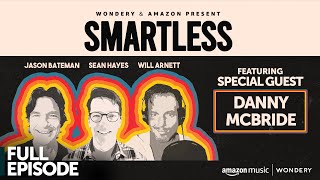
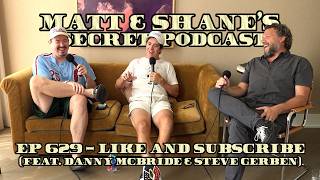
About this episodeDanny McBride discusses his transition from long-form television to short stories, revealing how the solitary …AI summary
Danny McBride discusses his transition from long-form television to short stories, revealing how the solitary nature of writing a book allowed him to explore unlikable characters without collaborative constraints. He emphasizes the importance of embracing fear and anxiety as motivators for creativity, while sharing practical career advice for aspiring artists to avoid burnout by finding sustainable day jobs rather than grinding in low-paying industry roles.
Key takeaways 5
McBride found the transition from TV to short stories liberating because it removed the need for studio negotiations and production logistics, allowing him to complete stories purely on his own terms.
He utilized a specific technique during the grueling writing process of 'Vice Principals' by freehand writing three pages every morning in a notebook to keep his brain fresh and motivated.
McBride actively chooses to write unlikable, flawed characters (like in 'Eastbound & Down' and 'The Righteous Gemstones') because he believes traditional likability formulas are boring and that depth comes from challenging audience expectations.
Moving away from Hollywood to Charleston allowed McBride to gain perspective on his work, viewing it as 'seasoning' to people's lives rather than the center of their existence, which reduced creative pressure.
McBride advises aspiring creatives to find a job that doesn't make them want to kill themselves, as working 16-hour days as a PA drains the energy needed for actual creative work.
Notable quotes 4AI-generated: wording and quote attribution may be wrong. Use the play link to verify.
“Fear of failure is not your enemy. It's your friend. It's something to be embraced, not pushed into the closet.”
▶ 25:12McBride explains that anxiety and fear are indicators that an artist truly cares about their work and should motivate them to put in the necessary energy.
“It's better to leave people wanting more of it than people be like, 'Yeah, I think we're good.'”
▶ 50:36McBride's philosophy on when to end a television show or creative project, prioritizing audience engagement over overstaying one's welcome.
“You're not going to do the [__] you want to do. So, in the meantime, just find a job that doesn't make you want to kill yourself.”
▶ 45:39Practical career advice given to young artists moving to Los Angeles, highlighting the importance of financial sustainability over immediate industry proximity.
“I just want to be in and out... I just want stuff that's in and done in one night.”
▶ 2:43McBride explaining his desire for short stories after seven years of writing for 'The Righteous Gemstones,' comparing the long TV commitment to a serious relationship he wasn't ready for.
Chapters & Sections (27)▼
0:01Transitioning from TV to Short Storieschapter2
1:40Motivations for Writing Short Stories
3:14Freewriting to Combat Writing Grind
4:51Writing Process and Collaboration in Storytellingchapter1
7:13Solo Writing vs Collaborative Filmmaking
9:50Writing Process and Modern Men Themeschapter3
11:49Thrilling Tales of Modern Men Discussion
13:04Unlikely Protagonists and Modern Man Themes
15:29Self-Belief and Mirror Reflections
18:22Film School Outsiders and Career Beginningschapter1
21:10Film School Dynamics and Early Career Breaks
23:47Embracing Fear and Unlikable Characterschapter1
25:34Rejecting Likability for Complex Characters
28:39Injecting Depth and Gravitas into Comedychapter1
31:41Injecting Depth and Gravitas into Comedy
33:36Fatherhood and Relocating for Familychapter2
36:20Impact of Absent Father on Writing
38:53Leaving Hollywood for Family Life
41:11Perspective on Hollywood and Career Advicechapter2
43:21Career Advice and Solitary Writing
44:47Career Advice for Hollywood Newcomers
46:49Actor Studio Questions and Gemstones Live Showchapter2
48:34Favorite Sounds and Dream Professions
49:33Gemstones Live Show and Show Endings
51:10Rejected Scripts, Political Comedy, and Set Memorieschapter2
 1h 23m
 1h 9m
1h 9m 23m
23m 1h 9m
1h 9m 1h 7m
1h 7m 1h 16m
 1h 10m
 1h 2m
1h 2m 1h 28m
 1h 1m
1h 1m 1h 14m
 52m
52m 1h 11m⏭ 2
 1h 1m⏭ 4
 1h 11m⏭ 1
 1h 28m⏭ 2
 1h 14m
 57m⏭ 1
 1h 33m
 59m⏭ 1
 1h 6m⏭ 1
 2h 4m⏭ 2
 20h 40m⏭ 10
 1h 41m⏭ 2
 1h 36m⏭ 1
 2h 47m
 1h 26m
 55m⏭ 1
 1h 42m⏭ 2
 2h 18m
 1h 4m
1h 4m 1h 6m
1h 6m 11h 23m⏭ 1
 2h 35m
 1h 0m⏭ 1
 46m
46m 3h 54m⏭ 7
 33m
33m 3h 59m⏭ 5
 48m⏭ 2
 37m⏭ 2
 38m
38m 56m
56m 54m⏭ 2