About this episodeTim Matheson reflects on his five-decade career, emphasizing that acting is a team sport where collaboration a…AI summary
Tim Matheson reflects on his five-decade career, emphasizing that acting is a team sport where collaboration and humility outweigh individual ego. He shares specific lessons from legends like Lucille Ball, Henry Fonda, and Clint Eastwood, highlighting the importance of preparation, grounding performances in reality, and maintaining professional toughness in a volatile industry.
Key takeaways 6
The 'Film School Boot Camp' concept: Real-world acting education comes from observing and learning from seasoned professionals (like Lucille Ball and Jackie Gleason) rather than just formal classes, focusing on discipline, timing, and professionalism.
Clint Eastwood's acting technique involves intense listening and reacting in the moment rather than pre-planning or rehearsing lines, creating a naturalistic performance that draws out better work from scene partners.
Lucille Ball's approach to comedy required physical precision; she insisted actors use real props during rehearsals to ensure accurate timing with other performers, preventing spills and maintaining the rhythm of the scene.
Kurt Russell demonstrated that true professionalism involves protecting the team dynamic; he confronted public relations staff to ensure he was not featured alone on a cover when he and his co-star were presented as a team.
Memorizing lines is best achieved by focusing on the character's objective and desire rather than rote memorization, allowing the words to fall naturally from the urge to communicate.
The entertainment industry is highly volatile; as Tom Hanks noted, one is always 'one phone call away from being a movie star,' requiring constant adaptability and resilience through career transitions.
Notable quotes 5AI-generated: wording and quote attribution may be wrong. Use the play link to verify.
“You walk in the room, you hit your mark, you look the other actor in the eye, and you tell him the truth.”
▶ 9:20Henry Fonda's simple yet profound approach to acting, contrasting with more complex methods.
“It's a full contact business. You can't be a baby. You can't be too sensitive because you can be sensitive as an artist, but you got to be able to take the hits that go on in Show Business.”
Lucille Ball's advice to Matheson about the toughness required to survive in Hollywood.
“We never leave anyone behind because they may be dead, but they may not be dead. So you can't take the chance of leaving a comrade behind.”
Matheson's reflection on Marine Corps boot camp and how it taught him the value of camaraderie and teamwork.
“It's like he's got all these Maseratis and Ferraris in his garage and he's treating us like bumper cars.”
▶ 44:00Danny Aiello's description of working on Steven Spielberg's '1941,' where talented actors felt underutilized in a chaotic production.
“Just one phone call away from being a movie star.”
▶ 14:24Tom Hanks' quote cited by Matheson regarding the unpredictability and opportunity in the film industry.
Chapters & Sections (50)▼
0:00The Evolution of the Television Industrychapter3
0:00Career Evolution in the Entertainment Industry
2:27Early Career in Acting and Voice Work
4:04Early Career and Counterculture Influences
5:47Early Experiences in the Film Industrychapter2
5:47Early Career in Hollywood and Vaudeville
7:37Working on Low-Budget Films in the 1960s
10:06Lessons Learned from Working in Show Businesschapter3
10:06Lessons Learned from Working in the Film Industry
11:52The Reality of Working in Show Business
13:06Navigating the Challenges of the Entertainment Industry
14:42Career Transitions and Early Hollywood Experienceschapter2
14:42Career Transitions and Early Hollywood Experiences
17:11Overcoming Personal Challenges and Finding Growth
19:16Lessons Learned from Military Service and Public Dutychapter3
19:16Importance of Public Service and National Duty
20:50Working with Clint Eastwood on Magnum Force
22:17Discovering a Natural Acting Style on Set
23:48Child Actors and Career Transitionschapter4
23:48Acting Career and Personal Growth Insights
25:43Early Career Experiences in Television Acting
27:18Importance of Teamwork in Film Production
28:53Acting Techniques for Memorization and Performance
32:18Discovery of the Comedy Script Animal Housechapter3
32:18Auditioning for the Film Animal House
34:43Casting and Filming Process for a Comedy
36:05The Making of Animal House Comedy Approach
38:08The Making of Animal House and its Impactchapter2
38:08The Making of Animal House and its Impact
40:32Career Reset and Success in Hollywood
42:14Analyzing the Failure of 1941 Filmchapter2
42:14Analyzing the Success and Failure of Spielberg Films
44:20Comedy Film Making and Career Choices
46:42Adapting Japanese Film Zatoichi into American Versionchapter3
46:42Adapting Japanese Film Zatoichi into American Version
48:52Challenges of Directing and Collaborating with Crew
50:08Breaking into a Groundbreaking TV Drama
51:45Adapting to High-Pressure TV Acting Environmentchapter3
51:45Working on a High-Pressure TV Set Environment
53:44Overcoming Challenges in Acting and Personal Recovery
55:10Emmy Nomination Experience and Reaction
56:32Emmy Awards and the After Party Experiencechapter4
56:32Emmy Awards and the After-Party Experience
58:45Motivation Behind Writing a Memoir
1:00:02Lessons Learned from Civil Rights Demonstrations
1:01:32Importance of Teamwork in Creative Projects
1:03:51Working with Underrated Actors in Hollywoodchapter3
1:03:51Early Career and Unsuccessful Auditions
1:06:30Personal Story of Medical Emergency and Teamwork
 1h 23m
 1h 9m
1h 9m 23m
23m 1h 9m
1h 9m 1h 7m
1h 7m 1h 16m
 1h 10m
 1h 2m
1h 2m 1h 28m
 1h 1m
1h 1m 1h 14m
 52m
52m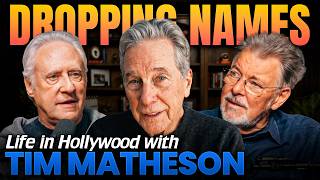
 1h 20m
 2h 35m⏭ 2
 1h 0m
1h 0m 32m
32m 40m
40m 1h 10m
 2h 54m⏭ 3
 2h 12m
 1h 53m
 1h 49m⏭ 2
 1h 2m⏭ 3
 1h 44m⏭ 3
 11h 23m⏭ 1
 33m
33m 1h 0m⏭ 1
 46m
46m 3h 54m⏭ 7
 48m⏭ 2
 3h 59m⏭ 5
 1h 16m
 54m⏭ 1
 1h 13m
 38m
38m 54m⏭ 2