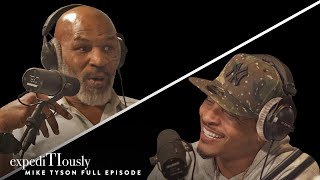
About this episodeJohn Hope Bryant and T.I. discuss the critical importance of financial literacy, leveraging debt for wealth bu…AI summary
John Hope Bryant and T.I. discuss the critical importance of financial literacy, leveraging debt for wealth building, and shifting from a consumer to an owner mindset within the Black community. Bryant shares his journey from homelessness to building a $100 million real estate portfolio, emphasizing that self-esteem and financial education are the foundations of generational wealth. The conversation highlights the need for Black artists and entrepreneurs to master the business side of their industries and invest in community-owned assets.
Key takeaways 10
Wealth vs. Money: Making money happens during the day through work; building wealth happens in your sleep through assets like real estate, stocks, and intellectual property.
Smart Debt Leverage: Bryant owns $100 million in rental properties with $48 million in debt, utilizing non-recourse loans where the business cash flow secures the loan, not personal assets. This 'juices' returns on equity.
Three Mentalities: Bryant categorizes people into Surviving (distrusts systems, keeps cash), Thriving (sees opportunity in downturns), and Winning (believes in success before achieving it). He argues the 'surviving' mindset keeps communities poor.
Bad vs. Good Debt: Financing luxury items like jewelry, cars, or shoes is 'bad debt' because it depreciates. Financing income-generating assets like rental properties is 'good debt' because it appreciates and generates cash flow.
The Music Business Reality: Quincy Jones states that without owning music rights, publishing, and licensing, an artist is merely a 'temporary performer' or 'work for hire,' not truly in the music business. Ownership is key to longevity.
Credit Score Impact: Bryant asserts that neighborhoods with credit scores of 700+ do not riot, while those with scores around 500 are preyed upon by financial predators. Financial literacy directly impacts community stability.
Intentional Renewable Philanthropy: Bryant employs local minority-owned businesses for maintenance (plumbing, electrical) at $25/hour, reinvesting wealth back into the community while protecting his properties.
Rent-to-Own Model: Bryant offers a 10% permanent rent reduction to tenants who raise their credit score to 700 through Operation Hope counseling, incentivizing financial behavior change.
Historical Context of Wealth: The term 'millionaire' originated in 1850 Natchez, MS, a slave port, where Black people created more wealth than railroads were worth at the time. This historical wealth extraction underscores the need for reparative financial education.
Atlanta's Success Model: Atlanta's rise as a hub for Black wealth was driven by affirmative action policies that directed billions in contracts to Black-owned businesses, focusing on money rather than race politics.
Notable quotes 5AI-generated: wording and quote attribution may be wrong. Use the play link to verify.
“You build wealth in your sleep. You don't build [wealth], you make money during the day but you build wealth in your sleep.”
▶ 0:00Bryant distinguishes between active income (money) and passive income/asset accumulation (wealth).
“If you think you're in the music business and you don't own music rights, publishing rights, licensing rights, you're actually not in the music business. You're a temporary performer. You're work for hire.”
▶ 25:15Quincy Jones's advice on ownership being the difference between an artist and a business owner.
“Anger is not a business plan. Frustration is not going to pay your mortgage. Blaming whoever for 300 years ago is not going to solve the problem.”
Bryant emphasizes actionable financial empowerment over dwelling on historical grievances.
“You cannot discriminate in your heart and integrate your pocket. It doesn't work. The math doesn't work.”
▶ 1:05:05Bryant argues that systemic economic empowerment requires intentional investment in minority-owned businesses, regardless of personal biases.
“If I don't like me, I'm not gonna like you. If I don't feel good about me, I'm not gonna feel good about you. If I don't respect me, I don't know how to respect you.”
▶ 1:15:38Bryant links self-esteem and self-worth directly to financial decision-making and community leadership.
Chapters & Sections (71)▼
0:00Building Wealth and Financial Literacychapter4
0:00Building Wealth for Black Artists and Communities
1:31Managing Ego and Vulnerability in Leadership
3:14Overcoming Adversity through Personal Struggles
4:48Financial Stress and Divorce Consequences
6:04Growing Up in a Limited Socioeconomic Environmentchapter5
6:04Growing Up with Limited Role Models
7:39Breaking Down Barriers to Financial Literacy
8:51Importance of Artist Community in Social Movements
10:28Benefits of Strategic Debt Management
11:45Overcoming Debt and Financial Limitations
13:52Debt and Leverage in Real Estate Investingchapter3
13:52Debt and Financing in Real Estate Investments
15:43Benefits of Leverage in Banking Investments
18:02Challenges of Securing Funding for Creative Ventures
19:51Risk Management in Business Acquisitionschapter3
19:51Risk Management in Business Acquisitions
22:04Brand Value and Leverage in Business
23:38The Art of Negotiation in Business
25:57The Business of Art and Building Wealthchapter2
25:57Building Wealth for Black Artists and Entrepreneurs
27:46Financial Literacy in the Music Industry
30:15Financial Mismanagement and Impulsive Spending Habitschapter2
30:15Financial Mismanagement and Impulsive Spending Habits
32:31Leveraging Real Estate for Financial Growth
34:36Community Wealth Building through Real Estate Investmentchapter3
34:36Community Wealth Building through Real Estate Investment
36:36Community Wealth and Affordable Housing Initiatives
38:05The Importance of Financial Literacy and Mindset
40:10Ownership Mentality and Personal Responsibilitychapter2
40:10Importance of Ownership Mentality in Personal Life
42:04Modern Slavery and Economic Oppression
44:28Financial Literacy and Wealth Creation for Minoritieschapter2
44:28Financial Literacy and Wealth Creation
46:34Overcoming Guilt and Racial Injustice Awareness
48:35Personal Responsibility and Social Changechapter2
48:35Personal Responsibility and Social Change
50:55Importance of Ownership and Voting in Society
53:14Breaking Down Systemic Trauma and Mental Healthchapter2
53:14Breaking the Cycle of Trauma and Mental Health
55:17Leadership Mindset and Trauma in Communities
57:17Raising Resilient Children for Future Successchapter3
57:17Parenting for Future Success and Resilience
58:50Mandatory Education for a Technology-Centric World
1:00:06Racial Reparations and Historical Financial Injustice
1:01:48Comparing Historical Trajectories of Native Americans and Jewschapter2
1:01:48Historical Wealth Disparities and Reparations
1:04:35The Ineffectiveness of Discrimination in Business
1:06:13Value of Society and Economic Inequalitychapter2
1:06:13Future of Society and Value of Human Life
1:09:00Racial Tensions vs Financial Empowerment in Atlanta
1:10:17Racial Inequality and Systemic Justicechapter2
1:10:17Racial Inequality and Systemic Justice
1:12:47Implementing a Comprehensive Civil Rights Agenda
1:14:33Racism and Destruction of Black Wall Streetchapter4
1:14:33Racism and Destruction of Black Wall Street
1:16:20Impact of Integration on Black Communities
1:18:05Shifting Consumer Mentality to Wealth Mindset
1:19:35Importance of Self-Awareness and Personal Growth
1:21:24Importance of Self-Esteem and Respectchapter3
1:21:24Importance of Self-Esteem and Respect
1:23:02Challenging the Value of Respect in Relationships
1:24:29Maintaining Independence and Authenticity in Decision Making
1:26:22Financial Literacy and Personal Responsibilitychapter2
1:26:22Financial Literacy and Personal Responsibility
1:29:00Overcoming Cynicism in Public Service
1:30:53Navigating Politics and Finding Common Groundchapter4
1:30:53Navigating Politics and Bipartisan Cooperation
1:32:38Overcoming Failure and Maintaining Enthusiasm for Success
1:33:57Company Traditions and Appreciation for Employees
 1h 12m⏭ 1
 1h 13m
 1h 22m
 1h 55m
 1h 24m
 1h 1m
1h 1m 1h 42m
 1h 41m
 26m
26m 1h 23m
 51m
51m 2h 32m
 27m
27m 3h 21m⏭ 2
 4h 24m
 1h 12m
 26m
26m 56m
56m 2h 1m⏭ 3
 1h 38m⏭ 5
 2h 26m⏭ 3
 1h 9m⏭ 1
 52m
52m 2h 31m⏭ 4
 11h 23m⏭ 1
 33m
33m 1h 0m⏭ 1
 46m
46m 3h 54m⏭ 7
 48m⏭ 2
 3h 59m⏭ 5
 1h 13m
 38m
38m 54m⏭ 2
 54m⏭ 1
 58m⏭ 5