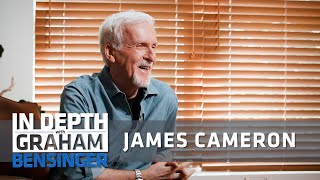
About this episodeJames Cameron details the technical evolution of performance capture and 3D cinematography for Avatar sequels,…AI summary
James Cameron details the technical evolution of performance capture and 3D cinematography for Avatar sequels, emphasizing that 3D must be authored during production rather than added in post. He discusses the creative collaboration with composers to preserve melodic themes amidst heavy sound design, and reveals how personal grief and family dynamics deeply influenced the narrative structure of Avatar: The Way of Water.
Key takeaways 5
3D Cinematography Technique: Cameron treats wide lenses (e.g., 25mm) like longer lenses (e.g., 50mm) by using shallow depth of field (f/1.0 or lower) to create cinematic separation and guide the viewer's eye, avoiding the 'cell phone' look of deep focus.
Performance Capture Workflow: The studio uses a 'retreat' model where departments write white papers on lessons learned after each film to fund R&D, future-proofing technology for sequels rather than starting from scratch.
Audio Mixing Strategy: Composers like Simon Franglen create rich, multi-tracked orchestral scores that are stripped down to their 'primal essence' during action scenes to survive heavy sound design, with full complexity reserved for end credits.
Narrative Structure Shift: Avatar 2 was split into two films because the original script was too crowded with backstory; the second film focuses intensely on family grief and internal conflict rather than just external environmental themes.
Grief as Narrative Driver: Cameron intentionally explored the realistic impact of losing a child on a marriage, noting that over 50% of couples facing such loss divorce, which informed the intense conflicts between Jake, Neytiri, and Spider.
Notable quotes 4AI-generated: wording and quote attribution may be wrong. Use the play link to verify.
“I don't want to miss anything. This is the actors are our gold. Let's make sure that we preserve that completely right down through the process.”
▶ 13:16Cameron explaining his primary goal for the technical development of the sequels: preserving the actors' performances above all else.
“3D can't be just imposed on a film after the fact with conversion. It has to be part of your authoring process. It's how you guide the the subjective response to the movie of of the audience.”
▶ 19:03Cameron arguing against post-production 3D conversion, asserting that 3D is a directorial tool for guiding consciousness.
“If I can't cry in my own movie, I feel I've failed... My goal as a filmmaker is to get you to feel something.”
▶ 35:28Cameron defining his metric for success, prioritizing emotional resonance over intellectual or visual exercises.
“We'll treat a 25 millimeter lens like it's a 50 millimeter lens... in terms of shallow depth of field, throwing the background more out of focus.”
▶ 14:17A specific technical insight on how they manipulate lens choice and aperture to achieve cinematic aesthetics in 3D.
Chapters & Sections (18)▼
0:00Lightstorm Studios VFX Workflow and Facilitieschapter4
2:36Manhattan Beach Studios and Film Props
3:50Motion Capture Stages and Physical Media
5:22Performance Capture Acting and Technology Evolution
8:11Avatar Performance Capture Development
10:33Avatar Sequels Story Structure and 3D Cinematographychapter3
12:413D Cinematography and Depth of Field Techniques
15:12Cinematic Depth of Field and Selective Focus
16:55Split Diopters and 3D Splash Housing Techniques
18:273D Authoring and Film Score Compositionchapter2
22:30Mixing Melodic Scores with Loud Sound Design
24:36Integrating Sound Design and Emotional Scoring
27:21Grief and Family Dynamics in Avatar 2chapter2
29:50Family Dynamics and Grief in Avatar 2
31:24Avatar Thematic Depth and Film Longevity
32:53Cinema's Emotional Power and Physical Mediachapter2
34:41Preserving Actor Performances and Emotional Impact
 1h 26m
 1h 10m
 1h 0m
1h 0m 1h 10m
 1h 35m
 1h 25m
 24m
24m 1h 41m
 1h 31m
 38m
38m 1h 13m
 29m
29m
 1h 2m⏭ 1
 52m
52m 33m
33m 1h 3m
1h 3m 1h 9m
1h 9m 3h 29m⏭ 1
 1h 4m
1h 4m 3h 5m⏭ 2
 55m
55m 1h 40m
 1h 53m⏭ 1
 1h 2m
1h 2m 1h 0m⏭ 1
 33m
33m 46m
46m 3h 54m⏭ 7
 3h 59m⏭ 5
 1h 13m
 54m⏭ 1
 58m⏭ 5
 54m⏭ 2
 25m
25m 45m⏭ 2
 1h 16m⏭ 2