About this episodeCeleste Barber discusses her rise to fame through parodying Instagram's unrealistic beauty standards, her jour…AI summary
Celeste Barber discusses her rise to fame through parodying Instagram's unrealistic beauty standards, her journey into writing a memoir, and her candid views on body positivity and workplace harassment. She emphasizes the importance of humor as a coping mechanism, the need for authentic storytelling over curated perfection, and the ongoing relevance of movements like #MeToo.
Key takeaways 5
Body positivity has been co-opted by the internet to primarily feature slender, high-cheekboned influencers, marginalizing the actual anti-fatness movement and those who face systemic discrimination based on size.
Humor serves as a practical tool for navigating trauma and insecurity; Barber used self-deprecating parody to reclaim agency over her image and connect with audiences who felt alienated by Instagram's 'highlight reel'.
The #MeToo movement risks becoming a fleeting trend or fashion statement if not treated as a sustained cultural shift; Barber argues it must remain visible and active rather than being dismissed as a past event.
Writing a book is compared to having a baby: initially exciting, then frustratingly difficult, and finally relieving upon completion; the process is cathartic but emotionally draining.
Feminism should not require unconditional support among women; Barber believes in holding other women accountable when their actions are problematic, arguing that silence enables bad behavior.
Notable quotes 5AI-generated: wording and quote attribution may be wrong. Use the play link to verify.
“I don't hate hot people because I'm married to only the hottest person in the world.”
▶ 2:28Barber clarifies that her critique is not about hating attractive people, but about the societal currency they receive for their looks.
“It's a social political movement for people who literally are dying because of anti-fatness... it's bizarre that it gets thrown to people of our size where we really really we're not a size that is normally discriminated against.”
▶ 6:09Barber critiques how the body positivity movement is often represented by influencers who do not face the same systemic discrimination as larger-bodied individuals.
“I just want to make people laugh... if I think on it too much it doesn't work.”
▶ 46:36Barber explains her creative process, emphasizing that over-analyzing content for impact kills the spontaneity and humor that resonates with her audience.
“I don't think that we all just have to respect and love what we all do just because we all have boobs or a uterus... I don't agree with that's who you are... I've got good tits too but I don't agree with what you're doing.”
▶ 36:23Barber argues against the idea that women must automatically support each other regardless of behavior, advocating for accountability within feminism.
“It's like having a baby... when you're in it you like this is dumb I shouldn't have beyond this... then when you finish it and it's out and the world kind of loves it and then a few months later you're like how can I could do that again.”
Barber describes the emotional rollercoaster of writing her memoir, highlighting the initial excitement, middle frustration, and post-completion relief.
Chapters & Sections (40)▼
0:11Body Image and Self-Acceptance in Societychapter2
0:11The Reality of Social Media Influencers
2:51Body Positivity and Societal Beauty Standards
5:50Body Positivity and Anti-Fatness in Societychapter2
5:50Body Positivity and Anti-Fatness in Society
8:01Celebrity Culture and Award Show Experiences
10:23Writing a Book and Overcoming Creative Challengeschapter3
10:23The Writing Process and Creative Motivation
12:42Sharing Personal Stories and Emotional Catharsis
14:27Author's Personal Experiences with MeToo Movement
15:56Sexual Harassment in the Workplace Awarenesschapter2
15:56Sexual Harassment in the Workplace Awareness
18:48Experiences as a Female Stand-up Comedian
21:35Dealing with Unpredictable Fan Interactions and Behaviorchapter3
21:35Dealing with Unpredictable Fan Interactions and Behavior
23:51Realizing the Value of Being a Funny Woman
25:48The Power of Humor in Coping with Adversity
27:17Marriage Secrets and Long-Term Relationshipschapter2
27:17Relationship Dynamics and Confidence Issues
29:00Marriage Secrets and Long-Term Relationship Dynamics
32:23Insecurity and Jealousy in Romantic Relationshipschapter2
32:23Insecurity and Comparison in Romantic Relationships
34:19Toxic Feminism and Double Standards in Society
38:12Author's Goals and Expectations for Book Readerschapter3
38:12Author's Intentions and Book Expectations
40:08Managing Emotions and Life Expectations
41:58Overcoming Body Image Insecurities and Self-Doubt
44:01Balancing Creative Freedom and Audience Impactchapter2
44:01Content Creation and Audience Consideration
45:49Trusting Instincts in Comedy and Public Perception
48:57Instagram's Content Moderation and Censorship Policieschapter5
48:57Experiences with Social Media Platforms and Censorship
50:46Social Media Platform Moderation and Accountability
52:09Regret and Preparation in Stand-up Comedy
53:41Overcoming Self-Doubt and Writing a Book
55:28Writing a Book as a Comedian
56:40Morning Writing Routine and Productivity Tipschapter3
56:40Morning Writing Routine for Creativity
58:15Social Media Influencers and Celebrity Obsession
1:00:08Embarrassing Moments and Humorous Personal Experiences
 1h 23m
 1h 9m
1h 9m 23m
23m 1h 9m
1h 9m 1h 7m
1h 7m 1h 16m
 1h 10m
 1h 2m
1h 2m 1h 28m
 1h 1m
1h 1m 1h 14m
 52m
52m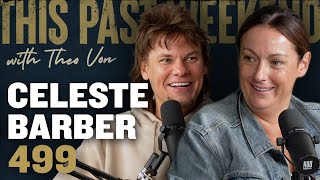
 1h 6m⏭ 1
 20h 40m⏭ 10
 1h 36m⏭ 1
 1h 41m⏭ 2
 2h 4m⏭ 2
 2h 47m
 22m⏭ 1
 1h 47m
 2h 21m⏭ 1
 29m⏭ 1
 57m
57m 3h 45m⏭ 2
 11h 23m⏭ 1
 33m
33m 3h 54m⏭ 7
 1h 0m⏭ 1
 46m
46m 48m⏭ 2
 3h 59m⏭ 5
 1h 13m
 25m
25m 45m⏭ 2
 54m⏭ 1
 58m⏭ 5