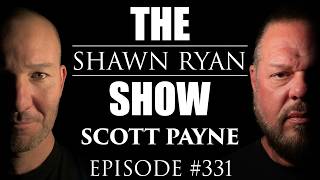
About this episodeRetired FBI Special Agent Scott Payne details his 28-year career, focusing on the psychological toll of underc…AI summary
Retired FBI Special Agent Scott Payne details his 28-year career, focusing on the psychological toll of undercover work, the physiological effects of adrenaline dumps, and specific operations against white supremacist groups and motorcycle gangs. He emphasizes that rigorous training and stress inoculation are critical for survival in high-stakes law enforcement, while also revealing the personal sacrifices and identity fragmentation inherent in deep-cover infiltration.
Key takeaways 6
Adrenaline dumps cause auditory exclusion and time dilation; physical fitness accelerates recovery from these stress responses.
FBI hiring prioritizes diverse professional backgrounds (accountants, former military, etc.) over just police experience to solve complex crimes like healthcare fraud.
Undercover agents must mirror their targets' appearance and behavior to build trust, often requiring them to suppress their own moral compass temporarily.
The '1%er' motorcycle club culture is heavily male-dominated and exclusionary, making infiltration difficult but rewarding for intelligence gathering.
White supremacist accelerationist groups often use coded language (e.g., 'bugaloo', 'siege') and QR codes on stickers to recruit and share extremist content anonymously.
Law enforcement faces high rates of divorce, suicide, and substance abuse due to the pressure cooker environment and lack of adequate decompression training.
Notable quotes 5AI-generated: wording and quote attribution may be wrong. Use the play link to verify.
“We bleed on the range so you don't die in the street.”
Explaining the purpose of high-stress tactical training simulations.
“An adrenaline dump is a sudden large release of the hormone adrenaline... that rapidly flips your body into fight or flight mode... Blood flow is redirected away from digestion toward muscles, heart, lungs, and brain.”
▶ 9:34Scientific explanation of the physiological response during life-threatening situations.
“If you lie under inquiry, then that's recorded. You're kind of dead to us because you can't go testify anymore.”
▶ 22:41Describing the FBI's strict honesty policy during background investigations and polygraphs.
“I was satisfied with my career... if I do something now, I'm just starting right back over.”
The moment Payne realized it was time to retire after a particularly intense case.
“You're looking at a 19-year-old kid led by a 40-something leader... they were wearing cryo gear... building their kit up.”
▶ 2:32:04Describing the alarming reality of young, untrained individuals preparing for violent accelerationist attacks.
Chapters & Sections (108)▼
0:00Undercover Law Enforcement and Traumachapter1
3:46Police Trauma and Active Shooter Training
5:55Adrenaline Dump and Training Importancechapter4
7:55Stress Inoculation and Adrenaline Effects
9:21Adrenaline Dump Mechanics and Police Culture
11:18Jump Out Boys and Narcotics Operations
13:29Police Pay and FBI Application Process
16:36FBI Phase One Test Math and Diversitychapter1
18:55FBI Test Math and Guessing Strategy
20:14FBI Polygraph and Background Investigation Processchapter1
22:18FBI Integrity and Lying Consequences
24:54FBI Training and DNA Forensicschapter1
27:16DNA Forensics and Genetic Genealogy
29:40FBI Training and Undercover Infiltration Experienceschapter3
31:25Undercover Infiltration and Backstory Creation
33:20Early Undercover Operations and Drug Buys
35:29Advanced Surveillance Technology and Phone Tracking
37:28Fourth Amendment, Warrants, and Police Tacticschapter2
 2h 30m⏭ 3
 1h 58m⏭ 2
 1h 44m⏭ 2
 1h 35m⏭ 3
 1h 27m⏭ 1
 1h 33m⏭ 4
 1h 51m⏭ 3
 1h 34m⏭ 3
 2h 0m⏭ 3
 1h 50m⏭ 2
 1h 53m⏭ 2
 1h 48m⏭ 3
 2h 46m⏭ 2
 5h 1m⏭ 6
 3h 59m⏭ 6
 2h 42m⏭ 1
 1h 43m⏭ 1
 2h 31m⏭ 2
 1h 46m⏭ 2
 49m
49m 3h 32m
 1h 29m
 2h 40m
 5h 13m⏭ 2
 11h 23m⏭ 1
 2h 35m
 1h 0m⏭ 1
 46m
46m 3h 54m⏭ 7
 33m
33m 3h 59m⏭ 5
 48m⏭ 2
 37m⏭ 2
 38m
38m 56m
56m 54m⏭ 2