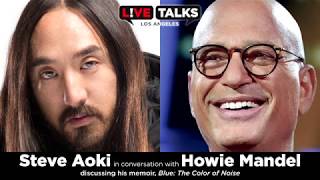
About this episodeThis conversation details the life of DJ/Producer Steve Aoki, tracing his journey from a challenging childhood…AI summary
This conversation details the life of DJ/Producer Steve Aoki, tracing his journey from a challenging childhood as the son of Benihana founder Rocky Aoki to becoming a global electronic music icon. Key themes include the cultural impact of Benihana as an Americanized Japanese experience, the DIY ethos of the punk/hardcore scene that shaped his career, and his transition into mainstream success while maintaining a straight-edge lifestyle.
Key takeaways 5
Benihana's success was driven by Americanizing Japanese culture through showmanship (hibachi grills, French hats) rather than traditional authenticity, making it accessible and appealing to Western audiences in the 1960s.
Rocky Aoki was a marketing pioneer who adopted an American 'showman' persona, engaging in stunts like hot air balloon flights and offshore racing to build brand recognition, contrasting with traditional Japanese modesty.
Aoki's career was built on the DIY punk/hardcore ethos: starting a label (Dim Mak) in a living room, creating zines, and leveraging community connections before achieving mainstream success.
The straight-edge movement, influenced by Ian MacKaye of Minor Fugazi, provided a framework for positive rebellion and community support within the punk scene, which Aoki maintained even after entering the drug-heavy electronic music industry.
Aoki's touring discipline was forged in punk bands where he learned to survive on minimal resources (sleeping in vans, no hotels), allowing him to scale to high-volume festival performances later in his career.
Notable quotes 4AI-generated: wording and quote attribution may be wrong. Use the play link to verify.
“Benihana is more American than Japanese and people don't realize it. Like mainly the cooking, the showmanship, the hats. It's like that's that's a French style hat, right? So, there's a lot of interesting things that like my grandfather was like, 'Oh, we want the red French style hats.' And because they they're louder, they catch shrimp better when you flick it in the air.”
Explaining how Benihana adapted Japanese concepts for American appeal.
“The great thing about punk music is like you go to a show and you're like, I don't know. I think in a few months I'd be able to play drums as good as this guy. That's what I did. Exactly. That's like why I love punk because cuz then I was like, I don't know how to sing. I don't know how to play any instruments. My friends that we were going were like, we don't know. Let's just let's just figure it out.”
▶ 25:44Describing the accessible, low-barrier entry point of punk music that inspired his musical journey.
“I don't have to worry about you anymore.”
▶ 1:15:58The final words from his father Rocky Aoki before he died in 2008, which Aoki interprets as a profound expression of pride.
“You got to remember like the second you don't think it's that important to you, someone else does and someone else will take it. And then when you're like, 'Oh, I'm back, guys.' They're like, 'No, we already have someone else.' It's like you you better you better fight for that every single time you have the chance.”
▶ 1:22:02Advice on maintaining relevance and passion in a competitive industry.
Chapters & Sections (47)▼
0:00Rocky Aoki's Wrestling and Benihana Originschapter1
1:33Rocky Aoki's Wrestling and Benihana Origins
5:12Benihana Origins and Founder's Personachapter2
7:39Benihana's Early Struggles and Public Offering
9:13Father's Unconventional Life and Marketing
10:55Father's Life, Coma, and Family Dynamicschapter2
12:29Family relocation and father's New York lifestyle
13:29Father's New Jersey Home and Lifestyle
15:24Immigrant Experience and Benihana's Cultural Impactchapter2
17:51Benihana's Americanization and Cultural Appeal
19:13Childhood Social Struggles and School Changes
20:45School struggles and finding nichechapter2
22:10Dad's Pressure and Sibling Dynamics
24:05Adolescent Identity Formation and Peer Influence
25:28Punk Music DIY Culture and Sneaking into Movieschapter2
27:18DIY Zines and Punk Culture Creativity
28:38Punk rock illegal activities and movie theater tricks
31:08UC Admissions and College Party Culturechapter2
32:56College Life and Parties in Vista
34:39UCSB Student Life and Hardcore Punk Scene
36:35Zen Magazine, Dim Mak Label, and Punk Scenechapter2
38:06Detroit Punk and Emo Music Scene
39:24Vegan Lifestyle and Drinking Habits
40:49Straight Edge Punk History and Philosophychapter1
42:01Punk subculture evolution and academic transition
44:57Choosing Music Label Over Academiachapter1
46:26Starting Dim Mak and Moving to LA
48:51Transitioning from Record Collector to DJchapter2
50:08Vinyl Collection and Hoarding Habits
51:45Vinyl Collection and DJing at Three of Clubs
53:32LCD Sound System Inspires Electronic Music Careerchapter1
 2h 31m⏭ 2
 2h 4m⏭ 2
 2h 36m
 1h 28m⏭ 3
 2h 5m⏭ 1
 2h 17m
 1h 14m
 2h 0m⏭ 2
 1h 2m⏭ 2
 2h 8m
2h 8m 2h 26m⏭ 2
 1h 50m
 1h 10m
 32m
32m 1h 17m⏭ 2
 1h 8m
1h 8m 1h 27m
 1h 12m⏭ 4
 1h 39m⏭ 1
 1h 25m
 1h 15m
 1h 55m⏭ 4
 1h 53m⏭ 4
 2h 43m
 2h 14m⏭ 2
 1h 40m
 2h 59m⏭ 2
 3h 8m
3h 8m 3h 33m⏭ 1
 33m
33m 1h 0m⏭ 1
 11h 54m⏭ 8
 11h 54m
 9h 11m
 6h 26m
 3h 54m⏭ 7
 46m
46m 54m⏭ 1
 3h 59m⏭ 5
 54m⏭ 2
 1h 16m⏭ 2