About this episodeThis conversation honors Danielle Smith's pioneering career in hip-hop journalism, highlighting her role as th…AI summary
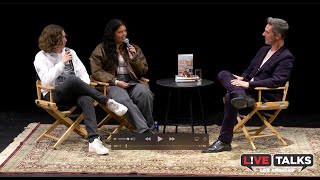
This conversation honors Danielle Smith's pioneering career in hip-hop journalism, highlighting her role as the first African American editor at Billboard and Vibe, and her impact on elevating women in publishing leadership. The discussion explores the evolution of media from rigorous traditional journalism to the democratized digital age, noting both the loss of institutional training and the vital importance of diverse voices having the freedom to publish. It concludes with insights into Smith's new book and podcast, which aim to correct historical narratives by crediting Black women in pop music for their songwriting and production contributions.
Key takeaways 5
Legacy of Black Women in Publishing: Danielle Smith identifies herself as a pioneer who broke barriers as the first African American editor at Billboard and Vibe. She emphasizes that many women (like Mimi Valdez, Sophia Chang, and Chimo Do) worked tirelessly in the 90s and 2000s, often underfunded ('functioning on spit and glue'), to build the cultural equity and IP that defines hip-hop journalism today.
Impact of Media Democratization: While the ease of publishing ('pressing publish') allows for greater diversity of voices, Smith expresses concern that gutted media institutions have left a generation of content creators without traditional journalistic training. This includes skills in fact-checking, historical context, and pitching, which were rigorously taught in older magazine environments like Vibe.
Cultural Mirror Effect: Smith explains that negative reactions from artists or their camps often stem from a lack of familiarity with being reported on. She notes that Black communities have historically been excluded from mainstream media coverage, so when they are finally represented (e.g., in films like New Jack City or magazines like Vibe), the reaction can be volatile because it is a 'mirror' held up to their culture for the first time.
Undervalued Contributions of Black Women: A central theme is the erasure of Black women's creative agency. Smith points out that while white female artists are frequently labeled 'singer-songwriters' (implying genius/creation), Black women like Brandy are often just called 'singers,' despite co-writing and producing major hits like Monica's 'The Boy Is Mine.'
Trauma of the Hip-Hop Era: The interview reflects on the 'bloody' and 'traumatic' nature of the late 90s hip-hop industry, where journalists faced physical threats, office raids, and legal intimidation. This era required immense toughness from editors who were documenting a culture while often being targeted by it.
Notable quotes 5AI-generated: wording and quote attribution may be wrong. Use the play link to verify.
“We were all functioning on spit and glue. We were always functioning on do we have enough money to get the issue out the way we want it to look... everybody's doing three jobs.”
Danielle Smith describing the resource-strapped but high-output environment at magazines like Vibe, XXL, and The Source during the 90s.
“It has taken us as people of color as black people so long to even be covered... if you mainstream culture white people have been used to this since Benjamin Franklin. So we really aren't used to it.”
▶ 31:35Explaining why some artists reacted violently or defensively when confronted by journalists covering negative stories about them.
“When you call somebody a singer-songwriter that just adds another element of genius to who they are and what they do... we don't call Brandy singer-songwriters. We just say she's a singer.”
▶ 22:55Smith highlighting the racial double standard in how female artists are credited for their creative work compared to their white counterparts.
“I worry that is there a generation of what we now call content creators that just don't have the training to even know that they're doing something that isn't traditional right.”
▶ 14:10Smith's concern regarding the decline of formal journalistic training due to the gutting of media institutions over the last 20 years.
“Every editor at XXL, The Source, and Vibe has been threatened, has been physically assaulted, has had their office run into violently.”
Smith emphasizing the physical dangers faced by hip-hop journalists during the East Coast/West Coast era.
 1h 19m
 49m
49m 58m
58m 43m
43m 39m
39m 54m
54m 39m
39m 46m
46m 36m
36m 36m⏭ 1
 30m
30m 29m
29m 21m⏭ 1
 18m
18m 1h 8m⏭ 1
 2h 46m
 1h 34m⏭ 3
 1h 11m⏭ 1
 1h 12m⏭ 1
 2h 57m
 1h 8m
1h 8m 1h 53m
 1h 22m
 4h 20m
 1h 0m⏭ 1
 33m
33m 3h 59m⏭ 5
 3h 54m⏭ 7
 54m⏭ 1
 46m
46m 1h 26m
 1h 13m
 54m⏭ 2
 9h 11m
 6h 26m
 1h 16m⏭ 2