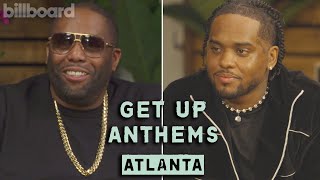
About this episodeAtlanta OGs discuss the evolution of street culture, the impact of the 1996 Olympics, and the importance of un…AI summary
Atlanta OGs discuss the evolution of street culture, the impact of the 1996 Olympics, and the importance of unity across city sides. They emphasize that true representation requires authenticity and community investment rather than performative toughness, urging younger generations to seek mentorship and correct their mindset to elevate the city.
Key takeaways 5
The 1996 Olympics marked a pivotal shift in Atlanta's culture, moving the city from a localized, survival-based mindset to a globalized entertainment industry hub.
Street credibility is defined by longevity, community respect, and authentic behavior rather than performative violence or material display; artists like Ant-Man are respected for maintaining raw authenticity.
Regional stereotypes (East vs. West vs. South side) are often based on unfamiliarity and lack of cross-pollination, leading to unnecessary conflict that can be resolved through direct communication and shared respect.
The 'gang mentality' historically served as a protective mechanism against external threats (racism, police, kidnapping) but has evolved into a source of internal division that needs to be dismantled for community growth.
True leadership involves being 'empty' and open to correction, allowing for continuous personal growth and serving as a role model for younger generations.
Notable quotes 4AI-generated: wording and quote attribution may be wrong. Use the play link to verify.
“Atlanta is like this right here. Bro, I wouldn't even know Atlanta had it not been from East Side and West Side. I wouldn't know the value of my street had it not been for your street.”
▶ 56:12Speaker emphasizes the interconnectedness of Atlanta's different neighborhoods and how understanding one side enhances the value of another.
“The best way to learn anything is to become empty. So that all knowledge sports in fresh, new, incredible and unpredictable. And every experience is transforming, transcendental, worthwhile and real.”
▶ 44:10Speaker references a martial arts poem to explain the importance of humility and being open to correction for personal growth.
“Ant-Man is more Atlanta than Future... He ain't trying to adapt to surroundings. And that's to me that's the epitome of Atlanta... I ain't got to adapt to nothing. [__] adapt to me.”
▶ 36:42Discussion on why Ant-Man represents the authentic spirit of Atlanta better than other artists who may perform for media or trends.
“Just cuz a [__] ain't do something for you don't mean he did something to you. Take that however you want to take it.”
▶ 1:38:17Advice on separating emotions from facts and not taking offense when others do not act in your favor.
Chapters & Sections (53)▼
0:00Atlanta OGs Discuss City Misinterpretations and Historychapter2
2:21Atlanta Misinterpretations and OG History
4:04Atlanta History and Personal Roots
5:56Atlanta Survival, Gang Mentality, and Studio Impactchapter1
9:10Atlanta Gang Uniforms and Geographic Isolation
10:57Atlanta Gang History and Cultural Shiftschapter1
12:521980s Atlanta Gang Influx and Chip and Dip
16:03Atlanta Street Culture Evolution and Regional Differenceschapter1
17:52Atlanta Park Etiquette and Regional Stereotypes
20:20Atlanta Neighborhoods, Safety, and Regional Stereotypeschapter2
22:49Apartment Complex Safety Stereotypes
24:16North Side Stereotypes and Regional Isolation
25:37Atlanta Neighborhoods Geography and Territorychapter2
27:04Atlanta Side Territory and Zoning
28:40Atlanta Neighborhood Identity and Territory Expansion
31:10Atlanta Street Culture and Music Representationchapter4
33:18Street Survival and Finesse
34:26Atlanta's Global Music Representation
35:39Ant-Man vs Future Atlanta Representation
37:39Authenticity vs Media Adaptation in Atlanta
39:14Authenticity, Leadership, and Personal Growthchapter2
40:39Personal Elevation and Healing Playbook
41:42Atlanta's Respect for Lived Experience
43:51Atlanta Hood Culture and Cross-Side Unitychapter3
45:15East Side Cultural Translation
46:54Breaking Down Atlanta Side Barriers
48:28Gang Culture Communication and Youth Mentorship
50:43Atlanta Unity and Ending Regional Hatechapter2
53:06Atlanta Brotherhood vs Regional Hate
54:12Atlanta Community Hustle vs NY Block Takeover
55:03Atlanta Street Culture and Mentorshipchapter3
56:26East Side Club Etiquette and Respect
57:45Overcoming Self-Sabotage and Survival Mindset
59:01Adapting Street Survival Instincts to Social Norms
1:01:12Mentorship, Vulnerability, and Authentic Interviewingchapter2
1:02:50Power of Asking Questions
1:04:53Authentic Interviewing and Leadership Awareness
1:07:07Atlanta West Side Identity and Territorychapter3
1:08:42East Atlanta vs West Side Identity
1:10:30Franklin Road Territory and Street Economics
1:14:05Ray Daniels Interview Context and Atlanta Sensitivity
1:17:20Atlanta Authenticity and Hip Hop Beefchapter1
1:18:56Atlanta Authenticity and Direct Communication
1:21:45Atlanta Unity and Power of Wordschapter2
1:23:58Outspokenness and Atlanta Unity
1:25:22Impact of Words on Atlanta
1:27:41Atlanta Loyalty, Community Support, and Studio Legacychapter2
1:29:56Atlanta OGs Professional Vouching and Community Loyalty
1:31:33Studio Legacy and Community Giving
1:33:11Atlanta Sides, Jose William Legacy, and Growth Advicechapter3
 4h 5m
4h 5m 2h 10m
 3h 23m
 3h 21m
 2h 41m
 2h 34m
 1h 6m
1h 6m 1h 13m
 1h 6m
1h 6m 4h 11m
 3h 5m
3h 5m 1h 33m⏭ 1
 1h 5m
1h 5m 1h 20m
 24m
24m 1h 2m
1h 2m 58m⏭ 1
 3h 4m
3h 4m 35m
35m 29m
29m 56m⏭ 1
 1h 52m
 29m
29m 1h 14m⏭ 2
 1h 0m⏭ 1
 33m
33m 3h 59m⏭ 5
 3h 54m⏭ 7
 46m
46m 54m⏭ 1
 1h 13m
 54m⏭ 2
 9h 11m
 1h 26m
 6h 26m
 58m⏭ 5