About this episodeToo Short reflects on his 40-year career, detailing how selling custom rap tapes to drug dealers built his ear…AI summary
Too Short reflects on his 40-year career, detailing how selling custom rap tapes to drug dealers built his early stage presence and street credibility. He discusses the evolution of hip-hop from regional cassette culture to global streaming, criticizing the loss of artist development while celebrating his longevity and recent collaborative projects with artists like Lil John and Snow Tha Product.
Key takeaways 7
Early Career Hustle: Too Short's career began by selling custom cassette tapes to drug dealers for $5-$20, which provided him with free roam in dangerous neighborhoods and taught him how to perform for tough, unpredictable crowds.
The 'Player' Persona: He defines a 'player' not just as a playboy but as someone capable of managing multiple simultaneous relationships without conflict, a persona that fueled his early songwriting and humor.
Evolution of Explicit Content: The shift from clean Side A/dirty Side B cassettes to explicit CDs in the 90s normalized profanity in rap, changing it from a comedic shock value (as in 'Freaky Tales') to a standard industry norm.
Marketing Stunts: The 1996 'retirement press conference' was a calculated marketing stunt during contract renegotiations that generated massive free promotion but inadvertently marked the peak of his commercial sales.
Late-Career Signature Hits: 'Blow the Whistle' became his signature song decades into his career, created by Lil John mimicking the unique Roland SH-101 bassline from Too Short's 1987 album 'Freaky Tales'.
Industry Critique: Too Short criticizes the modern music industry for scrapping artist development, noting that while democratization allows anyone to release music, it results in performers who lack the skills to engage live audiences.
Collaborative Strategy: His recent album 'Sir Too Short Volume 2' features a four-part series strategy, starting with an underground-style volume, moving to a mainstream collaboration with Lil John, and planning future volumes for different audiences.
Notable quotes 5AI-generated: wording and quote attribution may be wrong. Use the play link to verify.
“I never had an album out. And I got on stage and everybody in the crowd knew every word, everything I was rapping. And the people backstage thought I was just like the opening act. And I get off stage, they're like, 'Who the [__] are you? And how did they all know your songs?'”
▶ 7:59Describing his first major studio performance where he realized his name recognition preceded his face recognition.
“The gift was that that press conference was the one and only time in my career where I received endless amounts of free promotions for album... And the curse was I never had another platinum album.”
▶ 24:06Reflecting on the unintended consequences of his 1996 fake retirement press conference.
“I think 88 is like the best year of ever in hip-hop albums... I think that early 80s though, that is a love affair that you can never get over... Nothing ever in your life will be better than that music.”
▶ 1:17:57Sharing his perspective on the golden eras of hip-hop and the emotional connection listeners have with music from their youth.
“You got to be a teacher and a student at all times. You know, I'm sure Jay-Z... had to something compelled him to want me to do songs with him because he called me twice.”
▶ 58:18Explaining why established artists collaborate with him, citing an anecdote about a producer telling East Coast rappers to study his work.
“I'm not really the universe gave it to you and it's one and done and you gave it to the people. I'm like no I'm like that happened like it just happened.”
▶ 35:19Responding to fans asking for a recreation of the unique bassline from 'Freaky Tales', emphasizing that some creative moments are unrepeatable.
Chapters & Sections (39)▼
0:05Early Career Selling Rap Tapes to Drug Dealerschapter3
1:52Creating Custom Rap Tapes for Dealers
4:38Selling Tapes to Drug Dealers
6:24Early Live Performance Challenges and Fame
8:49Too $hort's First Studio Session and Player Lifestylechapter1
10:551985 Drug Money Studio and Player Lifestyle
13:32Defining Player Culture and Songwriting Humorchapter1
16:16Balancing Explicit Content and Clean Lyrics
18:18Evolution of Explicit Rap and Marketing Stuntschapter1
21:13Retirement Stunt and Album Naming
23:26The Retirement Press Conference and Lil John Collaborationchapter2
25:54Impact of Retirement on Features
28:05Early Collaboration and Contract Resolution
30:40Blow the Whistle Global Impact and Creationchapter1
33:50Hi-Y Movement and Freaky Tales Bassline
35:30Signature Song Success and Early Career Originschapter3
37:11JBL Headphones and Music Perception
38:48Unique Upbringing and First Tape
40:22Selling Rap Tapes to Drug Dealers
42:38Studio Pressure and Collaborations with Biggie and Tupacchapter3
44:40Pressure of Biggie's Impromptu Verse
46:21Crafting the Hook and Pimp Narrative
47:39Tupac's Instant Songwriting Speed
49:18Flow State Songwriting and Collaborationchapter2
50:57Early 90s Songwriting Inspiration
52:00Collaborative Songwriting with Snow Tha Product
54:54Hip-Hop Evolution and Album Longevitychapter2
56:32Articulation and Album Longevity
58:25East Coast Rappers and Producer Anecdote
1:00:04Jay-Z's Impact on Regional Hip Hop and Modern Music Industrychapter1
1:02:49Impact of Instant Music Distribution
1:05:43Artist Development and Album Series Strategychapter2
1:08:10Four-Part Album Series Strategy
1:10:16COVID Era Collaborative Recording Process
1:11:30Senior Rappers, Fatherhood, and Hip-Hop Historychapter4
1:12:43Career Reflection and Future Plans
1:14:19Height Growth, Financial Advice, and Rap History
 1h 13m⏭ 1
 1h 30m
 1h 0m⏭ 1
 54m⏭ 3
 1h 9m
1h 9m 56m⏭ 2
 45m
45m 52m⏭ 3
 1h 3m
1h 3m 1h 0m
1h 0m 51m
51m 58m
58m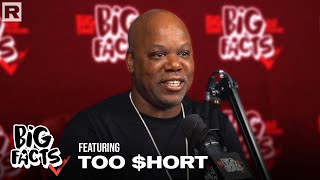 1h 10m
 1h 50m
 47m
47m 30m
30m 23m
23m 1h 11m
 25m
25m 2h 30m⏭ 1
 1h 31m
 50m
50m 4h 49m
 1h 5m⏭ 1
 1h 9m
1h 9m 51m
51m 1h 37m
 1h 44m⏭ 1
 1h 22m
 4h 31m⏭ 4
 29m
29m 33m
33m 1h 0m⏭ 1
 3h 54m⏭ 7
 6h 26m
 54m⏭ 1
 3h 59m⏭ 5
 46m
46m 54m⏭ 2
 1h 13m
 1h 26m
 1h 16m⏭ 2
 9h 11m