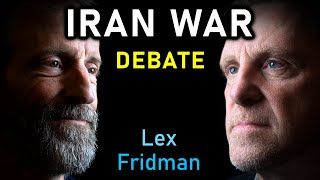
About this episodeThe video argues that the US war with Iran is strategically unsound, driven by Israeli interests rather than A…AI summary
The video argues that the US war with Iran is strategically unsound, driven by Israeli interests rather than American security, and risks a prolonged ground conflict with no clear exit strategy. The host and guest Jim Webb contend that the initial assassination of the Ayatollah eliminated diplomatic off-ramps, while the lack of strategic objectives and poor military preparation (specifically regarding drone warfare) makes a ground invasion likely and potentially disastrous. They warn that this foreign policy failure is eroding American moral authority, domestic stability, and global alliances.
Key takeaways 6
The US is effectively fighting a war dictated by Israeli strategic goals (territorial expansion in Lebanon/Syria) rather than US national interests, as admitted by officials like Marco Rubio.
The assassination of the Ayatollah at the war's outset was a catastrophic strategic error that removed the possibility of negotiation and turned the conflict into a total war against the Iranian populace, emboldening resistance.
Military preparation for a ground war in Iran is inadequate; the US military is still reorienting from counterinsurgency to conventional warfare and lacks effective counter-drone tactics, despite Iran having access to advanced Russian drone technology.
The war is causing severe domestic societal decay, including infrastructure neglect, rising unemployment for native-born citizens, and the erosion of civil liberties, exemplified by local law enforcement arresting citizens for memes.
The US is losing its moral authority globally by partnering with Israel on actions that violate international norms (killing religious leaders, targeting civilian infrastructure), which undermines the 'decency' that historically underpinned American soft power.
Jim Webb proposes a specific diplomatic solution: The US should leverage its position as the senior partner to constrain Israel and offer Iran a face-saving off-ramp by withdrawing US troops from the region in exchange for de-escalation.
Notable quotes 5AI-generated: wording and quote attribution may be wrong. Use the play link to verify.
“We're not doing this for us. We're doing it for somebody else who gives us campaign contributions... That is not inspiring. That's not exactly, you know, MacArthur out there. Well, it's the opposite of MacArthur. It's a betrayal of the country.”
▶ 1:27:33Jim Webb discussing the admission by US officials that the war is being fought for Israeli interests, arguing this betrays the soldiers and the nation.
“We killed the pope during Lent while he was standing on a street corner or with his family including a grandkid... we emboldened the entire civilian population to stand up and fight us.”
Webb explaining why the assassination of the Ayatollah was a strategic disaster that eliminated diplomatic options and unified Iranian resistance.
“If you're willing to do all of this and just say aloud, 'No, we're not doing this for us... There's no potential upside here for you... But we're doing it anyway,' I don't know. I think anyone who expresses those views is probably willing to hurt you.”
▶ 1:42:56Webb analyzing the mindset of US leaders who openly admit to fighting a war without national benefit, suggesting they harbor hostility toward the American public.
“The reality is is you can talk to the man himself... [Millennium Challenge] was designed to produce a result that people wanted to see within DoD. It was not designed to take a look at a particular problem set.”
▶ 2:16:05Webb referencing the 2002 war game where General Van Riper's realistic simulation of an Iranian victory was ignored because it contradicted desired outcomes.
“Decency... It is you know the city like the shining city on a hill... those are why, you know, that's what motivated me... seeing the historical arc of this country growing up... people served to defend those ideals.”
Webb explaining his motivation for enlisting in the Marines, contrasting it with the current lack of moral clarity in foreign policy.
Chapters & Sections (65)▼
0:00US Withdrawal from Iran Conflict: Benefits and Riskschapter2
3:39US-Iran Conflict and Israel's Involvement
6:34Israel's Humiliation of Other Nations
8:39Israel's Expansion of Territory in the Middle Eastchapter1
11:25US Troop Commitment in Iran Regime Change
13:57US Troops Deployment in Iran and Its Consequenceschapter2
15:56Military Intervention in Iran and Middle East
17:39Consequences of Eroding US Diplomatic Power
20:02Lack of Strategic Explanation in Military Actionschapter2
22:47Infrastructure Neglect in the United States
24:29Rising Unemployment Among Native-Born Americans
26:36The Impact of War on Societal Changechapter
31:20Consequences of Middle East Wars on Global Migrationchapter1
33:17Consequences of Targeting Foreign Leaders and Governments
36:23Consequences of Global Power Imbalancechapter2
38:35Potential Physical Threats to the United States
40:00Israel's Aggression in Lebanon: Territorial Expansion
41:55War Crimes and Propaganda in Middle East Conflictschapter2
43:26Evangelical Leaders' Silence on Christian Persecution
44:51American Evangelicals' Silence on Middle East Christians
46:35Loss of Moral Authority in US Foreign Policychapter1
48:38Government Power Expansion During Wartime
51:51Authoritarianism and Free Speech in Law Enforcementchapter2
54:15Rise of Authoritarianism in the US
55:45Forced Military Service and Government Tyranny
57:51US Troops Entering Iran: Consequences and Goalschapter2
59:56US Ground Troops Deployment in Iran
1:02:05US Ground Troops Deployment in Iran Unclear
1:04:01Global Economy at Risk from Strait Closurechapter2
1:06:22Enlisting in the Marine Corps for Duty and Patriotism
1:07:35Military Service as a Path to Social Mobility
1:09:29The Iraq War and Its Consequenceschapter3
1:11:55Veterans' Experiences in Vietnam and US Support
1:13:43Veterans' Experiences in War and Military Policy
1:15:09Unpredictable Nature of Military Deployments
1:17:13US Military Strategy in Iraq Criticizedchapter2
1:19:02US Military Readiness for Conventional Warfare
1:20:28Global Military Advancements and Technological Gaps
1:22:10Military Effectiveness in Modern Warfarechapter1
1:24:29Risk of Unnecessary Bloodshed in Military Intervention
1:28:04Troops' Safety and Loyalty in Questionchapter1
1:29:48Veterans' Perceptions of Military Deployment and Government
1:32:22Comparing US and Israeli Military Tacticschapter1
1:35:32Effective War Tactics and Proportionality in Conflict
1:37:20Comparing IDF and US Military Conductchapter2
1:39:34US Support for Israel's Actions in Gaza
1:41:04US Government's Motives and Actions Questioned
1:44:29Decline of Military Enlistment Due to Wartime Motivationschapter1
1:46:20US Military Intervention in Iran: Motives and Consequences
1:49:59Creating a Martyr in Iran: Consequences and Implicationschapter3
1:52:40Criticizing Leadership and Politicians in the US Legislature
1:53:56The Psychological Toll of War on Soldiers
1:55:39The Importance of Respecting the Dead
1:59:28Consequences of Violent Military Tactics on Civilianschapter1
2:02:12Importance of Individual Rights and Freedoms
2:04:54Iran Conflict and Israeli Interference Allegationschapter1
2:07:19US Military Mistakes in Foreign Conflicts
2:09:50Iran's Strategic Move to Disrupt Global Oil Supplychapter1
2:12:34US Troops Being Sent to Iran: A Strategic Mistake
2:15:12War Games and Military Exercises: Rigged Outcomeschapter1
2:17:56Challenges of Reopening the Strait of Hormuz
2:20:06Consequences of US Troops Being Deployed in Iranchapter3
2:21:38US Foreign Policy and Diplomatic Relations
2:23:45US Withdrawal from Middle East and Iran Conflict
 2h 38m⏭ 3
 1h 58m⏭ 4
 2h 12m⏭ 6
 1h 44m⏭ 2
 1h 48m⏭ 3
 34m⏭ 1
 1h 42m⏭ 2
 2h 24m
 1h 16m⏭ 1
 1h 13m⏭ 3
 1h 51m⏭ 3
 1h 31m⏭ 2
 4h 5m⏭ 1
 1h 51m
 3h 2m⏭ 2
 3h 5m⏭ 1
 11h 54m
 4h 16m⏭ 4
 6h 7m⏭ 4
 4h 27m⏭ 3
 2h 33m⏭ 4
 2h 36m⏭ 4
 2h 27m⏭ 3
 2h 21m
 1h 0m⏭ 1
 33m
33m 3h 54m⏭ 7
 54m⏭ 1
 3h 59m⏭ 5
 54m⏭ 2
 46m
46m 6h 26m
 1h 13m
 1h 16m⏭ 2
 9h 11m
 1h 26m