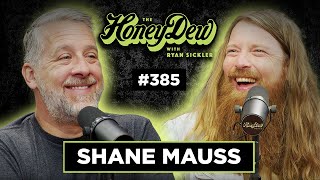
About this episodeComedians Dan Soder and Shane Moss discuss the evolution of Moss's comedy from traditional joke-writing to sci…AI summary
Comedians Dan Soder and Shane Moss discuss the evolution of Moss's comedy from traditional joke-writing to science-themed storytelling, highlighting the challenges of maintaining laugh density with complex topics. They explore the psychological and neurological impacts of psychedelics, contrasting meaningful large-dose experiences with the skepticism surrounding tech-culture microdosing. The conversation also delves into cognitive science concepts like the Dunning-Kruger effect and the illusion of knowledge in the internet age.
Key takeaways 7
Comedy Evolution: Shane Moss transitioned from standard stand-up to science-themed shows because he cared more about ideas than traditional joke structures, though he notes that science jokes often have lower 'laughs per minute' due to complex setups.
Visuals and Aphantasia: Moss's Vegas residency features real-time visual blending by VJ Michael Strauss, who uses 25 years of visual assets. This collaboration was inspired by Strauss's experience with aphantasia (inability to visualize mentally), which he overcomes or enhances through psychedelic experiences.
Olfactory Memory and Brain Function: Moss discusses losing his sense of smell during COVID and the potential for relearning it through exercises. He references Charles Bonnet Syndrome, where dormant brain parts create hallucinations when deprived of stimulation, suggesting smell loss might trigger memory-based sensory recall.
Microdosing Skepticism: Moss criticizes the tech-culture trend of microdosing, comparing it to drinking non-alcoholic beer or taking a cruise without staying anywhere. He argues that true psychedelic value comes from large doses that induce humility and perspective shifts, rather than small doses used as productivity enhancers.
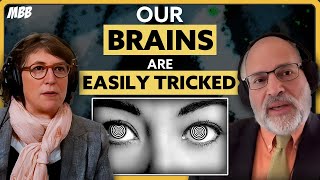
The Illusion of Knowledge: Discussion of studies showing that humans conflate access to information (via the internet) with actually knowing it. This leads to overconfidence (related to Dunning-Kruger effect) where people feel they understand topics after brief exposure, despite retaining little.
Storytelling Risks: Moss highlights the difficulty of storytelling in comedy compared to joke-telling. If a story loses the audience due to missing context, the comedian cannot 'reload' like they can with a punchline, leading to a 'lost' room.
Bay Area Psychedelic History: The conversation touches on Alexander Shulgin, a chemist who tested over 1,000 new psychedelics on himself before sharing them with friends, emphasizing a culture of personal accountability in early psychedelic research.
Notable quotes 5AI-generated: wording and quote attribution may be wrong. Use the play link to verify.
“I would enjoy celebrities so much more if it was for intelligent people providing information.”
▶ 6:08Shane Moss expressing his preference for intellectual celebrity culture over fame-based recognition.
“Microdosing... is like taking a cruise to visit places or just going and living in a place... I wouldn't even say it's cruise level. I'd say it's looking at a couple pictures and thinking that you know Barcelona now.”
Moss's analogy explaining why he finds microdosing ineffective compared to large-dose experiences.
“Our brains are conflating the ability to access knowledge with already having it. So, what does that mean? When we have the internet in our pockets all of the time, we're all just going to walk around thinking we know everything already because you can look it up.”
▶ 57:54Discussion on how the internet creates an illusion of competence and understanding.
“A lot of your shitty behavior is because you're insecure... You're supposed to question the AI vending machine. You're also supposed to go, why do I need this stuff?”
▶ 50:21Moss critiquing the mindset of tech bros who use microdosing to maintain control rather than gain humility.
“It's like taking a cup to the ocean and you're just like trying to get a cup of water... versus like a sink where it's just dropping and you go and I waited and now I got a full cup.”
▶ 59:23Metaphor for how information overload washes out retention compared to deep learning.
Chapters & Sections (29)▼
0:00Upcoming Comedy Tour Dates and Venueschapter2
2:26Shane Mauss's Evolution as a Comedian
4:39Combining Science and Comedy as a Career
6:01The Power of Intellectual Celebrity Culturechapter1
8:07The Art of Crafting a Themed Comedy Special
11:37The Inner Monologue and Comedy Connectionchapter2
12:54Creating Immersive Live Shows with Visuals
14:36The Creative Process of Visual Artists
16:30Visual Imagery and Inner Monologue Spectrumchapter1
19:24Loss of Smell and Taste During COVID
21:38Relearning Smell and Brain Functionchapter1
23:50The Risks and Challenges of Psychedelic Performance
26:35The Struggle with Performance and Creativitychapter1
28:46Psychedelic Experiences and Creative Process
30:52The Importance of Self-Experimentation in Sciencechapter1
32:47Psychedelic Culture in the Bay Area
35:51Language Learning with Babelchapter1
38:22Psychedelic Experiences in the 1960s
40:49Critique of Microdosing Culture and NA Beerschapter1
43:10The Frustration with Modern Vending Machines
46:16AI Vending Machines and Human Interactionchapter2
47:54The Overemphasis on Personal Gain in Tech
49:24The Dark Side of Social Media and Celebrity Culture
51:29Criticizing the Placebo Effect and its Practitionerschapter2
53:09The Limitations of Microdosing and its Effects
54:27The Dunning-Kruger Effect and Human Ego
56:29Conflating Knowledge with Access to Informationchapter2
59:39Overcoming Stage Fright and Finding Comedy Confidence
1:01:56The Evolution of Comedic Style and Subject Matter
 1h 4m⏭ 2
 1h 30m⏭ 3
 1h 9m⏭ 5
 1h 3m⏭ 3
 1h 7m⏭ 2
 1h 9m⏭ 3
 1h 12m⏭ 6
 52m⏭ 3
 58m⏭ 5
 1h 5m⏭ 3
 1h 16m⏭ 2
 1h 3m⏭ 2
 1h 20m⏭ 1
 1h 10m⏭ 4
 1h 40m⏭ 2
 1h 38m⏭ 3
 1h 17m⏭ 2
 1h 59m⏭ 1
 1h 29m⏭ 2
 1h 9m
1h 9m 1h 18m
 2h 52m⏭ 1
 1h 9m⏭ 1
 1h 28m⏭ 1
 53m
53m 1h 0m⏭ 1
 1h 28m⏭ 2
 2h 50m⏭ 3
 50m
50m 11h 23m⏭ 1
 33m
33m 1h 0m⏭ 1
 46m
46m 3h 54m⏭ 7
 48m⏭ 2
 3h 59m⏭ 5
 1h 13m
 1h 16m
 54m⏭ 1
 58m⏭ 5
 24m
24m