About this episodeThe video details the engineering marvel of the Sleipner, the world's largest semi-submersible crane vessel, h…AI summary
The video details the engineering marvel of the Sleipner, the world's largest semi-submersible crane vessel, highlighting its ability to lift 20,000 tons at sea through advanced ballast systems and roller bearing technology. By adapting historical innovations like 16th-century roller bearings and 20th-century free-fall lifeboats, the vessel achieves unprecedented stability and safety for offshore construction. The ship operates as a self-sufficient floating city, powered by LNG and equipped with dynamic positioning to maintain precise locations in harsh ocean conditions.
Key takeaways 6
The Sleipner is a 140,000-ton semi-submersible vessel with two cranes capable of lifting the equivalent weight of the Eiffel Tower (approx. 20,000 tons).
Stability is achieved through a dynamic ballast system: the ship can sink to a draft of 32-36 meters, filling 82 tanks with nearly 190,000 tons of seawater to counterbalance heavy lifts.
The crane rotation mechanism uses the world's largest roller bearing (30m diameter) with 5,000 roller elements, allowing the 9,000-ton crane structure to rotate 360 degrees smoothly in under 2 minutes.
The vessel is an industry first for its size, running on both marine diesel and liquefied natural gas (LNG) stored at -160°C in insulated tanks lined with wood to prevent structural brittleness.
Dynamic positioning systems keep the ship within a 30-50 cm footprint for weeks using GPS and thrusters, essential for precise platform installation.
Safety protocols include nine free-fall lifeboats capable of launching from 55 meters above water, a record height for such launches, protecting crew from fire and debris.
Notable quotes 4AI-generated: wording and quote attribution may be wrong. Use the play link to verify.
“Sailing this ship is different from normal ships. We're one of the widest ships in the world. She's very high. Sometimes we call it an apartment building only. It's a really fast apartment building.”
▶ 2:56Captain Arian Udo describing the unique handling characteristics of the Sleipner compared to traditional vessels.
“Ballasting is controlled sinking. Sinking is something you tend to avoid on a ship. It always gives you a weird feeling.”
Engineer Yurus explaining the counter-intuitive process of sinking the vessel to increase stability for lifting operations.
“The bearing consists of two rings. The lower section is connected to the vessel whilst the top is joined to the bottom of the crane. When the rollers are added, the system allows 360° of rotation.”
Technical Superintendent Yuri Browz explaining how historical roller bearing technology was scaled up to allow massive crane rotation.
“If we have to abandon the ship, yeah, then we are faced with a big problem because getting people off a ship at sea in an ocean is one of the more difficult things that is.”
▶ 33:46Captain Udo highlighting the critical safety challenge of evacuating crew from a deck situated over 35 meters above water.
Chapters & Sections (17)▼
0:04Sleipner Crane Ship Engineering and Operationschapter2
2:34Bridge Operations and LNG Fuel Systems
5:25Crane Dimensions and Maintenance
7:06Engineering Stability for Massive Crane Vesselschapter1
9:48Power Systems and Stability Challenges
12:48Ballast Systems for Crane Stabilitychapter2
15:36Long Henry Ballast Tanks and Stability
17:35Ballast System Mechanics and Operations
22:27Windmill Cap Rotation and Roller Bearingschapter2
24:07Windmill Sail Rotation Mechanics
25:45Historical Roller Bearing Mechanism
28:25World's Largest Crane Ship Roller Bearing Technologychapter1
31:55World Record Lift and Crew Safety Risks
34:13Evolution and Mechanics of Free Fall Lifeboatschapter3
36:22Free Fall Lifeboat Design and Safety
38:35Free Fall Lifeboat Launch Experience
40:52Lifeboat Safety Features and Engineering Pride
 4h 18m
 43m
43m 4h 45m
 42m
42m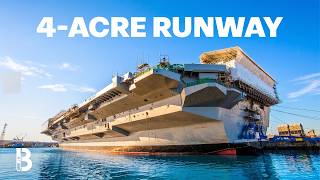 41m
41m 21m
21m 2h 24m
 1h 6m
1h 6m 4h 6m
4h 6m 2h 54m
 1h 44m⏭ 2
 3h 58m⏭ 2
 2h 54m⏭ 1
 1h 37m⏭ 3
 52m⏭ 3
 1h 15m⏭ 2
 2h 23m
 5h 14m⏭ 1
 11h 23m⏭ 1
 33m
33m 3h 54m⏭ 7
 1h 0m⏭ 1
 46m
46m 48m⏭ 2
 1h 16m
 3h 59m⏭ 5
 1h 13m
 25m
25m 25m
25m 45m⏭ 2