About this episodeThe host critiques political commentator Osman Osmanov (Osmanold) for avoiding direct debate, accusing him of …AI summary
The host critiques political commentator Osman Osmanov (Osmanold) for avoiding direct debate, accusing him of using anti-Israel and white nationalist rhetoric as a stepping stone for mainstream political power. The discussion highlights contradictions in Osmanov's identity as a self-proclaimed white nationalist who is Mexican, and contrasts his behavior with the Chabad community's reliance on public welfare, which the host uses to challenge narratives about Muslim dependency.
Key takeaways 5
Osman Osmanov avoids direct debate with the host, citing nervousness and a preference for low-pressure environments like video games, which the host interprets as fear of having his claims dismantled.
Osman Osmanov is identified as a 'Mexican safar' (Spanish-speaking person), creating a contradiction with his self-identification as a leader of the white nationalist movement.
The Chabad Lubavich community in New York is described as having 40% on welfare, 70% on Medicaid, and an average of 6-7 children per household, yet receiving significant public funding for religious study.
The host argues that terms like 'Kafir' (disbeliever) carry more theological weight than racial slurs like the n-word because they relate to a choice of belief rather than an immutable characteristic.
Osman Osmanov is accused of using the 'anti-Israel' or 'anti-semitic' movement as a stepping stone to gain approval from mainstream institutions and political power.
Notable quotes 5AI-generated: wording and quote attribution may be wrong. Use the play link to verify.
“You have no space to call me low IQ when you are running away from a conversation. Like you cannot even have a dialogue with somebody with a differing point of view than yours.”
▶ 0:32Host criticizing Osman Osmanov for avoiding debate while insulting the host's intelligence.
“The leader of the white nationalist movement for Gen Z is a Mexican. That's hilarious. That's funny. That's a lie that needs to be called out.”
▶ 9:46Host pointing out the hypocrisy and contradiction in Osman Osmanov's identity politics.
“God is going to provide money. You don't have to worry about that.”
▶ 22:01A Chabad member explaining their reliance on public benefits and divine provision rather than traditional employment.
“It's the supreme slur because it hits in here. It's a choice. And when you hear it, you are remembering that you're refusing the truth and you're subsisting in your disbelief.”
▶ 18:34Host arguing why 'Kafir' is more impactful than racial slurs due to its theological implication of choice.
“They do everything that the Muslims are accused of. Oh, are you connecting the dots yet? Or is he going to go right back to the same propaganda slop tomorrow?”
▶ 24:20Host challenging the narrative that only specific groups are dependent on welfare, using Chabad as a counter-example.
Chapters & Sections (13)▼
0:00Debate Avoidance and Political Hypocrisychapter3
2:28Personal Attacks and IQ Insults
4:31IQ Insults and Political Hypocrisy
5:56Power Hunger and Political Insecurity
8:12Critique of White Nationalist Hypocrisychapter1
10:52Accusations of Subversion and Hypocrisy
13:55Debate on Kafir vs N-word Slurschapter1
15:52Kafir vs N-word Power Comparison
18:51Chabad Welfare Dependency and Public Benefitschapter4
20:52Reading Hours and Welfare Comparison
21:59Critique of Performative Charity and Divine Reliance
 31m
31m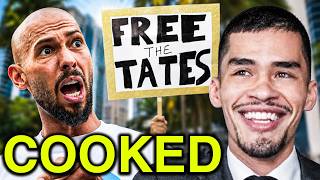 51m⏭ 1
 1h 6m
1h 6m 39m
39m 26m
26m 48m⏭ 2
 47m
47m 1h 45m
 1h 1m
1h 1m 56m
56m 28m⏭ 2
 34m
34m 49m
49m 28m
28m 21m⏭ 2
 1h 48m⏭ 2
 1h 31m⏭ 3
 2h 11m⏭ 4
 3h 0m
3h 0m 1h 50m⏭ 2
 6h 59m
 1h 59m⏭ 5
 3h 2m⏭ 2
 3h 19m
 11h 23m⏭ 1
 1h 0m⏭ 1
 33m
33m 46m
46m 3h 54m⏭ 7
 3h 59m⏭ 5
 1h 13m
 54m⏭ 1
 25m
25m 45m⏭ 2
 1h 16m⏭ 2
 58m⏭ 5