About this episodeMike D discusses his solo album 'Thank You,' exploring how aging and grief transformed his creative process fr…AI summary
Mike D discusses his solo album 'Thank You,' exploring how aging and grief transformed his creative process from chaotic collaboration to intentional, analog-focused production. He reflects on the emotional weight of performing with his children, the psychological impact of wearing uniforms to maintain band cohesion, and the importance of mindfulness in navigating the trauma of his youth.
Key takeaways 6
Aging shifts the creative perspective: Mike D notes that as he gets older, time becomes more precious, leading him to be more honest and less cerebral in his songwriting, comparing his urgency to a senior football player maximizing their limited time on the field.
Analog equipment has personality: The album was largely created using obscure analog synthesizers and outboard gear in a non-climate-controlled studio. Mike D describes these machines as 'alive,' noting that their sound can change overnight without human intervention, requiring a relationship-based approach rather than just technical operation.
Uniforms as psychological tools: Mike D explains that wearing matching uniforms on tour is not just aesthetic but a psychological trigger. It signals 'showing up for work' and creates a collective unit identity, helping the band maintain professionalism and energy even when exhausted.
Grief is non-linear: Mike D shares that his creative block during the years between Beastie Boys projects was due to overwhelming sadness and grief over the loss of Adam Yauch (MCA). He emphasizes that grief does not follow a linear timeline and must be managed alongside daily life responsibilities like parenting.
Democracy vs. Leadership: While the Beastie Boys operated on a democratic veto system, Mike D found freedom in having final decision-making authority for his solo project. He establishes clear guidelines where he makes the final call, allowing collaborators to contribute without the paralysis of consensus.
Mindfulness as survival: Mike D reveals that he began practicing yoga and meditation around the time of Ill Communication to cope with the high attrition rate of friends dying from drugs and the AIDS epidemic in New York. This practice helped him understand his nervous system and survive the trauma of his youth.
Notable quotes 5AI-generated: wording and quote attribution may be wrong. Use the play link to verify.
“When they do start the seniors league... I'm in training right now for that... What Michael Diaria is saying is there is that who has time for this? Who has time to be sitting around questioning whether or not you have something to say when you know you've got something that needs to come out.”
▶ 6:06Mike D uses a football analogy to explain how aging creates urgency in creativity, leading to the concept of 'verbal diarrhea' as a necessary release.
“It is those those pieces of equipment um are alive and they are already firing and all you got to do is just check in and they may decide to work with you, they may decide not to work with you. A lot of times not like or very often.”
▶ 12:25Describing the unpredictable nature of analog synthesizers and outboard gear used in the studio.
“It's like superman goes and puts on the cape. Yes. You know, got ready for war. They let's go.”
Explaining the psychological effect of wearing uniforms before going on stage.
“Grief doesn't operate on this very linear timeline... It's not like it parks itself while you grieve. It's like, oh no, it's like, oh, that's why people say when it rains, it pours. It's like, are you kidding me? Well, it's like life is going to do that anyway. It's just you got to deal with this at the same time.”
Reflecting on how he managed grief over Adam Yauch while raising children and working.
“The Beastie Boys kind of raised us like our family gave birth to us... But with that came trauma and old learnings... The Beastie Boys was this kind of pure mature relationship... You gave us the freedom to make our own decisions... And that kind of gave us the chance to make decisions ourselves.”
The host reflecting on how the band served as a mentorship figure for fans.
Chapters & Sections (27)▼
0:00Music Appreciation and Creative Originschapter2
1:54Wu-Tang Clan Contacting Game
3:12Analyzing Thank You's Raw Musical Truth
4:38Aging, Time, and Creative Processchapter3
6:18Aging, Time, and Notebook Writing
7:51Studio Ambush and Rehearsal Chaos
10:20Analog Synthesizers and Tactile Music Creation
12:34Studio Workflow and Live Performance Reflectionschapter4
14:28Arp 2600 YouTube Video and Live Performance
16:33Unannounced Malibu Surf Shop Performance
19:15Collaborative Music Creation and Trust
20:56Uniforms and Collective Band Identity
22:29Interviewing Beastie Boys and Sports Fandomchapter2
24:03Interviewing Beastie Boys and Sports Fandom
25:44Beastie Boys Interviewing Style and Bagel Talk
28:26Navigating Grief and Creative Blockchapter2
30:09Grief and Loss Impacting Music Creation
31:47Grief, Parenting, and Personal Growth
34:48Creative Freedom and Family Collaborationchapter3
37:06Creative Leadership and Family Dynamics
39:15Performing Live with Family Band
43:39Prince's Musical Genius and Spiritual Retreats
46:12Yoga, Trauma, and Creative Growthchapter1
48:24Nervous System Awareness and Creative Tools
51:39Influence of Beastie Boys and New York Music Scenechapter2
 1h 8m
1h 8m 40m
40m 45m
45m 58m
58m 58m
58m 59m
59m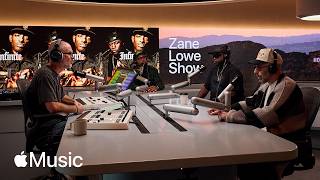 46m
46m 47m
47m 43m
43m 45m
45m 44m
44m 58m
58m 1h 59m⏭ 1
 1h 29m⏭ 2
 1h 9m
1h 9m 1h 18m
 2h 52m⏭ 1
 1h 9m⏭ 1
 1h 32m
 2h 30m⏭ 1
 1h 42m
 1h 49m⏭ 2
 1h 9m⏭ 1
 2h 41m⏭ 1
 1h 0m⏭ 1
 33m
33m 46m
46m 3h 54m⏭ 7
 3h 59m⏭ 5
 54m⏭ 1
 1h 13m
 54m⏭ 2
 58m⏭ 5
 1h 16m⏭ 2
 45m⏭ 2
 1h 26m