About this episodeSimon Hellberg discusses his journey from theater roots and anxiety struggles to his 11-year role on The Big B…AI summary
Simon Hellberg discusses his journey from theater roots and anxiety struggles to his 11-year role on The Big Bang Theory, highlighting the industry's shift from hopeful tech culture to the darker themes of his new show The Audacity. He shares personal anecdotes about navigating parenthood during the pandemic, overcoming panic attacks through therapy and medication, and the unique challenges of co-directing a film with his wife Jocelyn. The conversation underscores the value of artistic fluidity and the importance of mental health support in high-pressure entertainment careers.
Key takeaways 5
The entertainment industry's cultural perception has shifted from the optimistic tech-bro era of The Big Bang Theory/Silicon Valley to the cynical, ego-driven themes of modern prestige TV like The Audacity.
Simon Hellberg overcame crippling anxiety and panic attacks during his rise to fame by utilizing therapy and medication, though he notes the fear that medication might dull the emotional sensitivity required for acting.
Hellberg experienced significant creative freedom and experimentation after 11 years on a long-running show, allowing him to treat acting as a low-stakes playground for experimentation (e.g., humming Pixie songs during scenes).
The pandemic created a unique 'end of days' atmosphere for new parents, with Simon and his husband experiencing a chaotic but memorable birth in Las Vegas while navigating hospital protocols for same-sex intended parents.
Hellberg's early career was heavily influenced by his father's involvement in the original Groundlings improv scene, connecting him with legends like Phil Hartman and Paul Reubens.
Notable quotes 5AI-generated: wording and quote attribution may be wrong. Use the play link to verify.
“I felt very very content ending at that point... it was a natural ending too in the sense that we weren't renewed like it we weren't picked up and it was kind of um it was only as the season ended that they started even talking about more right but they had never talked to us so it was a little bit funny in that sense.”
▶ 8:20Reflecting on the conclusion of The Big Bang Theory after 11 years, noting the lack of renewal discussions until the very end.
“I'm going to try like I I'm just so like dorkked out about acting that I'm like, oh, I this this will be fun to come in and like have a job where I feel like there are no stakes because I've been doing it for so long that I've finally gotten over like my crippling anxiety and I can just be like, 'What happens if I hum a pixie song in my head while I'm doing this scene?' Turns out not that much.”
▶ 24:00Describing his post-Big Bang approach to acting, where he feels free to experiment without the pressure of maintaining a specific character image.
“It's like it's sort of an alternate universe from Big Bang Theory... it's like the dark underbelly. It's about ego. It's about loneliness. It's about wealth. And like really the loneliness that that that super intelligent mind sometimes requires in order to to work.”
▶ 31:41Comparing his new show The Audacity to his previous work, highlighting the shift from charming neurosis to darker themes of wealth and isolation.
“I remember just flash flashes of this moment but like I remember like being in a vestigle of like a building trying to just like catch my breath and like like hyperventilating and someone coming up to me asking if they needed to call an ambulance and I was like freaked out to turn around Justin was with me but I was kind of running way cuz he was also like dealing with like he was trying to settle the bill and I was like trying to get out of there and like I ended up running and he couldn't find me.”
▶ 27:09Recalling a severe panic attack during Gay Pride in New York City, illustrating the intensity of his anxiety struggles.
“I love being in somebody's like painting, you know? I love I love that. I mean that's I guess what you always want to do, but sometimes you can feel it more... sometimes you can feel less of the machine and more of the person, right? And this is like a and the the cast is unreal... it's just um and it's a lot of funny people doing sort of deeper stuff.”
▶ 33:23Expressing his appreciation for working on The Audacity due to its singular creative voice (Jonathan Glader) compared to the more industrial feel of network TV.
Chapters & Sections (18)▼
0:00Pregnancy and Birth During the Pandemicchapter2
2:06Pandemic Bar Adaptations and Non-Alcoholic Drinks
3:27Pandemic Birth and Surrogacy Experience
5:21Big Bang Ending and Pandemic Lockdownchapter1
8:02Big Bang Theory Ending and Production
9:57Big Bang Theory Pilot Changes and Industry Lifechapter1
11:50Growing Up in Hollywood Industry Families
14:38Early Friendship and Theater Rootschapter4
16:20College Theater and Groundlings Influence
18:59Theater Roots and Hollywood Perception
22:33Acting Career Growth and Typecasting
24:00Acting Anxiety and Mental Health Struggles
25:57Anxiety, Panic Attacks, and Music Memorieschapter1
28:26Silver Lake Feist CD Lucy Punch Chair
30:52Contrasting Big Bang Theory and The Audacitychapter3
33:14Appreciating Succession and Meeting Joselyn
35:13Directing a film about a past relationship
36:45Directing Challenges and Walkie-Talkie Criticism
Transcript
Potential ad segments detected:
BETA
Loading transcript...
More from Dinner's On Me with Jesse Tyler Ferguson
 42m
42m 38m
38m 34m
34m 37m
37m 36m
36m 42m
42m 45m⏭ 1
 34m
34m 34m
34m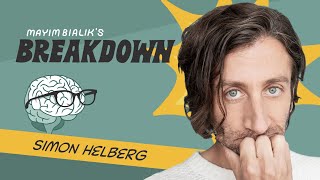
 1h 20m
 2h 35m⏭ 2
 1h 0m
1h 0m 32m
32m 40m
40m 1h 10m
 1h 14m⏭ 1
 2h 42m
 1h 31m
 2h 14m
 1h 11m⏭ 2
 1h 19m⏭ 1
 1h 0m⏭ 1
 33m
33m 3h 59m⏭ 5
 46m
46m 3h 54m⏭ 7
 54m⏭ 1
 1h 13m
 9h 11m
 1h 26m
 54m⏭ 2
 6h 26m
 58m⏭ 5