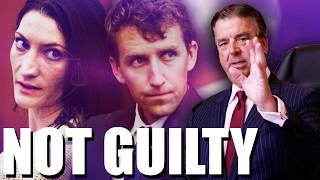
About this episodeThe video analyzes the Lindsay Clancy trial, focusing on the legal distinction between murder and a Not Guilty…AI summary
The video analyzes the Lindsay Clancy trial, focusing on the legal distinction between murder and a Not Guilty by Reason of Mental Illness (NGRI) verdict, highlighting that the core issue is criminal responsibility rather than the act itself. It warns true crime commentators about severe defamation risks when publishing conspiracy theories without evidence, citing a $10 million judgment against an Idaho psychic. The hosts dissect trial strategies, expert testimony credibility, and the procedural implications of prosecutorial misconduct regarding religious references.
Key takeaways 6
Legal Definition of NGRI: A verdict of Not Guilty by Reason of Mental Illness does not result in freedom; the defendant is committed to a mental hospital indefinitely until deemed safe, creating a lifelong 'mentally ill and dangerous' designation.
Defamation Risk for Commentators: Publishing false conspiracy theories about active cases can lead to massive defamation lawsuits. The Idaho 4 case resulted in a $10 million judgment against a psychic who falsely accused a professor.
Jury Deliberation Indicators: The specific evidence jurors request to view (pills and the knife used for self-harm) signals they are focusing on the defense's mental health argument, suggesting a potential NGRI lean.
Expert Witness Credibility: Board certification (like Bruce Rivers') indicates peer-reviewed competency, but forensic experts like Dr. Lindsey Thomas are valued because they follow the science rather than being hired guns for either side.
Prosecutorial Misconduct Risks: If the prosecution introduces prohibited evidence (like Catholic dogma/mortal sin) despite judicial warnings, it can lead to a mistrial. A mistrial caused by the prosecution results in a dismissal with prejudice, meaning the case cannot be retried.
Burden of Proof Shift: In NGRI cases, once the defense raises the issue, the burden shifts to the prosecution to prove beyond a reasonable doubt that the defendant was NOT suffering from a mental disease at the time of the crime.
Notable quotes 5AI-generated: wording and quote attribution may be wrong. Use the play link to verify.
“If she's criminally responsible, it's murder one. There's just no question. It's murder one.”
▶ 0:16Host explaining that if the jury rejects the mental illness defense, the facts of strangling three children constitute first-degree murder.
“If you're found not guilty by reason of mental illness, you don't just walk away... she's committed and goes to a hospital... it's a lifelong distinction.”
▶ 2:26Guest Bruce Rivers clarifying the misconception that NGRI equals freedom, comparing it to John Hinckley Jr.'s 30-year institutionalization.
“She got sued and she got a judgment against her for 10 million. You can do this all you want, but you do it at your peril.”
▶ 16:05Warning to true crime content creators about the financial and legal dangers of spreading unproven conspiracy theories.
“If the prosecution causes a mistrial... it's game over. Not guilty. And it's not guilty by reason mental illness. It's not guilty. It's like, okay, case dismissed. And guess what? With prejudice, you can't bring it up again.”
▶ 26:21Explaining the severe consequence for prosecutors who ignore judicial orders regarding prohibited testimony.
“The government has the burden of proof... prove number two that Lindsay at the time killed her children was not suffering from a mental disease.”
▶ 39:08Defense attorney explaining how the burden of proof shifts in insanity defense cases.
Chapters & Sections (23)▼
0:00Lindsay Clancy Trial Verdict Analysischapter2
2:45Lawyer Introduction and Sponsorship
5:52Mental Illness Verdict Consequences
7:47NGRI Verdict Analysis and Legal Implicationschapter1
11:27Witness Credibility and NGRI System
14:12Legal Risks of True Crime Conspiracy Theorieschapter1
17:22Defamation Risks of Social Media Theories
20:00Concealment, Control, and Expert Testimony Analysischapter1
21:48Expert Witness Bias and Control Analysis
25:48Mistrial Risk and Closing Argumentschapter1
29:26Closing Arguments and Postpartum Defense
31:22Jury Instructions and Civic Dutychapter1
33:46Jury Instructions and Closing Arguments
36:44Mental Illness Defense and Burden of Proofchapter2
39:08Burden of Proof in Mental Illness Defense
40:58Nurse Ethics and Child Homicide Context
42:33Mental Illness Defense vs. Conscious Choicechapter2
44:05Mother's Conscious Choice to Kill Children
45:40Mental Illness Defense Compulsion Analysis
47:30Jury Deliberations and Mental Health Defensechapter3


 59m
59m 1h 28m⏭ 2
 1h 14m
 1h 42m
 1h 23m⏭ 3
 2h 45m
 47m
47m 2h 15m
 1h 0m
1h 0m 2h 58m
 2h 43m
 11h 54m
 11h 23m⏭ 1
 33m
33m 3h 54m⏭ 7
 1h 0m⏭ 1
 46m
46m 48m⏭ 2
 1h 16m
 3h 59m⏭ 5
 1h 13m
 25m
25m 54m⏭ 1
 58m⏭ 5