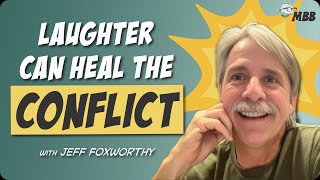
About this episodeComedian Jeff Foxworthy discusses his return to stand-up comedy, emphasizing the importance of showing the cre…AI summary
Comedian Jeff Foxworthy discusses his return to stand-up comedy, emphasizing the importance of showing the creative process rather than just the polished product. He shares deep reflections on managing ego, prioritizing family over fame, and using humor to bridge cultural divides, while warning against the loss of human creativity in the age of AI.
Key takeaways 6
Comedy as a universal connector: Foxworthy argues that despite regional or political differences, people share fundamental desires for love, significance, and entertainment. His 'Redneck' and 'Ghetto' specials succeeded because they highlighted shared human quirks rather than dividing people.
The 'Lava Lamp' career model: Citing Kenny Rogers, Foxworthy advises performers to heat up, cool off, and heat up again. Staying in the spotlight too long burns you out and makes audiences tired; stepping away preserves longevity.
Trust is fragile and binary: Foxworthy compares trust to a cup of coffee—it is earned drop by drop but lost all at once if spilled. This perspective drove his decision to fly home nightly during tours to maintain family bonds, avoiding the 'lonely hotel room' trap that ruined many peers.
Wisdom through observation: Having a father who abandoned the family taught Foxworthy what not to do. He actively chose to be present for his children, resulting in adult children who call daily, which he defines as true success.
AI threatens human creativity: Foxworthy warns against using AI to write jokes. He believes creativity relies on instinct and gut feeling, and outsourcing this to machines strips away the unique human element that makes comedy authentic.
Media polarization vs. reality: Foxworthy distinguishes between a divided media landscape and a unified public. He notes that while TV news creates conflict for ratings, real-world audiences at his shows are diverse and united by laughter.
Notable quotes 5AI-generated: wording and quote attribution may be wrong. Use the play link to verify.
“Trust is kind of like a cup of coffee. You earn it a drop at a time, but when you lose it, it's like somebody turns that cup, it goes it all goes away at one time.”
▶ 0:12Foxworthy explains how his father's infidelity shaped his view on trust, leading him to prioritize family consistency over career convenience.
“The best career in show business is like a lava lamp. Is you heat up for a while and then you go away and you cool off and then you come back and you heat up. Because when it's hot, if you stay there too long, it'll burn you up and people get tired of you.”
▶ 20:43Foxworthy shares advice from Kenny Rogers about pacing one's career to avoid burnout and audience fatigue.
“I don't want to be put in a box... Don't tell me what I think. That's what I get mad about. Don't tell me who I dislike, who I'm prejudiced against. I'm like, you don't know me.”
▶ 14:47Foxworthy rejects political labeling, arguing that individuals are complex and shouldn't be defined by media stereotypes or party lines.
“It was always it it was never laughing at somebody. It was laughing with them.”
▶ 1:01:12Foxworthy explains the core philosophy behind his 'Redneck' comedy: identifying with the subject rather than mocking them from a position of superiority.
“The number one gre ingredient in creativity is instinct. It's tr trust in your gut. And when you go to AI, you give your instinct away.”
▶ 1:04:31Foxworthy argues that relying on AI for creative work destroys the human instinct that is essential for authentic comedy.
 1h 5m
1h 5m 50m
50m 1h 5m
1h 5m 1h 16m⏭ 2
 1h 9m
1h 9m 1h 16m
 33m
33m 1h 2m
1h 2m 58m
58m 1h 42m
 1h 4m
1h 4m 1h 0m
1h 0m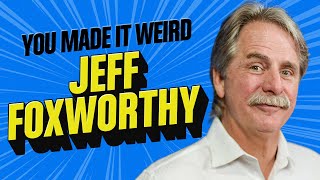

 1h 16m
 3h 57m⏭ 3
 1h 37m
 5h 25m⏭ 3
 1h 47m
 1h 3m⏭ 2
 1h 22m⏭ 2
 1h 18m⏭ 4
 1h 47m
 2h 51m⏭ 2
 1h 8m
1h 8m 2h 52m⏭ 3
 11h 23m⏭ 1
 33m
33m 1h 0m⏭ 1
 46m
46m 3h 54m⏭ 7
 48m⏭ 2
 3h 59m⏭ 5
 1h 13m
 38m
38m 54m⏭ 2
 54m⏭ 1
 58m⏭ 5