About this episodeThe guest defines Judaism as a 'religious family' rather than a race or religion, explaining that identity is …AI summary
The guest defines Judaism as a 'religious family' rather than a race or religion, explaining that identity is determined by maternal lineage or conversion and cannot be renounced. The discussion contrasts the Jewish concept of 'chosenness' as a universal mission with Christian exclusivity, while interpreting biblical violence and the problem of evil through a non-literalist, historical lens.
Key takeaways 7
Judaism is best understood as a 'religious family' that predates Western concepts of race and religion; one is born into it or joins it, but cannot truly leave, similar to family ties.
Maternal lineage determines Jewish status traditionally because the mother is always known, whereas patrilineal descent was adopted by Reform Judaism for mixed households.
The 'Chosen People' concept refers to a specific mission and responsibility in the world, not racial superiority; other nations also have special missions.
The guest interprets biblical commands for violence (e.g., against Canaanites) as ancient human projections of their desires onto God, rather than literal divine commands.
Unjust suffering exists to preserve moral autonomy; if good deeds were guaranteed rewards and bad deeds guaranteed punishment, morality would be transactional rather than genuine.
Christianity's lack of civil legislation in its founding (due to the Roman Empire) made it more portable and internal compared to Judaism's integrated civil/religious law.
Christopher Hitchens used rhetorical charm to mask weak arguments, particularly on free will, where he claimed we have no choice but to have it.
Notable quotes 4AI-generated: wording and quote attribution may be wrong. Use the play link to verify.
“It's not a race because you can't convert to be a race. It's not a religion because there are Jews who are not religious but they're still Jews.”
▶ 0:30Defining the unique nature of Jewish identity that defies Western categorization.
“The only way to be morally good is to not know what's going to happen to you even though you're morally good... The only worthy explanation that I know of is what's basically called dis teologico... suffering for no reason.”
▶ 45:54Explaining the theological justification for unjust suffering and the necessity of free will.
“The most morally corrupting thing in the world is friendship... It's your friends that end up upending you.”
▶ 1:14:14Reflecting on why Christopher Hitchens could not criticize Israel despite his political stance, due to his personal friendships with Palestinians.
“God says to job at a certain point your friends have not spoken the truth about me as you have... The truth that job spoke is I didn't deserve to suffer... God says you were right and they were wrong.”
▶ 42:39Interpreting the Book of Job as validating the reality of unjust suffering rather than dismissing it.
Chapters & Sections (55)▼
0:00Defining Judaism Beyond Western Conceptschapter3
0:00Defining Judaism as a Concept
1:50Jewish Conversion and Legal Principles
3:18Judaism as Ethnicity vs. Religion
5:11Jewish Identity and Maternal Lineage Explainedchapter3
5:11Jewish Identity and Maternal Lineage
6:53Jewish Conversion and Lineage Discussion
8:42Jewish Conversion and Child Inheritance Traditions
12:15Judaism's Unique Identity and Confusionchapter3
12:15Judaism's Definition and Confusion
14:08Judaism vs Christianity: Universal vs Connected
15:37Judaism and the Concept of the Chosen People
17:31Chosen People Concept and Cultural Hubrischapter2
17:31Chosen People Concept in Judaism and Christianity
19:29Becoming a Jew as a Choice
22:23Comparing Christianity and Judaism's Chosen People Conceptchapter2
22:23Comparing Christianity and Judaism
24:06Ancient Israelites' Interpretation of Their Mandate
26:34Bible Interpretation and Human Understandingchapter2
26:34Biblical Interpretation and Human Understanding
29:34Ancient People's Beliefs and God's Will
30:53Interpretation of Scripture and Human Motivationschapter2
30:53Interpretation of Scripture and Human Motivations
33:25Interpreting the Hebrew Bible's Moral Commands
35:43Hebrew Bible Composition and Genrechapter2
35:43Hebrew Bible Composition and Genre
38:12Interpreting Historical Texts and Literalism
40:03Job's Bet with Satan and Divine Retributionchapter2
40:03Job's Bet with Satan and Divine Retribution
41:45Biblical Perspective on Suffering and Justice
44:35The Problem of Unjust Suffering in Judaismchapter3
44:35The Problem of Unjust Suffering in Judaism
46:06The Problem of Unjust Suffering in the World
47:29Philosophy of Suffering and Afterlife
49:34Afterlife Significance and Personal Viewschapter2
49:34Afterlife Significance and Physical Resurrection
51:21Mourning and the Concept of Death
53:59Death and the Uncanny Nature of Lifechapter3
53:59Death and the Uncanny Nature of Life
56:18Jesus and Jewish Tradition
58:03Jesus' Teachings and Moral Character
59:58Christianity and Jewish Day School Experiencechapter3
59:58Christianity and Jewish Day School Experience
1:01:47Jewish Customs and Christian Observance
1:03:17Circumcision Criticism in Judaism
1:04:39Circumcision Debate and Religious Imperativechapter2
1:04:39Circumcision Debate and Moral Implications
1:06:49Circumcision and Conversion in Judaism
1:09:03Debating Christopher Hitchens on Free Willchapter2
1:09:03Christopher Hitchens Debate Experience
1:11:13Christopher Hitchens' Debate Style and Personal Life
1:13:51Friendship and Moral Corruptionchapter3
1:13:51The Impact of Friendship on Moral Decisions
1:15:47The Power of Friendship and Corruption
1:17:13Personal Anecdotes about Christopher Hitchens
 1h 36m⏭ 2
 1h 47m⏭ 1
 1h 36m⏭ 3
 1h 44m⏭ 1
 1h 40m⏭ 1
 2h 24m
 1h 31m⏭ 1
 1h 42m
 2h 1m⏭ 1
 2h 9m
2h 9m 2h 6m⏭ 1
 21m⏭ 1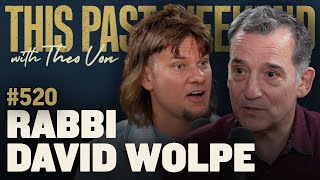
 1h 46m⏭ 5
 1h 19m⏭ 1
 1h 31m⏭ 1
 1h 36m⏭ 2
 1h 33m⏭ 2
 2h 47m
 1h 59m
 2h 10m
 1h 57m⏭ 2
 3h 18m⏭ 1
 1h 25m⏭ 1
 2h 57m
 1h 0m⏭ 1
 33m
33m 3h 59m⏭ 5
 54m⏭ 1
 3h 54m⏭ 7
 46m
46m 54m⏭ 2
 9h 11m
 1h 26m
 1h 13m
 6h 26m
 1h 16m⏭ 2