About this episodeThe host and guest analyze Lil Durk's federal trial, arguing that his emotional trauma over King Von's death a…AI summary
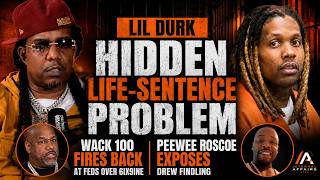
The host and guest analyze Lil Durk's federal trial, arguing that his emotional trauma over King Von's death and poor strategic decisions regarding media interactions (specifically with Academics and Tekashi 6ix9ine) compromised his legal defense. They emphasize that Durk must testify to counter the narrative presented by cooperating witnesses like F-Jam, while also discussing the broader cultural implications of gang culture in hip-hop through the lens of Pusha T's legal issues.
Key takeaways 5
Durk's decision to sit for a three-hour interview with Academics allowed prosecutors to use the content as evidence that he was aware of and engaged with the 'Slide for Von' campaign, which the government argues motivated the alleged crime.
The guest argues that Durk made a critical error by taking 'street ball' rules into a federal jurisdiction (Beverly Hills/LA), where the 'refs' (judges/prosecutors) do not allow the same leeway as in Chicago, leading to harsher scrutiny.
Witness F-Jam is expected to testify that he was recruited by Boon Mo specifically to carry out the hit because he felt excluded from other opportunities, and that Durk gave him $50,000 in the song 'Back Again' as a show of loyalty/retainer.
The guest compares Durk's situation to Pac's trial, noting that internal betrayal is often more dangerous than external enemies, and that having too many people involved in a crime increases the risk of someone folding under pressure.
Pusha T's recent legal troubles are discussed as a result of contract disputes and perceived disrespect, with the guest suggesting that his actions were driven by a need to protect his reputation and financial interests, similar to how street dynamics operate.
Notable quotes 5AI-generated: wording and quote attribution may be wrong. Use the play link to verify.
“You got too many dudes knowing too much stuff, man. Somebody can break down at any moment just for the hell of it and start giving up information.”
▶ 0:22Guest explaining why having multiple conspirators is a strategic liability in criminal operations.
“Durk should have drew the line as a street. You got to draw the line. Even when he was dissing Little Baby Savage... they want this rap [__] so bad that they'll deal with that level of [__] because in the street a cut a [__] off for way less than that.”
▶ 1:54Guest criticizing Durk for allowing Academics to fuel conflict online, which escalated the situation beyond typical street beefs.
“Evidence doesn't tell a story. And some of these people tell stories for a living. So I believe that what they're doing is opening statements sometimes when they come out.”
▶ 17:05Guest discussing how media coverage and documentaries function as de facto opening statements for the prosecution in the court of public opinion.
“He got to get up there and testify, homie. You know what I mean? You got to do because here go the whole key. They been doing [__] and committing crimes. If they love, they went and done that on. I let people use my credit card all the time. I don't got nothing to do with them.”
▶ 42:23Guest advising Durk on his trial strategy: he must take the stand to present his own narrative and counter the testimony of cooperating witnesses.
“The wolves will attack my protected by God and I ain't told no lies. You notice none of these are stand on the podium and say I built this myself. None of my homeboys gave me nothing.”
▶ 4:16Quote from Tekashi 6ix9ine used by the host to illustrate the disconnect between internet personas and street reality.
Chapters & Sections (41)▼
0:00Lil Durk Trial and Media Impactchapter2
2:53Lil Durk Trial and Inner City Respect
4:38Lil Durk Trial Street Ball Context
6:13Lil Durk's Emotional Trauma and Media Responsibilitychapter1
9:05Akademiks Fueling Tekashi69 Conflict
11:56Tekashi 6ix9ine's Comeback and Durk Trial Coveragechapter1
15:05Jury Selection and Media Bias Critique
17:48Durk Hearing: Wack 100 Podcast & Jam Testimonychapter2
19:53Wack 100 Podcast Impact on Durk
21:33Jam Testimony: Federal Freestyle & Hitting
23:30Courtroom Interference and Trial Updateschapter1
25:41Courtroom Harassment and Free Durk Pressure
28:46Lil Durk Trial Strategy and Internal Betrayalchapter1
30:58Lil Durk Trial Mistakes and Internet Impact
35:22Street Logic, Informants, and Legal Defensechapter3
37:37Federal Traps and Lone Operative Strategy
39:07Managing Informants and Legal Defense Strategies
41:04Lil Durk Testimony and Legal Strategy
43:01Media Disrespect and Street Loyaltychapter1
45:31Navigating Power and Street Loyalty
47:54Gang Violence Dangers and Internal Betrayalchapter4
50:19Internal Betrayal and Forced Affiliations
51:50Silence and Action Over Verbal Conflict
53:20Legal Immunity and Trial Strategy
56:13Desperation and Lack of Hustle
57:26Podcast Industry Business and Poo Shiesty Album Successchapter1
59:41Podcast Industry Profit and Poo Shiesty Chart Success
1:02:09Pusha T Legal Strategy and Political Influencechapter1
1:04:48Pusha T's Economic Value and Legal Defense
1:07:32Gang Violence Legal Analysis and Media Commercializationchapter2
1:09:31Media Commercialization of Gang Culture
1:11:21Snoop Dogg Super Bowl Gang Culture
1:13:49Street Rep, Contracts, and Regional Violencechapter4
1:16:46Teaching vs Beating: YoungBoy vs Pooh Shiesty
1:18:44Contract Disrespect and Street Boss Mindset
1:20:30Lil Durk's Gangster Mindset and Legal Pressure
1:22:48Critiquing Akademiks' Influence on Lil Durk
1:24:39Critique of Media Exploitation and Hip Hop Integritychapter3
 1h 13m⏭ 1
 1h 14m⏭ 1
 2h 40m
 47m
47m 53m
53m 1h 51m⏭ 3
 1h 28m
 2h 43m
 1h 32m
 2h 31m
 3h 26m
 2h 13m
 1h 49m
 1h 53m
 36m
36m 11h 54m⏭ 8
 11h 54m
 11h 54m
 2h 6m
2h 6m 2h 30m
 2h 24m⏭ 1
 1h 0m⏭ 1
 33m
33m 46m
46m 3h 59m⏭ 5
 3h 54m⏭ 7
 54m⏭ 1
 1h 13m
 54m⏭ 2
 1h 26m
 45m⏭ 2
 58m⏭ 5
 25m
25m