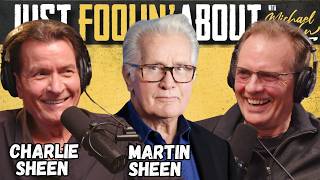
About this episodeMartin Sheen discusses his new podcast, his regret over changing his birth name due to 1950s industry prejudic…AI summary
Martin Sheen discusses his new podcast, his regret over changing his birth name due to 1950s industry prejudice, and his spiritual awakening in Paris. He provides behind-the-scenes insights into his iconic roles in Badlands, The West Wing, and The Departed, emphasizing the importance of personal authenticity in art and community in activism.
Key takeaways 5
Sheen regrets changing his name from Ramon Estevez to Martin Sheen, citing 1950s anti-Puerto Rican prejudice as the reason, and actively encouraged his son Emilio to keep the Estevez name.
His spiritual return to Catholicism was triggered by reading Dostoevsky's The Brothers Karamazov in Paris (1981), guided by director Terrence Malik.
Sheen insists that art must be personal to have value; if it is not personal, it is impersonal and irrelevant.
He views current political trends as fascist/authoritarian and believes citizens must remain vigilant against the militarization of domestic spaces.
On The West Wing, Sheen negotiated for the President to be Catholic and a Notre Dame graduate to ensure moral decision-making frameworks were central to the character.
Notable quotes 5AI-generated: wording and quote attribution may be wrong. Use the play link to verify.
“We are here to walk each other home.”
▶ 19:30Sheen's fundamental philosophy on human connection and community, referenced multiple times.
“If something's not personal, it's impersonal. And who cares?”
▶ 15:12Explaining his approach to storytelling in his podcast and acting career.
“It's fascism. It's authoritarianism. It's something that we've seen it before... but we've got to call it what it is.”
▶ 22:34Sheen's description of current political climate and militarization of US cities.
“My greatest fear is that I would not be worthy of my suffering... we had to learn to be worthy of our suffering.”
▶ 30:09Referencing Viktor Frankl's Man's Search for Meaning as a profound influence on his life.
“When I did it my way, it was Martin. When I did it Aaron's way, it was Bartlett.”
▶ 58:04Sheen describing how he learned to trust Aaron Sorkin's writing on The West Wing.
Chapters & Sections (83)▼
00:00Josh Interviews Martin Sheen on Happy Sad Confusedchapter3
00:00Josh's Podcast Interview with Martin Sheen
00:44Breakfast Club Reunion Backstory Shared
01:31Meeting the Estas Clan and Podcasting
02:15Martin Sheen Podcast Review and Interviewchapter2
02:15Martin Sheen Podcast Discussion and Review
03:18Artist and Activist Career Discussion
04:22Martin Sheen Interview on Podcastchapter2
04:22Interview with Martin Sheen on Podcast
05:15Josh Expresses Gratitude to Family
05:50Martin Sheen Discusses His Public Imagechapter3
05:50Conversation about Public Perception and Nicknames
06:30Martin Sheen's Presidential Image Burden
06:59Debunking the Ideal of Public Figures
07:40Regret Over Name Change in Early Careerchapter3
07:40Discussion about Name Change and Regret
08:26Actor's Experience with Prejudice in New York
09:39Regretting a Name Change Decision
10:19Martin Sheen's Son Keeps His Stage Namechapter1
10:19Martin Sheen's Son Keeps His Stage Name
12:04Martin Sheen's Podcast Inspirationchapter
13:41The Inspiration Behind the Podcastchapter
16:38Nostalgic Storytelling and Radio's Timeless Appealchapter2
16:38Nostalgic Storytelling and Radio Influence
17:50Providing Comfort in Chaotic Times
18:20Importance of Social Justice and Personal Responsibilitychapter
21:25Warning Signs of Fascism in Modern Societychapter2
21:25Concerns about Military Presence in Streets
22:16Authoritarianism and Fascism in Plain Sight
23:15Martin Sheen Discusses Career and Influenceschapter2
23:15Discussion on Rights and Patriotism
23:57Early Acting Career and Influences Discussed
24:57Friendship and Early Days with Alchapter2
24:57Sharing Memories of a Late Actor
25:47Friendship and Shared Life Experiences
26:40Al Pacino's Early Struggles and Friendshipchapter
28:24Memories of Working at a Theaterchapter1
28:24Memories of Working at a Theater
29:58Surviving Auschwitz and Finding Meaningchapter
32:02Terrence Malick's Early Work and Collaborationschapter
34:07Audition for Film Role with Casting Directorchapter2
 48m⏭ 1
 47m
47m 57m⏭ 2
 44m⏭ 1
 51m⏭ 1
 57m⏭ 1
 50m⏭ 3
 45m⏭ 2
 59m⏭ 2
 53m⏭ 2
 1h 0m⏭ 2
 1h 5m⏭ 3
 2h 46m⏭ 1
 1h 34m
 1h 49m
 1h 36m
 1h 54m⏭ 4
 2h 33m⏭ 2
 1h 26m
 1h 40m
 3h 19m⏭ 1
 1h 55m
 1h 0m
1h 0m 1h 14m
 33m
33m 1h 0m⏭ 1
 11h 54m⏭ 8
 11h 54m
 9h 11m
 6h 26m
 3h 54m⏭ 7
 46m
46m 54m⏭ 1
 3h 59m⏭ 5
 54m⏭ 2
 1h 16m⏭ 2