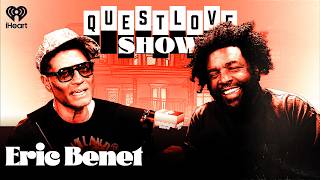
About this episodeThis conversation between Richard Marks and Eric Benet explores the tension between creative freedom and indus…AI summary
This conversation between Richard Marks and Eric Benet explores the tension between creative freedom and industry constraints, highlighting Benet's transition from major label restrictions to independent entrepreneurship. The dialogue emphasizes the importance of authentic self-expression in style and music, while also reflecting on the decline of public reverence for music due to digital accessibility and shortened attention spans.
Key takeaways 5
The 'Pot of Gold' Fallacy: Achieving a record deal is not the end goal but a new set of challenges where artists face external dictates on their art, often stifling the very creative energy that got them signed.
Creative Autonomy via Independence: Starting an independent label (JVR) allowed Benet to escape adversarial relationships with major labels, enabling him to pursue diverse projects like acting (Snap) and genre-bending music without corporate interference.
The Impact of Accessibility on Art Value: Benet theorizes that the ease of streaming access has devalued music, creating a society conditioned for ADD that no longer invests time or money to deeply experience albums as complete artistic journeys.
Songwriting as Channeling: Successful songwriting is described not as linear construction but as channeling a pre-existing emotional picture or melody from an external source, with lyrics serving to clarify the vision.
Generational Work Ethic: Benet attributes his early success and avoidance of industry vices to a laser-focused drive to not disappoint his parents and a generational ethos of earning success rather than expecting entitlement.
Notable quotes 5AI-generated: wording and quote attribution may be wrong. Use the play link to verify.
“We all thought that I'm going to get a record deal and then be happy for the rest of my life... And then you get it and you realize oh this is just another step... now I have all of these people above me who are trying in some way dictate my art.”
▶ 0:00Benet explains the disillusionment of signing with a major label, realizing it was a step toward creative restriction rather than freedom.
“The more easily accessible something is, the less important it is.”
▶ 42:01Benet's theory on why modern audiences value music less than previous generations who had to physically purchase and engage with albums.
“I see a painting that nobody else can see... There are clouds in front of the painting. I think the writing the song is trying to move this you getting the out of the way. So you can see it clearly.”
▶ 33:01Benet's metaphor for his songwriting process, describing it as revealing a pre-existing vision rather than building it from scratch.
“I never sat down and thought, let's see what can I give the public. Let me give the public. I need to scratch this crazy creative. It's such an arrogant thing to like think that you're going to predict what somebody's like.”
Benet argues that artists should create for themselves first; if it resonates with the public, that is a secondary, humbling outcome.
“When you play a song live and nobody's heard it and they freak the [ __ ] out, right? That's the goosebumps for me.”
▶ 28:59Marks describes the unique validation of seeing an audience connect with a brand new song before it is released.
Chapters & Sections (43)▼
0:00Reality of the Music Industry and Creative Freedomchapter2
0:00The Reality of Signing a Record Deal
2:29Eric Benet's Music Career and Artistry
5:50Importance of Personal Style and Self-Expressionchapter3
5:50Developing Personal Style and Sense of Fashion
7:03Celebrating the Legacy of a Mother Figure
9:10Celebrity Encounters and Music Festival Experiences
11:10Friendship and Collaboration in the Entertainment Industrychapter2
11:10Friendship and Collaborative Creative Process
13:02Photographic Memory and Celebrity Recognition
16:00Entrepreneurial Journey and Independent Label Creationchapter3
16:00Entrepreneurial Journey and Independent Music Label
17:45Challenges of Creative Control in the Music Industry
19:07Exploring Creative Interests and Personal Projects
21:10Overcoming Industry Manipulation and Creative Restraintchapter2
21:10Breaking Free from Industry Manipulation and Expectations
23:11Challenging R&B Music Industry Expectations and Conventions
25:41Songwriting Process and Hit Song Surpriseschapter2
25:41Songwriting Process and Hit Song Expectations
26:59Songwriting Process and Surprise Hits
29:46Challenges of Breaking into Mainstream Radiochapter4
29:46Challenges of Breaking into Mainstream Radio
31:14Songwriting Process and Unexpected Hits
32:35Creative Process and Inspiration for Songwriting
33:55Songwriting Process and Collaboration Techniques
36:08Career Reflections and Performance Experienceschapter2
36:08Career Reflections and Performance Experiences
38:51Authenticity in Creative Expression and Music Industry
40:43The Impact of Accessibility on Artistic Valuechapter2
40:43The Impact of Accessibility on Artistic Value
43:27The Evolution of Music and Changing Listener Preferences
45:07Musical Composition and Song Structure Analysischapter3
45:07Musical Composition and Modulation Techniques
46:31New Album and Upcoming Music Projects
48:06Inspiration from Brazilian Music and Culture
50:41Morning Routine and Weight Training Habitschapter2
50:41Daily Routine and Fitness Habits
52:56Dietary Habits and Inflammation Prevention
55:01Overcoming Adversity and Staying Focused on Successchapter4
55:01Overcoming Adversity and Staying Focused on Success
57:26Generational Differences in Work Ethic and Entitlement
 1h 40m
 1h 37m
 1h 15m
 1h 50m
 1h 18m
 1h 47m
 1h 35m
 1h 9m
1h 9m 1h 41m
 1h 27m
 1h 50m
 1h 50m

 2h 30m⏭ 1
 1h 32m
 1h 42m
 1h 49m⏭ 2
 1h 7m
1h 7m 1h 6m
1h 6m 51m
51m 1h 44m⏭ 1
 1h 22m
 4h 31m⏭ 4
 29m
29m 1h 40m
 1h 0m⏭ 1
 33m
33m 3h 59m⏭ 5
 46m
46m 3h 54m⏭ 7
 54m⏭ 1
 1h 13m
 54m⏭ 2
 9h 11m
 1h 26m
 45m⏭ 2
 58m⏭ 5