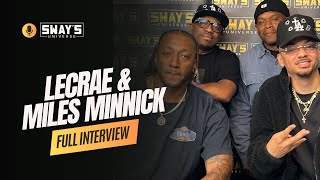
About this episodeMiles Minnik discusses his breakthrough into the mainstream music industry with his album 'Vodosa Rosa,' highl…AI summary
Miles Minnik discusses his breakthrough into the mainstream music industry with his album 'Vodosa Rosa,' highlighting collaborations with legends like E-40, Keak da Sneak, and Jeezy. He emphasizes maintaining authenticity and faith while navigating judgment from within the church, and shares his strategy of using manifesting and proactive networking to secure high-profile opportunities.
Key takeaways 5
Mainstream acceptance of faith-based artists is growing, evidenced by Miles being the first faith-based rapper booked at Rolling Loud with his own set.
Authenticity in collaboration does not require compromising artistic integrity; artists like E-40 and Keak da Sneak delivered verses that blended secular success with faith-based themes without censorship.
Proactive networking is essential; Miles secured a meeting with Grammy CEO Harvey Mason Jr. after performing at a Recording Academy showcase, demonstrating the value of utilizing industry access.
Manifesting through speech is a core strategy for Miles, who declares future collaborations (Kendrick Lamar, Justin Bieber) as a way to exercise faith and bring those realities into existence.
Handling public judgment requires emotional regulation; Miles admits to initially 'crashing out' on social media when criticized but learned to process emotions before responding.
Notable quotes 4AI-generated: wording and quote attribution may be wrong. Use the play link to verify.
“Big seven is not about what you acquire. is about who you inspire.”
▶ 16:59Miles defines his purpose in the music industry, shifting focus from personal gain to impact.
“If I sold my soul, I wouldn't be here for God. By the way, you'd be on an island that you bought and like on like 30,000 jets and not talking to anybody like, but I want to show the world you can still get those things but stand on on real real god business.”
▶ 17:34Responding to critics who claim he 'sold his soul' by collaborating with secular artists.
“It's not my job to judge anybody with how they're living their life. It's my job to to love them. Show them the love of God.”
▶ 12:57Explaining the theme of his song 'Not My Job' and his approach to non-judgmental relationships.
“What if what if God is waiting on us to declare something? Yes. To believe for something.”
▶ 27:13Miles' philosophy on why he speaks his future goals into existence before they happen.
Chapters & Sections (23)▼
0:00Faith-Based Music Industry Mainstream Breakthroughchapter4
0:00Faith-Based Music Industry Mainstream Breakthrough
1:54Balancing Multiple Responsibilities and Pressure
3:08Balancing Family Responsibilities and Financial Aid
4:22Album Track Selection and Song Significance
6:19Artist Collaboration and Creative Freedomchapter2
6:19Collaboration and Censorship on Music Projects
9:35Spiritual Support and Prayer Experiences Shared
11:15Prayer Requests and Spiritual Guidancechapter3
11:15Prayer and Spiritual Guidance in Public Life
13:09Dealing with Judgment and Criticism from Others
14:46Dealing with Online Criticism and Personal Growth
15:58Purpose and Authenticity in Creative Pursuitschapter3
15:58Purpose and Authenticity in Creative Pursuits
17:21Music Industry Ethics and Selling Out
18:36Networking Opportunities in the Entertainment Industry
20:07Artist Collaboration and Upcoming Tour Planschapter2
20:07Artist Collaboration and Upcoming Tour Plans
22:18Honoring Community Service and Personal Redemption
24:29The Power of Manifestation and Faithchapter3
24:29Manifesting Success and Faith in One's Abilities
27:20Collaboration and Co-Creation in Music Production
 1h 2m
1h 2m 29m
29m 28m
28m 22m
22m 42m
42m 22m
22m 1h 26m
 55m
55m 21m
21m 24m
24m 50m
50m 41m
41m

 2h 30m⏭ 1
 1h 32m
 1h 6m
1h 6m 1h 42m
 1h 49m⏭ 2
 3h 6m⏭ 1
 4h 13m⏭ 3
 3h 32m⏭ 2
 27m
27m 1h 28m⏭ 3
 52m⏭ 2
 41m⏭ 2
 1h 0m⏭ 1
 33m
33m 46m
46m 3h 54m⏭ 7
 3h 59m⏭ 5
 54m⏭ 1
 1h 13m
 54m⏭ 2
 58m⏭ 5
 1h 16m⏭ 2
 45m⏭ 2
 1h 26m