About this episodeBun B details the evolution of UGK from working-class roots in Port Arthur to navigating major label exploitat…AI summary
Bun B details the evolution of UGK from working-class roots in Port Arthur to navigating major label exploitation at Jive Records, highlighting the importance of artistic integrity and mutual respect in partnerships. He reflects on the tragic loss of Pimp C, the emotional and professional challenges of continuing UGK as a solo artist, and his successful transition into entrepreneurship with Trill Burgers as a means to reclaim cultural equity and build community.
Key takeaways 6
Early Hustle and Equipment Acquisition: Bun B and Pimp C funded their early recording equipment by selling candy out of backpacks in high school, pooling resources to buy drum machines and four-track recorders when they couldn't afford professional studio time.
Major Label Exploitation Tactics: The Jive Records contract included a 'death/jail clause' that reduced a member's percentage if they died or went to jail, and the label often manipulated accounting to keep artists in debt, forcing UGK to eventually 'ride dirty' by refusing advances to maintain creative control.
The Value of Authentic Collaboration: Features like 'Big Pimpin'' with Jay-Z and 'Sipping on Some Syrup' with Three 6 Mafia succeeded because they were organic pairings based on mutual respect rather than forced commercial formulas, proving that authenticity resonates more than manufactured trends.
Artistic Identity and Brand Consistency: UGK had to suppress Bun B's 'pro-black' aesthetic (dreads, beads) early on to present a cohesive street image, teaching him that artists must align their visual identity with their lyrical content to avoid sending mixed messages.
Posthumous Legacy Management: After Pimp C's death, Bun B ensured the family received financial benefits by signing off on the final two albums while Pimp was alive, allowing the posthumous album 'The Loyal Ones' to be released without contractual hurdles.
Entrepreneurship as Cultural Equity: Trill Burgers represents a way to monetize the 'blood, sweat, and tear equity' built over decades in music, allowing Bun B to own the product and share in the profits without compromising his principles or relying on record labels.
Notable quotes 5AI-generated: wording and quote attribution may be wrong. Use the play link to verify.
“I don't think there was a plan B for him as far as life was concerned like all he ever wanted to do was music... I was absolutely sure that he was going to make a record... so I was just like I'ma just stick with him and hold him down.”
▶ 0:00Bun B explains his initial motivation for pursuing music was not personal ambition but loyalty to Pimp C's singular focus on his craft.
“The most up thing in the UGK contract was there was a death slash jail clause... if one of us died or if one of us went to jail that we could replace that member but at a lower percentage rate.”
▶ 26:28Bun B reveals the predatory nature of his 1992 Jive Records contract, which legally devalued his partnership in times of crisis.
“We were riding dirty... we don't want money we don't want any money no cash advance... just put out the album we give you... that was the first time UGK ever got to truly represent themselves on record.”
Describes how UGK bypassed label interference by refusing advances and studio fees, resulting in the critically acclaimed 'Underground Kings' album.
“It's not about it wasn't about who I was aspiring to be... when you're an artist you have to be very careful that you're not making music always for yourself you got to read the room.”
▶ 16:24Reflects on the difficult decision to change his appearance and style to match the group's street image rather than his personal 'pro-black' aesthetic.
“Houston is different... you leave that at the door for a football game a basketball game we damn sure leave it at the door for Astros... if Altuve hit a home run me and the Trump dude gonna high five right.”
Bun B uses Houston's culture and Trill Burgers as an example of how communities can set aside political and social divisions for shared experiences.
Chapters & Sections (59)▼
0:00Growing Up in a Working Class Familychapter3
0:00Childhood Influences on Career Ambitions
2:51Early Influences and Career Development in Arts
4:17Chad's Music Career and Life Influences
5:51Rise of Southern Hip-Hop in the 90schapter2
5:51Rise of Southern Hip-Hop in the 90s
7:34Early Struggles and Development of Rap Skills
10:41Early Days of Music Industry Partnershipschapter5
10:41Early Days of Friendship and Business Partnerships
12:11Collaboration and Creative Vision in Music Production
13:30Developing Personal Style and Sound in Music
14:42Balancing Cultural Identity with Street Music Image
15:54Authenticity in Artistic Identity and Expression
17:42UGK's Group Dynamics and Brand Developmentchapter2
17:42UGK's Group Dynamics and Brand Development
19:28Formation and Influences of Early Rap Group
22:13UGK's Unique Sound and Early Successchapter2
22:13UGK's Unique Sound and Early Success
24:39Establishing Creative Control in Music Production
26:22Music Industry Contract Negotiations and Leveragechapter2
26:22Music Industry Contracts and Negotiation Strategies
28:38Navigating Record Deals and Contract Negotiations
31:08Regret and Misunderstanding in Record Deal Negotiationschapter3
31:08Signing a Music Contract with Regret
32:37Challenges of Major Label Signing for Emerging Artists
34:33Label Switching and Production Changes on Album
36:54Navigating Contract Amendments and Record Label Politicschapter3
36:54Navigating Contract Amendments and Sample Clearances
38:29Fighting for Creative Independence in Music Industry
40:29The Significance of Big Pimpin' in Hip-Hop History
41:57Collaborations and Budget Decisions in Music Productionchapter3
41:57Collaborations and Budget Decisions in Music Production
43:51Negotiating Power in the Music Industry
45:10Label Negotiations and Creative Freedom
47:22Music Industry Disputes and Creative Controlchapter2
47:22Reconciliation and Apology After Creative Differences
48:57Signing with Major Label and Album Success
51:28Maintaining Creative Partnerships Through Change and Successchapter3
51:28Maintaining Creative Partnerships Amidst Change and Success
53:54The Importance of Closure and Making Peace
55:42Early Music Production and Group Dynamics
57:14Taking Responsibility for UGK Album Productionchapter4
57:14Taking Responsibility for UGK Album Production
59:31Collaborating on UGK Album Post-Chad's Passing
1:01:33Importance of Having a Support System
1:02:49Evolution of Solo Artistry and Creative Process
1:04:40Authenticity in Music and Life Reflectionschapter2
1:04:40Authenticity in Music and Life Reflections
1:07:25Authenticity and Relevance in Artistic Collaborations
1:09:07Monetizing Cultural Equity and Personal Brandingchapter3
1:09:07Monetizing Cultural Equity and Personal Branding
1:11:04Partnering with a New Burger Concept
1:12:34The Decision to Pursue Food Business Ownership
1:16:01Overcoming Adversity and Reviving a Businesschapter5
1:16:01Overcoming Adversity in Business and Entrepreneurship
1:17:26Legacy and Redemption in the Entertainment Industry
1:19:14Cultural Benefits of Shared Dining Experiences
1:21:16Celebrating Community and Old School Artists
1:22:43Celebrating Houston's Unique Culture and Pride
 29m
29m 27m
27m 27m
27m 29m
29m 1h 8m
1h 8m 1h 47m
 1h 10m⏭ 3
 30m
30m 32m
32m 29m
29m 32m
32m 39m
39m 2h 30m⏭ 1
 1h 32m
 1h 42m
 1h 49m⏭ 2
 1h 7m
1h 7m 1h 6m
1h 6m 3h 8m
3h 8m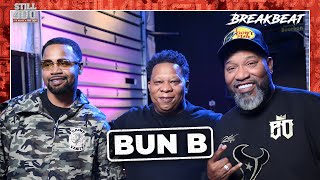 1h 26m
 1h 54m⏭ 1
 3h 45m⏭ 1
 1h 54m
 1h 26m⏭ 1
 1h 0m⏭ 1
 33m
33m 46m
46m 3h 59m⏭ 5
 3h 54m⏭ 7
 54m⏭ 1
 1h 13m
 54m⏭ 2
 45m⏭ 2
 1h 26m
 58m⏭ 5
 1h 46m