About this episodeAlan Cumming discusses his memoir 'Not My Father's Son,' detailing how childhood abuse by his father shaped hi…AI summary
Alan Cumming discusses his memoir 'Not My Father's Son,' detailing how childhood abuse by his father shaped his survival instincts and acting career. He explores the complexities of fame, his personal life including his marriage to Grant Shaffer, and his advocacy for mental health awareness in the military.
Key takeaways 5
Cumming argues against the romanticization of trauma in art, stating that while his abusive childhood forced him to develop skills like reading moods and suppressing emotions, he does not believe great artists come from bad situations.
He reveals that his father's behavior was irrational and likely due to mental illness, leading him to conclude that some people cannot be analyzed or understood, only walked away from.
Cumming identifies a parallel between his grandfather's untreated military trauma and modern veteran PTSD, noting that the stigma around mental health in the military contributes to high suicide rates.
He describes the constant self-consciousness of fame as exhausting, particularly the inability to observe people naturally because they are always observing him.
Cumming identifies as bisexual, explaining that he has always felt this way and was married to a woman before being with a man, rejecting the notion that he 'became' gay later in life.
Notable quotes 5AI-generated: wording and quote attribution may be wrong. Use the play link to verify.
“I am actually very wary of the theory that great artists come from bad abusive situations. I think that's a dangerous and slightly justifying the abuse road to go down.”
Cumming responds to the idea that his abusive childhood made him a better actor, rejecting the justification of abuse.
“The suspense and the tension before the actual violence happens or whatever the form of abuse is is actually the worst part. The waiting for it.”
▶ 7:47Describing the psychological impact of living with an abusive parent.
“I realized in my early life I had to study acting even for a new acting was to deal with my father which was to like walk into a room and think okay what the [ __ ] growing here I always what where's for his moods what's happening how you know how near am I to some humiliating painful situation and then also to suppress my own feelings.”
▶ 10:17Explaining how survival mechanisms from childhood translated directly into his acting craft.
“I think we do with abuse of people we try and rationalize them and we try and try and exhale pull the eyes for them or cover up or protect them or tighten psychoanalyzing them... actually there are some things that some people who are not to be analyzed and not to be understood because they are irrational they have some mental condition.”
▶ 13:36Cumming's conclusion about his father's mental state and why he chose estrangement over understanding.
“I always thought I was bisexual... I always know this is I know it's definitely difficult for you to comprehend... I saw a man who was out of control with his urges and and I in a funny way earlier I decided I would not have shame about my sexuality not that I had to say that but I felt it was inappropriate to do so it just what you are and just get on with it.”
Clarifying his sexual identity in response to questions about being married to a woman and then a man.
Chapters & Sections (40)▼
0:02Author's Writing Choices and Family Historychapter6
0:02Author's Writing Choices and Family History
2:31Confronting Childhood Trauma and Family Secrets
4:38Childhood Trauma and Its Lasting Impact
6:28Living with Childhood Emotional Abuse
8:00Childhood Trauma and Emotional Conditioning
9:39The Impact of Childhood Trauma on Artistic Development
10:56Complex Family Relationships and Estrangementchapter3
10:56Childhood Estrangement and Family Dynamics
12:34Dysfunctional Family Relationships and Parental Abuse
14:01Dealing with Irrational and Toxic Relationships
15:51Childhood Trauma and Emotional Abuse Effectschapter3
15:51Childhood Trauma and Emotional Abuse Effects
18:00Childhood Trauma and Emotional Abuse
19:52Overcoming Childhood Abuse and Finding Personal Strength
22:36Challenges of Fame and Public Lifechapter3
22:36The Challenges of Fame and Public Perception
24:14Challenges of Fame and Public Life
25:53The Art of TV Acting and Career Management
27:33Personal Life and Relationshipschapter2
27:33Personal Life and Relationships
30:17Self-Discovery and Meaningful Relationships
32:01Navigating Bisexuality and Societal Expectationschapter3
32:01Navigating Bisexuality and Identity Labels
33:39Coming to Terms with Bisexuality and Identity
35:38Interpretation and Evolution of a Character
37:41Celebrity Encounters and Unexpected Life Eventschapter2
37:41Celebrity Encounters and Unexpected Life Events
39:56Patti Smith's Unconventional Stage Presence
42:14Childhood Trauma and Creative Developmentchapter2
42:14Overcoming Childhood Trauma and Self-Discovery
43:47Personal Struggles with Mental Illness and Trauma
46:34Mental Health Support for Military Veteranschapter2
46:34Mental Health Support for Military Veterans
49:13Filming Memories of a Classic Music Video
51:07Acting in American Accent and Cultural Influencechapter4
51:07Sustaining an American Accent in Acting
53:11Acquiring Accents through Repetition and Familiarity
54:36Unique Macbeth Production and Performance Analysis
 1h 23m
 1h 9m
1h 9m 23m
23m 1h 9m
1h 9m 1h 7m
1h 7m 1h 16m
 1h 10m
 1h 2m
1h 2m 1h 28m
 1h 1m
1h 1m 1h 14m
 52m
52m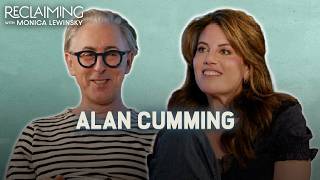
 4h 5m⏭ 4
 2h 10m
 2h 18m⏭ 3
 2h 31m⏭ 5
 2h 20m
 1h 37m
 3h 43m⏭ 4
 1h 47m
 1h 53m
 2h 49m⏭ 3
 1h 50m⏭ 3
 2h 28m
 1h 0m⏭ 1
 33m
33m 46m
46m 3h 54m⏭ 7
 3h 59m⏭ 5
 1h 13m
 54m⏭ 1
 54m⏭ 2
 1h 26m
 45m⏭ 2
 58m⏭ 5
 25m
25m