About this episodeASAP Rocky discusses his evolution from a mixtape rapper to a multi-hyphenate creative, emphasizing the import…AI summary
ASAP Rocky discusses his evolution from a mixtape rapper to a multi-hyphenate creative, emphasizing the importance of ancestral guidance, cultural reclamation, and intentional community building. He shares personal anecdotes about navigating gentrification in Harlem, the decline of club culture, and his creative process involving collaborations with Tim Burton and Puma. The conversation highlights his philosophy on leadership, handling failure, and maintaining authenticity in an era of exploitation.
Key takeaways 5
Ancestral Connection: Rocky believes ancestors are actively watching and guiding the living, citing a fortune cookie message and a medium session with Laura Lynn Jackson as validation for this belief.
Gentrification and Authenticity: He addresses the changes in Harlem, noting that while neighborhoods gentrify, he maintains connections by taking public transit (subway/taxis) to stay grounded and avoid alienating his roots.
Creative Evolution through Personas: His recent work involves distinct alter egos (Crash Dummy, Babushka Boy, Shirt Head, Mr. Mayor) that reflect different phases of his artistic growth and interest in hidden black history and German expressionism.
Leadership Philosophy: Rocky rejects the idea that one must leave behind those who aren't growing at the same pace, arguing that every circle needs a leader who remains humble and open to learning from mentors.
Reframing Failure: He has redefined failure not as a negative outcome but as a necessary lesson for improvement, a mindset shift that took him five years to fully embrace.
Notable quotes 5AI-generated: wording and quote attribution may be wrong. Use the play link to verify.
“The ones you love, even the ones that's not here with you, are always looking over you.”
▶ 0:50Rocky explains the origin of his belief in ancestral guidance, which came from a fortune cookie and was reinforced by a medium reading.
“I don't want to flex. I don't want to do... I got to keep it pushing, bro. Is it easy for you to blend in? Hell no. Look at me. But I take the train. I put a push shy on. I take the train. Sometimes I'm by myself. Sometimes I'm with security. I take the train to keep myself grounded.”
▶ 13:06Discussing how he returns to Harlem despite his success, choosing public transport over private cars to maintain humility and connection to his roots.
“The club culture is dead. Why the [__] you want to be around a bunch of [__] having a staring contest? What I'm flexing on you for about to pay 10x how much a [__] beverage elixir cost in [__] liquor store... I could do this in my living room. Call some friends over. Have a gathering. No weirdos around.”
▶ 15:07Rocky's critique of modern nightlife, preferring intimate gatherings in dive bars or private spaces over expensive clubs.
“If I'm the smartest guy in my circle, then I'm like, I need a new circle... You know why I don't [__] with that? Why? Cuz every circle need a leader. The leader has to be smart by smarter by default.”
▶ 54:55Explaining his rejection of the 'smartest person in the room' theory, arguing that true leaders stay within their communities rather than leaving them behind.
“I've always been this way... I try to make what we consider timeless music so that you can't really put a time stamp on it or expiration date on it cuz music needs to outlive the artist.”
▶ 31:58Describing his artistic goal to create genre-bending work that endures beyond trends, citing influences like Pink Floyd and Nat King Cole.
Chapters & Sections (41)▼
0:00Spirituality and Ancestral Guidance in Lifechapter3
0:00Spirituality and Ancestral Guidance in Life
1:55Hip Hop Culture and Paradigm Shift
3:19Morning Routine and Creative Career Balance
5:26Childhood Memories of Moving and Family Rootschapter2
5:26Childhood Memories of Moving and Family Life
7:05Claiming Regional Identity and Cultural Heritage
9:31Gentrification and Changing Neighborhood Dynamicschapter3
9:31The Impact of Success on Personal Growth
11:13Giving Back to the Community
13:12Maintaining Normalcy in Public Life
14:37The Decline of Club Culture and Nightlifechapter3
14:37The Decline of Club Culture and Nightlife
16:30Childhood Influences and Early Life Memories
17:57Ancient African Empires and Lost History
20:09The Harlem Renaissance and Jazz Legacychapter2
20:09The Harlem Renaissance of Jazz
22:16Learning to Swim as a Child
24:30Childhood Trauma and Swimming Anxietychapter2
24:30Childhood Trauma and Swimming Anxiety
26:33Protecting Creative Work from Leaks and Breaches
29:32Influence of German Expressionism on Artistic Collaborationchapter2
29:32Influence of German Expressionism on Artistic Collaboration
31:52Creating Timeless Music through Experimentation
33:46Origins of Aesthetic Personas in Musicchapter5
33:46Origins of Aesthetic Personas in Music
35:51Creative Influences and Inspiration in Art
37:51The Evolution of Hip-Hop and Black American Culture
39:19Self-Discovery and Authenticity in Artistic Pursuits
41:30Embracing Failure as a Learning Experience
43:15Overcoming Creative Blocks and Inspirationchapter2
43:15Overcoming Creative Blocks and Ego in Artistry
44:37Importance of Honesty and Self-Acceptance
47:45Celebrity Fashion Influences and Style Iconschapter3
47:45Celebrity Fashion Influences and Style Icons
49:21Celebrity Fashion Trends and Regrets
51:26Embracing Personal Style and Confidence
52:38Navigating Creative Growth and Toxic Relationshipschapter3
52:38Navigating Creative Growth and Peer Relationships
 1h 42m
 1h 1m
1h 1m 1h 29m⏭ 1
 1h 4m
1h 4m 1h 12m⏭ 1
 54m
54m 1h 23m
 2h 28m⏭ 1
 1h 35m⏭ 1
 1h 5m
1h 5m 1h 5m
1h 5m 2h 2m⏭ 1
 2h 12m
 52m
52m 1h 51m
 23m
23m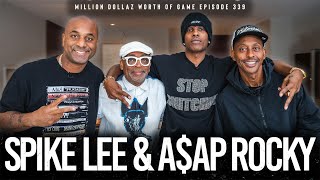 47m⏭ 3
 40m⏭ 2
 22m⏭ 1
 1h 4m
1h 4m 1h 18m
 4h 5m⏭ 4
 2h 20m
 2h 10m
 1h 10m
 2h 30m⏭ 3
 2h 3m⏭ 1
 23m
23m 1h 19m⏭ 4
 1h 50m
 2h 8m⏭ 3
 1h 14m⏭ 4
 55m
55m 33m
33m 1h 0m⏭ 1
 3h 54m⏭ 7
 46m
46m 6h 26m
 54m⏭ 1
 3h 59m⏭ 5
 11h 54m
 9h 11m
 11h 54m⏭ 8
 1h 16m⏭ 2
 54m⏭ 2