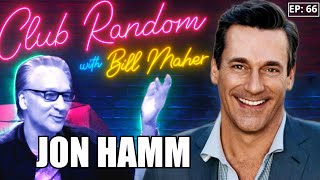
About this episodeJohn Ham discusses his journey from a struggling actor in Los Angeles to an Emmy-winning star, highlighting th…AI summary
John Ham discusses his journey from a struggling actor in Los Angeles to an Emmy-winning star, highlighting the importance of resilience, community support, and mental health. He shares insights on overcoming the trauma of his mother's early death, the realities of auditioning and contract negotiations in Hollywood, and his recent work on 'Fletch' and 'Top Gun: Maverick'.
Key takeaways 6
Ham gave himself a five-year window to succeed in acting before age 30, illustrating the high risk and low odds of an acting career where one might make only $2,400 in a year.
The lack of emotional support after his mother's death at age 10 was compounded by a generational inability to discuss trauma; he notes that 'if you ignore it, it will only get more kind of tangled up.'
Community and surrogate family played a crucial role in his survival and success; he credits teachers and friends' parents for providing the stability his father could not.
Ham secured the role of Don Draper after seven auditions, starting from the bottom with no name recognition, and had to negotiate better pay after initial contracts were 'draconian' and underpaid relative to the show's success.
He emphasizes the importance of therapy and processing trauma to enable deeper personal connections, noting that working on his mental health opened the possibility for marriage and long-term commitment.
The film industry has shifted away from theatrical releases for mid-budget films like 'Fletch', which went directly to PVOD (Premier Video on Demand) due to lack of studio interest, highlighting the changing landscape of movie distribution.
Notable quotes 5AI-generated: wording and quote attribution may be wrong. Use the play link to verify.
“If I'm not doing what I want to do by the time I'm 30, then maybe the market has spoken, so to speak, and it might be time to find something else to do.”
▶ 0:47Ham explaining the self-imposed deadline he set for himself when moving to Los Angeles at age 25.
“There's no ache like losing your mother... If you ignore it, it will only get more kind of tangled up and becomes this real object blockage really in your emotional life.”
▶ 6:44Discussing the long-term impact of his mother's death when he was 10 and the lack of emotional processing available at the time.
“Nobody gets through this by themselves. This ridiculous idea that there's this rugged individualist that can go it alone is so wrongheaded in my experience because I would not be where I am without the help of others.”
▶ 12:41Reflecting on how community support from teachers and friends' families helped him cope with grief and achieve success.
“I was at the very, very, very bottom. I was not even on the list... Matt Weiner famously said that man was not raised by his parents.”
▶ 39:24Describing his seventh audition for Don Draper on Mad Men, where he finally connected with the creator on a personal level.
“It's a reality warping time for sure... You're in a different playground. You're in a different world. It's all the rules are bending to accommodate whatever it is you want.”
Describing the disorienting experience of sudden fame after Mad Men became a hit.
Chapters & Sections (54)▼
0:00Chasing an Acting Career: Overcoming Oddschapter3
1:50Alternative Career Paths and Regrets
3:26Realizing One's Physical Appearance as a Career Asset
6:01Childhood Trauma and Unresolved Emotional Pain
8:08Coping with Grief and Parental Losschapter1
10:00Lack of Emotional Support in Childhood
13:04Childhood Education and Family Backgroundchapter1
15:08Growing Up in a Non-Traditional Family
17:53Arriving in Los Angeles for the First Timechapter4
19:29Navigating Early Career in Hollywood
22:03The Struggle of Auditioning for Success
24:38Paul Rudd's Early Career as a Wedding DJ
26:55Overcoming Self-Doubt and Developing a Strong Work Ethic
28:41Breaking into the Film Industry as a Set Dresserchapter2
30:29The Importance of Set Dressing in Film Production
32:05Early Career Struggles in the Entertainment Industry
33:52Early Career in Television Actingchapter1
36:36The Challenges of Auditioning for Mad Men
39:00Drawing from Personal Life Experiences for Character Developmentchapter1
41:46Comparing Emmy Wins in Mad Men and Breaking Bad
44:41Negotiating contracts in the entertainment industrychapter2
47:40The Reality of Sudden Fame and Fortune
49:14The Challenges of Fame and Celebrity Culture
50:58Overcoming Addiction and Imposter Syndromechapter2
53:03Maintaining a Healthy Work-Life Balance
54:40Celebrity Awards and Personal Achievements
56:19The Challenges of Live Television Performancechapter1
59:35The Art of Improvisational Comedy Techniques
1:02:35Debunking Penis Rumors and Celebrity Privilegechapter2
1:04:04The Reality of Celebrity Privilege
1:05:44The Intensity of Emotions in Youth
1:07:27The Challenges of Reviving a Classic Film Franchisechapter2
1:09:18Adapting Gregory McDonald's Novels for Film
1:10:41The Challenges of Making a Low-Budget Movie
1:14:48The Revival of Movie Theaters and Cinema Experiencechapter2
1:16:54Meeting Tom Cruise on a Prank Call
1:18:21Securing a Role in a Major Film Franchise
1:19:46The Art of Relaxation in Actingchapter3
1:21:48Navigating Career and Personal Life
1:23:11Healing from Trauma and Finding Emotional Accessibility
1:24:41The Power of Vulnerability in Trauma Therapy
1:26:44Regrets of Unresolved Parental Relationshipschapter1
1:29:19The Reality of Acting as a Career
1:31:40Celebrity Social Lives and Dinner Partieschapter2
1:33:10Guilty Pleasure TV Shows and Reality TV
1:34:35Celebrity Wealth and Privilege Criticism
1:36:30The Art of Humor and Comedy Writingchapter2
1:39:03Celebrity Relationships and Public Personalities
1:40:23Body Image and Self-Esteem in Public Figures
1:42:10Early Days of Radio and Talk Show Appearanceschapter4
1:45:22The Art of Pleasing Late Night Talk Show Hosts
1:46:48Childhood Influences on Comedy Career
1:48:19The Art of Preparation for Interviews
1:49:33New Movie Confess Fletch Promotional Discussion
 1h 7m
1h 7m 1h 27m
 1h 32m
 1h 47m
 56m
56m 1h 10m
 1h 16m
 1h 8m
1h 8m 44m
44m 56m
56m 1h 19m
 22m
22m


 1h 20m
 2h 54m⏭ 3
 2h 12m
 1h 53m
 1h 49m⏭ 2
 1h 2m⏭ 3
 2h 58m⏭ 4
 3h 57m⏭ 3
 38m⏭ 1
 1h 40m
 2h 19m⏭ 5
 1h 17m
 1h 0m⏭ 1
 33m
33m 3h 59m⏭ 5
 46m
46m 3h 54m⏭ 7
 54m⏭ 1
 1h 13m
 54m⏭ 2
 1h 26m
 45m⏭ 2
 9h 11m
 58m⏭ 5