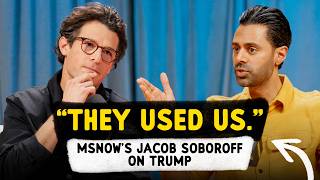
About this episodeJacob Soboroff discusses his book 'Prequel,' tracing the history of American anti-Semitism, Holocaust denial, …AI summary
Jacob Soboroff discusses his book 'Prequel,' tracing the history of American anti-Semitism, Holocaust denial, and far-right extremism back to the pre-WWII era, highlighting parallels with contemporary political movements. The conversation emphasizes the critical role of civil society, investigative journalism, and civil litigation in countering violent extremism, drawing lessons from historical figures like spy Leon Lewis and adman Henry Allen. Rachel Maddow and Jacob Soboroff also address the importance of media literacy, the resilience of democracy through ordinary citizens, and the need for long-term historical perspective in understanding current political threats.
Key takeaways 10
Holocaust denial in America has never been about factual disbelief but has consistently served as an anti-democratic political project, with origins traceable to at least 1948.
The 'America First' movement of the 1930s was heavily influenced by Nazi Germany, with figures like Henry Ford and Charles Lindbergh playing seminal roles in fomenting anti-Semitism and isolationism.
Senator Robert Rice Reynolds proposed building a wall around the US to block European Jews in the 1930s, mirroring modern border rhetoric.
Christian nationalism was defined by Gerald L.K. Smith in the 1940s as a political tool to justify deporting Jews and promoting white supremacy.
In Los Angeles, Nazi sympathizers planned to kidnap and murder prominent Jews in Hindenberg Park to incite racial pogroms, a plot exposed by private spy Leon Lewis.
Law enforcement and the FBI largely ignored fascist threats in the 1930s, focusing instead on Communism, despite evidence of German consulate funding for domestic Nazi groups.
Civil lawsuits were a crucial tactic used by activists like Leon Lewis to bankrupt and hamstring far-right groups, a strategy echoed by modern election workers suing harassers.
Regular citizens with specific expertise (e.g., adman Henry Allen tracing propaganda distribution) played heroic roles in exposing Nazi operations when official institutions failed.
The American tradition of avoiding reckoning for political sins is evident in pardons for Nixon, reluctance to prosecute torture architects, and lack of accountability for family separation policy officials.
Media literacy is critical during conflicts; viewers should verify sources, check for named sources, and ensure links to documents are real to combat disinformation.
Notable quotes 5AI-generated: wording and quote attribution may be wrong. Use the play link to verify.
“Holocaust denial is just a thing that I of all the Terrible Things it is I also find it just bizarre like how I understand what it's used for why people do it but it is um just a strange thing to try to convince people as a truly held belief given the reality of the world”
▶ 12:02Soboroff explains his initial confusion about why Holocaust denial persists despite overwhelming evidence, noting its utility as a political tool rather than a genuine belief.
“I wish to say this is him and say it without the slightest hesitation that if I had my way about it at this hour I would build a wall about the United States so high and so secure that not a single alien or foreign Refugee from any country upon the face of Earth could possibly scale or Ascend it”
▶ 21:23Soboroff reads a quote from Senator Robert Rice Reynolds in the 1930s calling for a border wall to keep out Jewish refugees, highlighting historical parallels to modern rhetoric.
“exposing it getting the truth of it right getting it down in an unassailable fact checkable F fashion so that this history cannot be Unwritten that's actually like 80% of the game”
▶ 19:50Soboroff argues that documenting history accurately is a primary defense against authoritarianism, more so than just legal prosecutions.
“when you came can't do politics without being scared for your neck then politics isn't for normal people anymore and you're on a slippery slope”
▶ 32:52Soboroff describes how street violence against political opponents in the 1930s eroded democratic norms by making political participation dangerous.
“I believe that we are capable of rational um discourse I believe that we are capable of emotional growth I believe that even people who you might write off today as the worst people Among Us bent on the worst projects that you can imagine for our country and our people I believe that those people can change”
▶ 1:02:12Maddow expresses her faith in human capacity for change and redemption, arguing against writing off opponents and advocating for generous storytelling.
Chapters & Sections (44)▼
0:05Henry Ford's Anti-Semitic Influence and Legacychapter6
0:05Henry Ford's Anti-Semitic Influence and Legacy
2:27Appreciation for Editorial Freedom and Autonomy
3:50Overcoming Burnout in High-Pressure Work Environments
5:30Approaching the Israel-Hamas Conflict with Caution
7:44Media Literacy and Trustworthy News Sources
10:20Confronting Human Suffering and Terrible Behavior
12:47Origins of American Holocaust Denial and Anti-Democratic Forceschapter2
12:47Origins of American Holocaust Denial and Anti-Democratic Forces
15:28Preserving History from Far-Right Influential Narratives
17:23Prosecuting Sedition and Countering Violent Extremismchapter3
17:23Prosecuting Anti-Democratic Violent Movements as Crimes
18:37Importance of Exposing Ultra-Right Fascist Movements
20:09Historical Parallels Between Past and Present Politics
21:42Christian Nationalism and its Historical Implicationschapter3
21:42Christian Nationalism and its Historical Implications
23:29American History and Fascist Ideology in Los Angeles
24:47Nazi Plot in Los Angeles Exposed
26:27Far-Right Groups' Kidnapping and Murder Plots Exposedchapter3
26:27Far-Right Plots to Kidnap and Murder Jewish Americans
28:12Nazi Plots and Local Law Enforcement Response
29:48Fascist Groups and Government Response
31:28Rise of Fascism and Street Violencechapter3
31:28Rise of Fascism and Street Violence
33:15Distribution of Propaganda Leaflets in Public Spaces
34:31Archival Research and Historical Incidents
36:30Forgetting History and the Importance of Remembrancechapter2
36:30Forgetting History and the Importance of Remembrance
38:33Unlikely Heroes in Times of Crisis
41:01Ordinary Heroes in Extraordinary Circumstanceschapter3
41:01Lessons from Ordinary Heroes in Extraordinary Times
 1h 23m
 1h 9m
1h 9m 23m
23m 1h 9m
1h 9m 1h 7m
1h 7m 1h 16m
 1h 10m
 1h 2m
1h 2m 1h 28m
 1h 1m
1h 1m 1h 14m
 52m
52m
 1h 7m
1h 7m 2h 58m⏭ 2
 2h 45m⏭ 1
 1h 10m
 1h 25m
 51m⏭ 2
 1h 26m⏭ 2
 55m
55m 1h 12m
 26m
26m 1h 16m⏭ 2
 32m
32m 11h 23m⏭ 1
 33m
33m 1h 0m⏭ 1
 46m
46m 3h 54m⏭ 7
 48m⏭ 2
 3h 59m⏭ 5
 1h 16m
 54m⏭ 1
 1h 13m
 38m
38m 54m⏭ 2