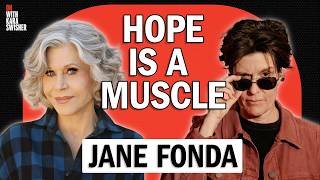
About this episodeJane Fonda discusses her transition from climate despair to action through the creation of Fire Drill Fridays,…AI summary
Jane Fonda discusses her transition from climate despair to action through the creation of Fire Drill Fridays, emphasizing that individual lifestyle changes are insufficient without large-scale political mobilization. She argues for the Green New Deal as a holistic solution that addresses climate change, economic inequality, and racial justice simultaneously, highlighting the critical role of intersectionality and collective action.
Key takeaways 6
Personal action (like driving an electric car) is an 'on-ramp' but cannot scale fast enough to solve the climate crisis; civil disobedience and political pressure are required for systemic change.
The Green New Deal is not just an environmental policy but a social justice framework that addresses the 'empathy crisis,' health pandemics, and racial disparities by transitioning fossil fuel workers and investing in marginalized communities.
Environmental racism is intentional: the fossil fuel industry deliberately places refineries and incinerators in communities of color, creating 'sacrifice zones' where tens of thousands die prematurely.
Women are disproportionately affected by climate change (80% of climate refugees) but also lead many solutions due to evolutionary and socialized tendencies toward interdependence and care.
The mental health crisis exposed by COVID-19 is linked to economic insecurity and lack of government support, reinforcing the need for a strong federal safety net similar to the New Deal.
Military spending is inefficient for national safety; cutting $600 billion from the military budget could fund infrastructure, healthcare, and climate resilience without compromising security.
Notable quotes 5AI-generated: wording and quote attribution may be wrong. Use the play link to verify.
“The act of putting your body in alignment with your deepest values is so empowering... you feel extremely empowered [even when handcuffed].”
▶ 6:27Fonda explains the psychological shift from despair to joy experienced through participating in civil disobedience.
“We can't let the perfect stand in the way of the good... The fossil fuel executives are flying all over the world... so if we say we're not going to fly we're at such a disadvantage.”
▶ 8:36Justifying the carbon footprint of traveling for activism versus the impact of large-scale political engagement.
“The mentality that brought slavery to this country... is the same mentality that thinks that we can use the earth as our wastebasket and just exploit it.”
▶ 20:07Connecting the historical oppression of people of color with the exploitation of the environment.
“There are 23 million Americans who know there's a climate crisis and have never done anything because nobody asked... we just have to organize the unasked.”
▶ 36:09Identifying the largest untapped resource for climate activism: people who agree with the science but haven't been mobilized.
“I'm closer to my death than I am to my birth... I want to be able to feel good if I don't do what I'm doing... I'm gonna hate myself when I'm lying on my deathbed.”
▶ 49:46Fonda's personal mantra for maintaining motivation and avoiding regret in her activism.
Chapters & Sections (40)▼
0:00Climate Change and Personal Action Strategieschapter4
0:00Climate Change and Personal Action
1:50Climate Crisis and Personal Activism Awakening
3:07Overcoming Climate Crisis through Activism and Education
4:31Transforming Despair into Collective Action and Hope
6:27Balancing Personal Actions with Large Scale Changechapter2
6:27Balancing Personal Actions with Large Scale Change
8:43Challenges of Implementing the Green New Deal
11:34Sustainable Agriculture and Climate Crisis Solutionschapter2
11:34Sustainable Agriculture and Climate Crisis Solutions
13:51Environmental Justice and Corporate Accountability
15:40Environmental Toxins and Public Health Criseschapter2
15:40Environmental Toxins and Public Health Response
17:24Need for Strong Federal Government in Crisis Situations
19:48Intersectionality of Climate and Social Justice Issueschapter2
19:48Intersectionality of Climate and Social Justice Movements
21:34Women's Role in Combating Climate Crisis
23:50Women's Bravery and Interdependence in Agingchapter3
23:50Evolutionary and Hormonal Factors in Female Bravery
25:22Importance of Interdependence and Collective Action
26:48Reducing Military Spending for National Security
29:01Importance of Public Water Access and Securitychapter3
29:01Importance of Public Water Access and Ownership
31:28Water Infrastructure Insecurity and Climate Change
33:41Transitioning Away from Fossil Fuels and Climate Crisis
35:39Confronting Climate Change Denial and Engaging the Unaskedchapter2
35:39Confronting Climate Change Denial and Misinformation
38:00Consequences of Climate Change on Human Health
40:17Individual Actions vs Collective Impact on Climate Crisischapter3
40:17Individual Action vs Collective Impact on Climate Crisis
42:41Convincing Climate Change Deniers and Activism Challenges
44:23Importance of Standing Up for One's Values
45:38Separating Art from Artist and Personal Identitychapter3
45:38Separating Art from Personal Politics and Beliefs
47:32Personal Mantras for Motivation and Resilience
49:02Finding Hope in Social Change Efforts
51:03Importance of Mass Civil Disobedience for Changechapter3
51:03Mass Civil Disobedience for Social Change
52:30Importance of Collective Action for Social Change
 1h 23m
 1h 9m
1h 9m 23m
23m 1h 9m
1h 9m 1h 7m
1h 7m 1h 16m
 1h 10m
 1h 2m
1h 2m 1h 28m
 1h 1m
1h 1m 1h 14m
 1h 30m
 1h 55m
 41m
41m 1h 4m⏭ 6
 45m
45m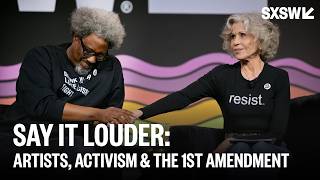 57m
57m 2h 57m
 2h 1m⏭ 1
 26m
26m 1h 0m
1h 0m 20m
20m 2h 24m
 2h 11m⏭ 2
 2h 31m
 28m⏭ 1
 57m
57m 3h 10m⏭ 1
 1h 19m
 1h 0m⏭ 1
 33m
33m 46m
46m 3h 54m⏭ 7
 3h 59m⏭ 5
 1h 13m
 54m⏭ 1
 54m⏭ 2
 1h 26m
 45m⏭ 2
 58m⏭ 5
 25m
25m