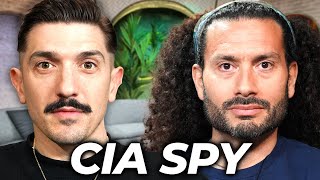
About this episodeFormer CIA agent John Keryaku argues that Israel exerts disproportionate influence over US foreign policy thro…AI summary
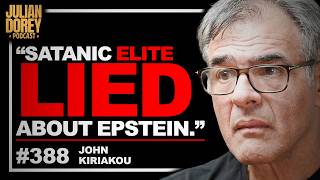
Former CIA agent John Keryaku argues that Israel exerts disproportionate influence over US foreign policy through lobbying (AIPAC) and dual-loyalty politicians, citing the Epstein scandal as evidence of Israeli intelligence operations targeting Western elites. He details specific espionage techniques including non-personal communications, surveillance detection routes, and the use of commercial spy technology, while asserting that the US is economically unsustainable due to defense spending and debt.
Key takeaways 5
Political Influence: Politicians displaying foreign flags (e.g., Josh Shapiro, Tom Cotton, Debbie Wasserman-Schultz) are cited as evidence of divided loyalty, with Keryaku arguing US policy is often dictated by Israeli interests rather than American ones.
Epstein as Intelligence Asset: Jeffrey Epstein is characterized as an Israeli access agent who used his network of powerful figures (Clinton, Brennan, etc.) and hidden surveillance to collect compromising information for Mossad.
Espionage Tactics: The guest explains 'non-personal communications' using false-back drawers with burst transmitters and 'surveillance detection routes' (SDR) involving red/black roads and stairstepping to identify if one is being followed.
Economic Unsustainability: The US defense budget exceeds $1 trillion, surpassing the next eight largest countries combined, while China focuses on economic development (Belt and Road Initiative), leading to a trajectory where US debt servicing could consume 50-100% of GDP.
Technology Availability: Modern spy gadgets (listening devices, hidden cameras, trackers) are commercially available on platforms like Amazon, making espionage tools accessible to private citizens and investigators.
Notable quotes 5AI-generated: wording and quote attribution may be wrong. Use the play link to verify.
“In many cases, it's Israeli foreign policy that's been imposed on the United States.”
▶ 5:13Keryaku's assessment of why the US pursues policies like threatening Iran despite it not being a direct threat.
“You don't need to recruit Bill Clinton or Bill Gates. You essentially have recruited them in that everything that you might need, you can get from Epstein.”
▶ 16:16Explaining how Mossad allegedly used Epstein's parties and hidden cameras to gather intelligence on Western elites without direct recruitment.
“The Israelis really believe that they're alone in the world, even though they're not. They treat everybody else with disrespect.”
▶ 0:22Describing the cultural mindset that leads to aggressive behavior towards allies and partners.
“We're approaching the point where 50% of our GDP is going to servicing the debt. That's it. And in five or 10 years it'll be 100%.”
▶ 1:11:56Keryaku's economic forecast regarding the unsustainability of US defense spending and national debt.
“Did you really think I was so stupid that I didn't know that you were a double agent this whole time? I'm offended that you think so little of my abilities.”
▶ 50:21Keryaku confronting a double agent he had secretly identified and neutralized during an operation in the Middle East.
Chapters & Sections (33)▼
0:00Israel's Influence on US Politics and Espionagechapter3
3:01Global Threats to the United States
4:29Israel's Influence on US Foreign Policy
6:16US Policy on Iran and Israeli Influence
8:53Dual Loyalty of Politicians to Foreign Powerschapter1
 2h 55m⏭ 1
 39m⏭ 4
 1h 54m
 35m
35m 48m
48m 20m⏭ 3
 25m⏭ 1
 2h 56m⏭ 1
 25m
25m 1h 41m
 23m
23m 20m
20m 2h 31m⏭ 1
 3h 7m⏭ 2
 1h 2m⏭ 1
 3h 4m⏭ 1
 1h 48m⏭ 3
 1h 57m⏭ 3
 2h 19m⏭ 3
 3h 16m⏭ 3
 2h 27m⏭ 1
 39m⏭ 2
 2h 59m⏭ 1
 1h 54m⏭ 3
 3h 24m⏭ 3
 1h 24m
 2h 48m
 3h 20m⏭ 4
 2h 29m
 43m⏭ 1
 1h 27m
 1h 51m⏭ 3
 2h 50m⏭ 2
 1h 45m⏭ 4
 2h 38m⏭ 2
 1h 0m⏭ 1
 33m
33m 46m
46m 3h 54m⏭ 7
 3h 59m⏭ 5
 1h 13m
 54m⏭ 1
 58m⏭ 5
 54m⏭ 2
 25m
25m 45m⏭ 2
 1h 16m⏭ 2