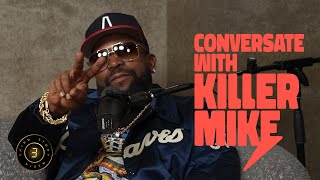
About this episodeKiller Mike and Ben Cohen discuss the intersection of business and activism, highlighting Cohen's ongoing camp…AI summary
Killer Mike and Ben Cohen discuss the intersection of business and activism, highlighting Cohen's ongoing campaign to free Ben & Jerry's from its parent company Unilever to preserve its social mission. The conversation emphasizes the importance of values-led corporate structures, the power of consumer boycotts, and the need for progressive coalition-building across diverse social movements.
Key takeaways 5
Ben & Jerry's was originally an independent Vermont-based company that went public on NASDAQ in 1989; it was forced to sell to Unilever in 2000 due to SEC rules requiring a sale when an offer significantly exceeded market value.
The 'Social Mission Board' was a legal structure negotiated during the 2000 sale to protect the company's values, but Unilever (now Magnum) is currently attempting to dissolve this board, prompting the 'Free Ben & Jerry's' campaign.
Cohen argues that venture capitalists and private equity firms are inherently values-agnostic, seeking 5-7 year exits for profit maximization, which conflicts with long-term social mission preservation.
Cohen observes an inverse relationship between CEO compensation and quality of leadership in his experience, noting that lower-paid CEOs were often better aligned with the company's mission than high-paid executives.
The conversation highlights the importance of 'worker solidarity' and supporting marginalized communities regardless of the activist's own demographic background, as demonstrated by Ben & Jerry's support for various civil rights causes.
Notable quotes 5AI-generated: wording and quote attribution may be wrong. Use the play link to verify.
“I stopped being like a dog and chasing every issue that came by. And I started really sticking to issues that could be world changing on a very local level or very macro level.”
▶ 6:28Killer Mike explaining how he refined his activism strategy after realizing the personal risks involved in being too vocal.
“We didn't do social justice to sell ice cream. But that's the way it turned out.”
▶ 15:01Ben Cohen reflecting on how their commitment to community care became a successful business model rather than a marketing tactic.
“The quality of the CEO was in inverse proportion to how much they got paid. The guys that got paid the least were the best.”
▶ 53:48Ben Cohen sharing an observation about leadership quality relative to compensation during Ben & Jerry's history.
“It's easy to point at a king without an army.”
▶ 24:49Ben Cohen discussing the power of collective action and consumer pressure against large corporations.
“I wasn't in it for the money... I was looking to make a living. But I wasn't looking for a big payout.”
▶ 48:11Ben Cohen explaining his motivation for building Ben & Jerry's as a values-led company rather than a wealth-extraction vehicle.
Chapters & Sections (32)▼
0:00Business of Activism and Social Entrepreneurshipchapter2
2:14Critique of Materialism and Consumer Culture
3:49Embracing Unconventional Fashion and Symbolism
4:53Balancing Activism and Personal Safetychapter2
6:12Finding Purpose in Social Activism
7:46The Power of Social Advocacy in Business
9:28Business and Activism: Utilizing Influence for Changechapter1
11:41Racial Inequality in the Justice System
14:50The Sale of Ben and Jerry's: A Business Decisionchapter2
16:58Reclaiming Ben and Jerry's Ownership
18:21Ben and Jerry's Fight with Unilever
20:17Balancing Activism and Profitability in Businesschapter2
22:05Businesses as Social Change Agents
23:58Corporate Influence on Social Justice Movements
25:35Embedding Values in Business Practiceschapter2
27:27Preserving Ben & Jerry's Values and Independence
29:17Boycotting Companies for Social Justice
31:15Supplements and Trust in the Marketchapter2
33:50Overcoming Entrepreneurial Fears and Doubts
35:33The Science of Cannabis and THC Effects
39:29Ben and Jerry's Governance and Social Missionchapter1
41:38Balancing Business and Social Activism
44:52Importance of Values in Business Ownershipchapter3
47:33Maintaining Independence in Corporate Social Responsibility
49:01Corporate Power and Activism in Business
50:39Corporate Social Responsibility in Business Practices
52:01Balancing Business and Social Responsibilitychapter1
54:25Christianity and Immigration in America
56:34Supporting Employee-Owned Businesses and Social Activismchapter3
58:26Consolidating Progressive Activism Efforts
1:00:12Business Activism and Corporate Accountability
 1h 40m
 1h 16m⏭ 1
 1h 19m
 1h 8m⏭ 3
 1h 54m
 1h 12m
 58m⏭ 1
 58m⏭ 1
 1h 20m
 1h 0m
1h 0m 1h 8m⏭ 1
 54m⏭ 1
 1h 12m
 49m
49m 1h 43m
 1h 13m
 2h 11m⏭ 5
 5h 13m⏭ 3
 1h 59m
 1h 41m⏭ 2
 34m
34m 2h 11m⏭ 4
 1h 8m⏭ 3
 1h 5m⏭ 1
 1h 43m⏭ 4
 11h 54m
 11h 54m⏭ 8
 1h 0m⏭ 1
 33m
33m 6h 26m
 9h 11m
 3h 54m⏭ 7
 46m
46m 3h 59m⏭ 5
 54m⏭ 1
 1h 16m⏭ 2