About this episodeArchaeological excavations in Jordan, Italy, and Europe reveal how Rome expanded and maintained its empire thr…AI summary
Archaeological excavations in Jordan, Italy, and Europe reveal how Rome expanded and maintained its empire through military force, cultural assimilation, and economic control. Key findings include the founding of Capitolias as a strategic trade hub, the social mobility of freedmen in Pompeii, and the brutal reality of frontier defense at Hadrian's Wall.
Key takeaways 5
Capitolias in Jordan was founded in 97 CE under Emperor Trajan to secure trade routes and mark Roman territory in the Decapolis, evidenced by frescoes depicting the city's founding and coins dating the city to 120 years old in 218 CE.
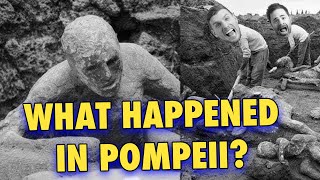
In Pompeii, the House of the Vettii demonstrates that freedmen (former slaves) could achieve significant wealth and social status, likely through wine trade, challenging the notion that only aristocrats held power.
The annexation of Nabatean Petra was likely violent rather than peaceful, supported by the discovery of over 400 ballista balls in a temple, suggesting military confrontation over trade route control.
Climate change is actively destroying archaeological sites at Vindolanda; oxygen entering the soil due to extreme weather patterns is causing organic artifacts like leather and wood to rot rapidly.
Roman military technology included specialized catapults: the Scorpion for rapid-fire bolts (120 mph), the Scorpio for precision (172 mph), and the Onager for heavy siege projectiles (300m range), with psychological impact being as important as physical damage.
Notable quotes 5AI-generated: wording and quote attribution may be wrong. Use the play link to verify.
“This is the smoking gun... Zeus, Z-E-U-S, Capitolianos. This is the name of the primary deity of the area.”
Pearce Paul Creasman identifying the name of the city on a tomb fresco in Beyt Ras.
“The point of archeology is to learn. It gives us a neat glimpse into time... We don't have a lot of those glimpses. So the more we can learn from this time capsule, the better.”
▶ 42:47Creasman reflecting on the value of archaeological discovery.
“In ten or fifteen years, if this trend continues, there won't be those objects, those artifacts left to find. They'll be gone. They'll just be soil.”
▶ 1:39:32Dr. Andrew Birley warning about the impact of climate change on organic artifacts at Vindolanda.
“The message was very clear to the Nabateans from the Roman. You can continue your life, but don't forget that you are under the Roman authority.”
▶ 36:04Jehad Haron explaining the purpose of Roman imperial cult temples in Petra.
“Usually they were supreme. Usually they were the superior force. Here, they clearly weren't. They were under attack. They were in trouble.”
▶ 2:01:36Dr. John Reid describing the vulnerability of Roman forces at Ambleside fort.
Chapters & Sections (60)▼
0:01Ancient Roman Tomb Frescoes Reveal City Foundingchapter1
2:15Frescoes Depict City Founding and Construction
4:59Capitolias Tomb Discovery and Excavationchapter1
7:21Excavating Capitolias Tomb Frescoes
9:36Excavating Roman Capitolias Theater and Radarchapter2
11:12Ground-Penetrating Radar Scans
13:10Deciphering Radar Data and City Features
15:11Capitolias Founding and Nabatean Tradechapter2
18:04Underwater Latin Inscription Clues
19:31Nabatean Wealth and Petra's Treasury
23:07Petra's Ballista Cache and Capitolias Frescoeschapter1
25:10Cultural Fusion in Capitolias Tombs
28:02Capitolias Theater Restoration and Roman Culturechapter2
29:40Capitolias Theater Drainage and Naval Reenactments
30:56Roman Theaters and Cultural Indoctrination
33:10Roman Imperial Cult and Capitolias Theaterchapter1
36:39Byzantine Coin and Blocked Theater Entrance
39:20Capitolias Theater Adaptation and Roman Identitychapter1
42:39Capitolias Founding and Pompeii Villa Discovery
45:12Excavating Pompeii's Insula and Amphoraechapter1
47:09Unearthing Amphorae and Fresco Clues
50:30Pompeii Eruption and Suburban Villa Excavationchapter2
52:02Roman Construction and Suburban Excavation
53:543D Laser Scanning Villa Excavation
56:08Pompeii Earthquake Victims and Slaveschapter3
58:59Pompeii Earthquake Damage and Reconstruction
1:00:31Pompeii Earthquake Victims and Slaves
1:03:22Plaster Casting Excavation Techniques
1:05:40Pompeii Elite Villas and Slave Quarterschapter1
1:07:51Cryptoporticus Structure and Slave Quarters Cast
1:10:45Life and Wealth in Roman Villaschapter1
1:13:30Freedmen's Villa Wealth and Wine Trade
1:15:29Pompeii Bakery and Enslaved Liveschapter3
1:18:37Bakery Millstones and Owner Inscriptions
1:20:25Excavating Enslaved Peoples Chamber Pot
1:23:42Mules and Millstones in Pompeii Bakery
1:25:28Social Mobility and Frontier Defensechapter2
1:27:02Pompeii Reconstruction and Frontier Archaeology
1:28:50Roman Frontier Archaeology and Defense
1:30:10Hadrian's Wall and Vindolanda Excavationschapter2
1:32:14Vindolanda's Preserved Roman Leather Artifacts
1:33:47Carnuntum Roman Frontier Excavation
1:35:13Roman Frontier Fortresses and Climate Threatschapter1
1:37:37Climate Change Threatens Roman Timber Forts
1:40:34Hadrian's Wall Construction and Milecastle 46chapter2
1:42:00Hadrian's Wall Turrets and Milecastle 46
1:43:21Milecastle 46 Artifacts and Strategic Purpose
1:46:02Roman Military Weapons and Armorchapter2
1:47:41Roman Armor and Catapult Mechanics
1:49:08Experimental Reconstruction of Roman Catapults
1:50:45Reconstructing Roman Weapons and Frontier Tradechapter1
1:53:11Roman Frontier Trade and Military Camps
1:55:33Roman Frontier Conflicts and Archaeological Evidencechapter2
1:59:24Emergency Lead Slingshots Reveal Roman Desperation
2:01:48Skull Injuries Reveal Combat Brutality
2:03:27Roman Catapult Testing and Frontier Defensechapter4
 45m
45m 44m
44m 1h 28m
 1h 52m
 44m
44m 43m
43m 44m
44m 2h 12m
 45m
45m 4h 26m
 53m⏭ 1
 3h 14m
 2h 57m⏭ 1
 1h 18m⏭ 2
 1h 59m⏭ 3
 1h 10m
 1h 11m⏭ 1
 1h 39m⏭ 5
 57m
57m 1h 54m⏭ 3
 2h 46m⏭ 3
 1h 0m⏭ 1
 33m
33m 3h 54m⏭ 7
 46m
46m 6h 26m
 9h 11m
 54m⏭ 1
 11h 54m
 3h 59m⏭ 5
 11h 54m⏭ 8
 1h 16m⏭ 2
 54m⏭ 2