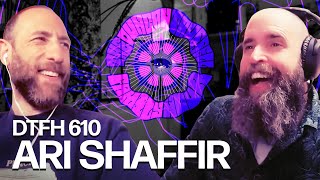
About this episodeAri Shafir discusses the psychological and practical benefits of disconnecting from technology, citing an eigh…AI summary
Ari Shafir discusses the psychological and practical benefits of disconnecting from technology, citing an eight-month trip to Latin America where he avoided news consumption to preserve sanity. The conversation explores the importance of taking calculated risks in travel and life, contrasting modern safety culture with the value of experiencing intense, present-moment activities like racing and rafting. Additionally, Shafir details the operational philosophy behind his new storytelling show, emphasizing creative autonomy and a profit-sharing model with guest comedians.
Key takeaways 6
Disconnecting from technology (e.g., turning phones off completely) protects mental health by preventing emotional exhaustion from constant news cycles; Shafir avoided the January 6 Capitol riots coverage by being in Ecuador.
The 'percentage game' of emergencies: Most people overestimate the likelihood of needing immediate phone access for crises; Shafir argues that in 99% of emergencies, your presence or phone call is not required.
Assessing environment-based risk rather than using a universal 'fear setting': Shafir leaves lockers open at low-risk country clubs and keys in cars in safe areas, arguing that blanket security measures are often unnecessary narcissism.
Creative autonomy yields better products than committee oversight: Shafir’s storytelling show avoids network executive interference by allowing comedians to tell stories in their preferred length and style, sharing profits rather than paying flat fees.
High-intensity activities (racing, rafting) induce a state of total presence where the mind is free from worry, providing a unique form of mental clarity and freedom.
Travel exposes cultural differences in safety and social norms; Shafir notes that 'safety' is often a societal construct that can limit life experiences, citing children’s lack of socialization post-pandemic.
Notable quotes 5AI-generated: wording and quote attribution may be wrong. Use the play link to verify.
“People need a hobby. Every nutty person on the street who's out there protesting... has no hobbies. Ships and bottles. People used to build ships in bottles.”
▶ 1:45Shafir explains that having constructive outlets like hobbies prevents people from becoming politically agitated or violent.
“If the tree falls in the forest and no one's there to hear it, did it ever fall? I shut my phone off... I don't put it on airplane mode. And I'm not saying I'm doing what you do, but when I go to bed at night, the phone is completely shut off.”
▶ 6:13Shafir justifies his complete disconnection from technology as a way to avoid emotional drain from global events.
“There's so few percentage of emergencies where you would need to be present or on your phone... Blood transfusion with only your blood... Somebody died, but that can wait. It can wait. If for the next day, definitely the next day.”
▶ 6:49Shafir breaks down the statistical improbability of needing immediate phone access for true emergencies.
“The worst thing you can do in a society is raise a bunch of dudes who are f***ed. And we got a bunch of f***ed dudes now... Safety kills. It kills and it's a big f***ing deal.”
▶ 58:17Shafir critiques modern safety culture, arguing that over-protection leads to social dysfunction and lack of resilience.
“If you're in a race car, there is no such thing as... 'Oh, there's kind of a hot chick by the side of the track.'... It's all 100% there. And then when you get out of the car... I wasn't even thinking.”
▶ 1:00:12Shafir describes the meditative state of total presence achieved during high-speed racing.
Chapters & Sections (51)▼
0:00The Benefits of Hobbies and Creative Pursuitschapter2
1:39The Importance of Hobbies for Mental Health
3:11The Challenges of Show Business Irrelevance
5:41The Importance of Disconnecting from Technologychapter2
7:22Making Last-Minute Funeral Arrangements
8:29The Dangers of Excessive Smartphone Use
10:04Security and Safety in Public Placeschapter2
11:58Comparing Risk Perception in Everyday Life
13:09Traveling and Safety in Foreign Cities
15:55Comparing Cultural Differences in Travel Experienceschapter
19:50Comedy Club Lineup and Booking Processchapter1
21:43The Misconception of Ari Shaffir's Netflix Special
24:22The Benefits of Independent Creative Controlchapter2
25:48The Dangers of Creative Control in Production
27:06The Importance of Creative Freedom in Art
29:56Meal Kit Services and Promotionschapter2
31:16The Psychology of Sharing Outrageous Stories
32:30The Art of Storytelling in Comedy
33:59Stalking and Harassment by a Fanchapter1
36:08Deception and Manipulation in Personal Relationships
 1h 23m⏭ 4
 2h 9m⏭ 4
 1h 39m⏭ 3
 1h 44m⏭ 4
 1h 37m⏭ 8
 1h 35m⏭ 5
 1h 59m⏭ 8
 1h 51m⏭ 4
 1h 40m⏭ 5
 1h 33m⏭ 4
 1h 57m⏭ 5
 1h 45m⏭ 6
 1h 23m⏭ 2
 1h 15m
![KT #690 - ARI SHAFFIR +JIM NORTON [SKANKFEST 2024]](https://img.youtube.com/vi/XaR_muN2LDU/mqdefault.jpg) 1h 52m⏭ 3
1h 52m⏭ 3 2h 21m
 1h 17m
 2h 35m⏭ 2
 1h 42m
 1h 37m⏭ 4
 2h 17m⏭ 6
 1h 41m⏭ 5
 2h 28m⏭ 1
 1h 20m⏭ 1
 2h 54m⏭ 1
 1h 37m⏭ 3
 52m⏭ 3
 1h 15m⏭ 2
 2h 23m
 5h 14m⏭ 1
 2h 5m⏭ 1
 1h 33m
 44m⏭ 1
 1h 17m
 1h 28m⏭ 1
 46m
46m 1h 0m⏭ 1
 33m
33m 46m
46m 3h 54m⏭ 7
 3h 59m⏭ 5
 54m⏭ 1
 1h 13m
 54m⏭ 2
 1h 26m
 45m⏭ 2
 58m⏭ 5
 25m
25m