About this episodeGrant Morrison discusses his novel 'The Invisibles' and his approach to storytelling, emphasizing the use of c…AI summary
Grant Morrison discusses his novel 'The Invisibles' and his approach to storytelling, emphasizing the use of classic archetypes like Arthurian legends and pantomime to explore modern themes of identity, gender fluidity, and societal collapse. He argues for a shift from patriarchal pyramid structures to network-based metaphors like fungi and molds, reflecting a new cultural era. Morrison also shares insights on the creative process, the importance of audience participation in literature, and his views on the current discourse surrounding gender and comics.
Key takeaways 6
Morrison updates classic narratives (Arthurian legend, All About Eve) by transposing them into the world of drag and pantomime, using these ancient forms to explore contemporary issues of identity and performance.
The concept of 'glamor' is traced etymologically to 'grammar,' highlighting how literacy and the ability to interpret hidden meanings created an aura of magic and uncanny power, which evolved into Hollywood's technique of isolating and emphasizing specific features.
Morrison views gender and identity not as fixed labels but as a multiplicity of selves ('lots of me'), resisting rigid categorization while acknowledging the utility of terms like 'non-binary' for community building.
The transition from the 'Eon of Osiris' (patriarchal, pyramid-based hierarchy) to the 'Eon of Horus' (network-based, fungal/mold-like connectivity) represents a fundamental shift in cultural structure and storytelling.
Novels offer a unique interiority that comics cannot replicate; Morrison deliberately uses a single, unreliable narrator to force readers to actively participate in constructing the truth of the story.
The creative process involves ritualistic elements, such as invoking deities like Ganesha and Mercury, to break down obstacles and facilitate the blending of spirits and ideas.
Notable quotes 5AI-generated: wording and quote attribution may be wrong. Use the play link to verify.
“The idea that someone could open this thing that they're largely a literate populace couldn't understand and read the words of literally God or Jesus was magic... so glamor became that it's about isolating about emphasizing what you've isolated to the point of creating almost an uncanny effect by specifying only the parts and then ignoring everything else that doesn't fit the projection.”
▶ 26:04Morrison explains the etymological and conceptual link between 'grammar' and 'glamor,' describing how the power of text evolved into the visual technique of Hollywood glamour.
“It's not about the trans experience this is not that I the trans experience as I believe and as I understand it is a revealing of self you know it's that you take off a disguise to become who you are whether it's this the drag I'm talking about the glamor I'm talking about is they put on disguises to become who you are or elements of who you are.”
▶ 48:21Morrison distinguishes between the trans experience (revealing self) and drag/glamour (constructing self), framing both as valid methods of identity expression.
“The image of the future... is no longer a privileged thing at the top it's nodes it's connected connectivity it's obviously manifesting itself literally as the internet... but I think it's the metaphorical image of the future... it disseminates like a net... under the pyramid is to just grow your mold through the stones and infiltrate.”
Morrison contrasts the old patriarchal pyramid structure with new network-based metaphors like fungi and molds, suggesting a shift in how power and culture operate.
“I don't have the commitment to wear a label or be part of any Community I like sex and dressing up in role play that's all it is.”
▶ 46:25A quote from his character Lucy Libang that sparked media discussion, which Morrison uses to explain his personal resistance to rigid identity labels while acknowledging their social utility.
“The power of the novel as a form is its interiority we can be right inside someone's head and almost trapped in someone's head but the idea was to make it super colorful and to make it psychedelic and to Turbo Charge the language.”
▶ 6:40Morrison explains his choice to write a novel instead of a comic, leveraging the medium's ability to immerse readers in a single, intense perspective.
Chapters & Sections (45)▼
0:00Navigating Complex National Identity and Colonial Historychapter4
0:00Legacy of British Monarchy and Colonialism
2:24Impact of a Stable Figure's Death on Society
3:37Comparing Elizabethan Ages of Cultural Renaissance
5:00The Challenges of Writing a First Novel
7:51Updating Classic Themes for Modern Audienceschapter2
7:51Updating Classic Stories for Modern Audiences
9:38Origins of Drag Culture in Pantomime Tradition
11:52Cultural Identity and Performance in Modern Societychapter1
11:52Cultural Identity and Performance in Modern Society
15:59Blending Genres and Themes in Storytellingchapter3
15:59Blending Genres and Imagery in Storytelling
17:43Narrative Technique in First-Person Storytelling
19:06The Creative Process of Writing Prose Fiction
20:39Author's Approach to Audience Participation in Storytellingchapter2
20:39Author's Approach to Audience Participation in Storytelling
22:56Childhood Memories of Comic Book Disappointment
25:02Origins of the Concept of Glamorchapter3
25:02Origins and Concept of Glamor
26:29The Evolution of Glamor and the Uncanny
27:45The Art of Makeup and Identity Creation
30:06The Reality of Isolation and Quarantine Lifechapter3
30:06The Reality of Isolation and Glamour
32:56Alchemical and Theatrical Influences on Creative Process
34:27Adapting Familiar Stories in Creative Writing
36:58Human Legacy and Cultural Significancechapter3
36:58The Significance of Superhero Stories in Human Culture
38:19Interpreting Alien Life and Advanced Technology
39:38Misinterpretation of Ancient Cultures and Stories
41:25Challenging Traditional Cultural Narratives and Power Structureschapter4
41:25Challenging Traditional Cultural Narratives and Power Structures
43:19Emergence of Decentralized Networked Societies
44:58Navigating Complexities of Gender Identity
46:13Identity Labels and Community Expectations
50:21The Complexity of Human Identity and Labelschapter3
50:21Navigating Personal Identity and Contradictions
51:40The Problem with Labeling Human Identity
53:32The State of Comics and Online Discourse
55:36Comic Book Adaptations and Novelization Processchapter3
55:36Adaptation of Comic Book Series into Film
57:16Defining the Line between Comic Books and Novels
58:32Comic Book Adaptations and Creative Ownership
1:00:13Identity Blurring in Superhero Characterschapter2
 1h 23m
 1h 9m
1h 9m 23m
23m 1h 9m
1h 9m 1h 7m
1h 7m 1h 16m
 1h 10m
 1h 2m
1h 2m 1h 28m
 1h 1m
1h 1m 1h 14m
 52m
52m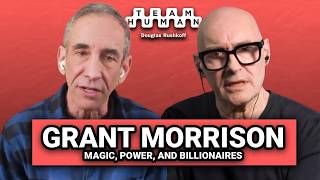
 1h 21m⏭ 3
 1h 12m
 1h 52m
 1h 31m⏭ 6
 2h 41m⏭ 2
 1h 44m
 49m
49m 3h 4m
3h 4m 54m
54m 1h 40m
 38m⏭ 2
 46m
46m 11h 23m⏭ 1
 33m
33m 1h 0m⏭ 1
 46m
46m 3h 54m⏭ 7
 3h 59m⏭ 5
 1h 13m
 54m⏭ 1
 1h 16m⏭ 2
 58m⏭ 5
 25m
25m 38m
38m