About this episodeProfessor David Kipping discusses the implications of his recent tenure, the scientific validity of unproven t…AI summary
Professor David Kipping discusses the implications of his recent tenure, the scientific validity of unproven theories like Terrence Howard's, and the physics behind quantum entanglement and gravitational waves. He explores the rarity of Earth-like conditions, the Fermi Paradox, and the potential for advanced civilizations to manipulate stars, concluding with his excitement for upcoming James Webb Space Telescope observations of exomoons.
Key takeaways 10
Tenure provides academic freedom to pursue high-risk, long-term research (10-20 year horizons) rather than short-term corporate-style deliverables.
Quantum entanglement cannot be used for faster-than-light communication because measurement collapses the superposition state randomly; one cannot force a specific outcome to encode a message.
Gravitational waves travel at the speed of light, confirmed by comparing arrival times of gravitational waves and electromagnetic counterparts from neutron star mergers detected by LIGO.
The solar system is chaotic in the long term (Lyapunov time ~5 billion years); simulations show a 1% chance Mercury becomes unstable and is ejected within a billion years.
Earth's location in the 'suburbs' of the galaxy is likely special, avoiding the high radiation and stellar instability of the galactic core while maintaining sufficient metallicity for planet formation.
Red dwarf stars may be hostile to life due to prolonged 'adolescence' (1 billion years) of high-energy radiation that strips planets of water via photodissociation.
The 'Rare Solar System' hypothesis suggests our solar system's architecture (stable gas giants, lack of hot Jupiters) is rare compared to observed exoplanet systems.
The 'Hard Locks' theory suggests major evolutionary transitions are uniformly spaced in time, implying each step is incredibly unlikely, potentially explaining why intelligent life is rare.
Sustainable civilizations may be invisible to SETI because they exist in equilibrium with their planet, lacking the disequilibrium signatures (like solar panels or nuclear explosions) we currently search for.
Kipping's team has been granted significant James Webb Space Telescope time to search for exomoons around Kepler-167e, a Jupiter analog, which could revolutionize the field similar to early exoplanet discovery.
Notable quotes 5AI-generated: wording and quote attribution may be wrong. Use the play link to verify.
“Physics and science is like being in love like when you're in love you just want to sing it to the world... hopefully we can direct him towards towards some other truths along the way as well and peer review uh guides a combination of guides and beats it out of you.”
▶ 4:30Kipping explains why scientists should be empathetic towards amateurs proposing grand theories, comparing their passion to being in love and noting that peer review eventually corrects errors.
“If you have a great idea and it disseminates to the community... you can put it on social media you can put it on an archive posting... if it's a good idea it will sustain it will survive that process of not just academic peers but me a much broader peer Community looking at it.”
▶ 5:42Discussion on how modern science allows ideas to survive or fail based on broader community scrutiny rather than just traditional gatekeepers.
“The Earth will probably be uninhabitable to complex life in less than a billion years... if it had taken only a little bit more we would have been just about getting to the stage of intelligence just about when we would be uninhabitable.”
▶ 37:20Highlighting the tight window for intelligent life on Earth and the significance of evolutionary timing.
“If a civilization truly reaches a completely 100% sustainable State there is no signature to look for that would be indistinguishable from a natural Perfectly Natural biosphere.”
▶ 1:43:20Explaining why advanced, sustainable civilizations might not be detectable by current SETI methods that look for industrial disequilibrium.
“We are in the not just the first chapter and not just the first page but like the very first like letter of that whole story [of the universe's timeline]... that feels really odd it feels in congruous with our expectation that we should be typical.”
▶ 23:08Discussing the tension between the Mediocrity Principle and our early position in cosmic history, suggesting either we are special or the deep future is inhospitable.
Chapters & Sections (101)▼
0:00Celebrity Guest Discusses Tenure and High-Risk Researchchapter4
0:00Celebrity Congratulates Host on Tenure Achievement
1:14Terrence Howard's High-Risk Conversations with Joe Rogan
2:45Discussing the Value of Speculative Theories
5:00Resistance to New Ideas in Academic Community
6:24The Allure of Unproven Scientific Theorieschapter2
6:24Debunking Misconceptions in Science and Evolution
8:29Quantum Entanglement and Communication Limitations
10:58Quantum Entanglement and Gravitational Waves Explainedchapter3
10:58Quantum Entanglement and Gravitational Waves Explained
12:45Gravitational Waves and Black Hole Mergers
14:01Gravitational Waves and General Relativity
15:58Frustration with Limited Scientific Discoverieschapter4
15:58Frustration with Limited Scientific Discoveries
17:59Career and Personal Life in the UK and US
20:08Election Distractions Affecting Productivity and Focus
21:34Impact of Global Events on Focus and Purpose
23:40Mixed Review of Sci-Fi Showchapter2
23:40Mixed Review of Sci-Fi Show
25:21The Three Body Problem in Physics
28:08Solar System Instability and Chaos Time Scalechapter2
28:08Solar System Instability and Chaos Time Scale
30:06Stability of the Solar System
32:46Rare Earth and Rare Solar System Hypothesischapter3
32:46Rare Earth and Rare Solar System Hypothesis
34:50Probability of Life in the Galaxy
36:18Evolutionary Transitions and Earth's Habitability
38:14Evolutionary Hurdles for Intelligent Life Existencechapter3
38:14The Difficulty of Intelligent Life Emergence
40:28Conditions for Life and Intelligence Existence
42:13RNA and the Origins of Life
44:57Rare Planetary Features in Our Galaxychapter3
44:57Rare Planetary Features in Our Galaxy
46:23Astrophysics and Galaxy Formation Theories
47:58Star Formation and Supernova Hazards
49:16Galactic Location and Star Type Significancechapter2
49:16Galactic Location and Star Type Significance
51:39Red Dwarfs and Planetary Water Loss
54:09Asteroid Impact to Save the Earthchapter3
54:09Asteroid Slingshot to Save the Earth
55:48Asteroid Impact vs. Sun Mass Reduction
56:58Effects of Mass Reduction on Sun's Radius
58:15Star Lifting for Cooling and Neighborhood Safetychapter3
58:15Star Lifting for Cooling and Colonization
59:54Underwater Civilizations and Alien Communication
1:01:16Challenges for Extraterrestrial Civilizations
1:02:52Alternatives to Oxygen for Combustionchapter2
1:02:52Alternatives to Oxygen for Combustion
1:05:27Panspermia and the Possibility of Life Transfer
1:07:08Mars and Venus Similarities to Earthchapter2
1:07:08Mars and Venus Exploration Risks and Contamination
1:09:49Moon Formation Theories and Controversies
1:13:06Moon's Impact on Earth's Plate Tectonicschapter3
 2h 15m⏭ 7
 2h 38m
 1h 12m
 1h 8m⏭ 2
 1h 37m
 2h 32m
 1h 5m
1h 5m 1h 23m
 1h 53m⏭ 5
 58m⏭ 2
 1h 53m⏭ 4
 1h 28m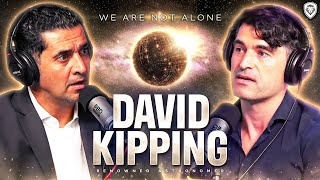
 2h 20m⏭ 1
 3h 3m⏭ 2
 41m⏭ 2
 1h 8m
1h 8m 3h 4m
3h 4m 1h 10m
 1h 17m
 45m
45m 3h 58m⏭ 2
 1h 14m⏭ 1
 3h 17m
 4h 6m
4h 6m 33m
33m 1h 0m⏭ 1
 3h 54m⏭ 7
 6h 26m
 54m⏭ 1
 3h 59m⏭ 5
 46m
46m 54m⏭ 2
 1h 16m⏭ 2
 9h 11m
 1h 26m
 31m
31m