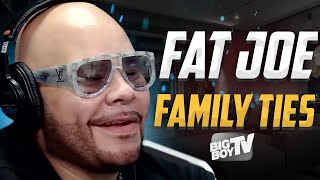
About this episodeFat Joe and Nori reflect on their pioneering roles in introducing Reggaeton to the US mainstream, highlighting…AI summary
Fat Joe and Nori reflect on their pioneering roles in introducing Reggaeton to the US mainstream, highlighting the genre's roots in Hip Hop and the cultural significance of Latino representation. They discuss the strategic importance of DJs, the personal risks taken by artists like Nori to embrace the genre, and the eventual validation of Latino culture in the music industry.
Key takeaways 5
Hip Hop is the foundational blueprint for Reggaeton; Fat Joe notes that trends seen in Latin Trap (fashion, flows) were already established in Hip Hop by artists like Jay-Z and Beyoncé before they appeared in Latin music.
Nori's 'Oro Solido' was a calculated risk that paid off by expanding the definition of Latino identity during the Puerto Rican Day Parade, creating an anthem that united Colombians, Dominicans, and Puerto Ricans.
DJs were the critical 'cheat code' for Reggaeton's expansion; DJs like DJ Enigma and DJ Camilo played a vital role in introducing the sound to New York clubs before it hit radio.
Fat Joe leveraged his existing Hip Hop status to bridge genres, working with Reggaeton artists like Eddy Queen and Daddy Yankee early on, despite his label's initial hesitation and his own limited Spanish proficiency at the time.
The mainstream success of Reggaeton validates predictions made 25 years prior by Latino media outlets like Urban Latino magazine, proving that Latino cultural influence was inevitable.
Notable quotes 5AI-generated: wording and quote attribution may be wrong. Use the play link to verify.
“Hip-hop is the birth of everything... by the time you seen Carol G and Anella we already seen Meek Mills Nicki Minaj Jay-Z beyon we seen all of that”
▶ 3:14Fat Joe explains that Hip Hop established the cultural and musical templates that Reggaeton later adopted.
“I sacrificed myself so I started to do certain records... I literally almost lost my other career and if you ask me what I do it again in a heartbeat because now look at now now I look like a genius”
Nori describes the personal and professional risk he took by releasing 'Oro Solido' when he was known as a pure Hip Hop artist.
“Today you become Latino for the 3 minutes... de ass that ass”
Nori explains the inclusive spirit of his hit song 'Oro Solido,' inspired by the Puerto Rican Day Parade where everyone unites regardless of background.
“We're in the Latin business you're telling me Jay-Z... I got to get a flight to see Daddy Yankee”
▶ 17:43Fat Joe recounts convincing his label Death Row to support his Reggaeton album by prioritizing connections with key Latin artists over traditional Hip Hop stars.
“If you go to a Puerto Rican restaurant you go to Jamaican restaurant you know how you know if it's good if the white people are there... it's great if they come”
Fat Joe uses a cultural analogy to explain how mainstream (white) adoption served as a marker of Reggaeton's legitimacy and success in America.
Chapters & Sections (22)▼
0:00Latin Hip Hop Intersection and Reggaeton Originschapter3
0:00Latin Hip Hop Intersection Discussion
1:46Reggaeton Origins and Early Influencers
3:04Hip-Hop Influence on Reggaeton Music
5:01Puerto Rican Day Parade Inspirationchapter3
5:01Artist Reflects on Music Career and Cultural Identity
6:37Artist Reflects on Reggae Throne Success
7:54Nori's Career Transition and Hip Hop Legacy
9:56Embracing Latino Culture and Music Influenceschapter2
9:56Reflecting on Latino Heritage and Music Career
13:06Fat Joe Discusses Working with Reggaeton Artists
14:35Artist Reflects on Reggae Album Experiencechapter2
14:35Artist Reflects on Reggae Album Experience
16:53Fat Joe's Experience with Looney Tunes and Death Jam
19:07Reggaeton's Rise to Prominence in the USchapter3
19:07Reggaeton's Rise to Popularity in the US
21:31Latinos in Hip Hop Industry Pioneers
22:58Big Pun's Influence on Latino Culture
24:34Reggaeton Pioneer's Impact on American Musicchapter3
24:34Reggaeton Pioneer's Impact on American Music Scene
26:25Puerto Rican Identity and Cultural Representation
27:56Celebrating Latino Heritage and Representation
 35m⏭ 4
 20m
20m 18m
18m 20m
20m 22m
22m 18m
18m 20m
20m 38m
38m 19m
19m 24m
24m 50m
50m 15m
15m 1h 13m
 1h 3m
1h 3m 1h 52m
 1h 32m
 1h 32m
 26m
26m 1h 5m⏭ 1
 2h 2m
2h 2m 24m
24m 29m
29m 1h 53m⏭ 3
 1h 41m⏭ 3
 2h 31m⏭ 1
 1h 25m⏭ 1
 2h 32m
 28m
28m 1h 38m
 3h 52m
 2h 30m⏭ 1
 1h 32m
 1h 42m
 1h 49m⏭ 2
 1h 7m
1h 7m 1h 6m
1h 6m 1h 43m⏭ 4
 11h 54m
 1h 0m⏭ 1
 11h 54m⏭ 8
 33m
33m 6h 26m
 3h 54m⏭ 7
 9h 11m
 3h 59m⏭ 5
 46m
46m 54m⏭ 1
 54m⏭ 2