About this episodeThe panelists analyze the 2020 US election as a reflection of deep economic and cultural polarization, charact…AI summary
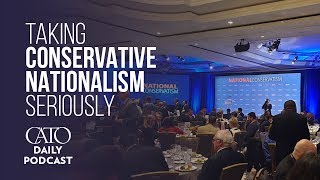
The panelists analyze the 2020 US election as a reflection of deep economic and cultural polarization, characterized by a split between a prosperous high-tech economy and a 'left-behind' rural economy. They argue that this division is driven more by cultural anxiety and demographic change than policy, suggesting that the removal of Donald Trump and a return to incremental, boring politics may help restore normalcy.
Key takeaways 5
Economic Divide: In 2020, Joe Biden won 477 counties accounting for 70% of US economic activity, while Trump won 2,497 counties accounting for only 29%, highlighting a split between the high-tech emerging economy and the 'left-behind' economy.
Coalition Dynamics: Both major political coalitions are held together primarily by antipathy to the other side rather than shared philosophy, with each side convinced that any political setback is due to systemic unfairness (e.g., 'deep state' vs. 'vote suppression').
Cultural vs. Policy: Much of the polarization is cultural, stemming from white older demographics feeling displaced by a younger, more diverse generation (40% of color), which cannot be fixed by policy alone and may take another decade to resolve demographically.
Historical Context: The current polarization is compared to 1896 (McKinley vs. Bryan) and the late 1960s; however, unlike the 1960s where parties were less polarized and voters more fluid, today's parties are rigidly aligned with the cultural divide.
Market Solutions: P.J. O'Rourke argues that market forces and mobility will eventually solve regional economic disparities, citing how industrialization moved from expensive big cities to places like Cleveland and Akron, suggesting similar shifts could occur in tech hubs.
Notable quotes 4AI-generated: wording and quote attribution may be wrong. Use the play link to verify.
“In 2020, Joe Biden won the 477 counties in the United States that account for 70% of American economic activity. And Trump won 2,497 counties in the United States that account for just about 29% of economic activity.”
▶ 6:20Elaine Kamarck uses this data to illustrate the stark economic split between the high-tech coastal economy and the rural 'left-behind' economy.
“What holds each of these coalitions together is antipathy to the other side. It is not a shared political philosophy. It is not a shared set of policy objectives. It is fear of and hostility to the other side.”
▶ 10:26Ramesh Ponnuru explains the structural weakness of modern American political coalitions.
“I want politics to be boring again... I would like to see our readership drop down... to its normal boring level where people who are interested in the difference between Medicare for all and public options tune into our area debates.”
▶ 30:02Elaine Kamarck expresses a desire for a return to normalcy, suggesting that high interest in politics is a symptom of crisis rather than engagement.
“Whenever there is a huge disruption in society... it causes lots of trouble and that trouble lasts for a while. Eventually society adjusts to it... they generally turn out to be net beneficiaries.”
▶ 31:51P.J. O'Rourke contextualizes current cultural friction as a temporary transitional period similar to previous industrial or technological revolutions.
Chapters & Sections (23)▼
0:05US Election Night and National Polarizationchapter3
0:05US Election Night Analysis and Reflections
3:09Importance of Personal Decisions in Life
4:42Election Perspective and Government Interaction
6:04US Politics and Economic Divide Analysischapter3
6:04US Economic Divide Under Biden and Trump
7:39US Election Analysis and Lessons Learned
10:15US Polarization and Effective Policy Challenges
12:02Economic and Cultural Factors in Polarizationchapter2
12:02Economic and Cultural Factors in Polarization
14:42Addressing Polarization and Overreach in Politics
17:10Comparing Cultural Divisions Past and Presentchapter3
17:10Comparing Cultural Divisions Past and Present
18:57US Politics and Economic Development
21:44US Political Polarization and Party Division
23:04Trump's Impact on US Politicschapter3
23:04Donald Trump's Impact on Public Attention
24:37US Politics and Bipartisan Policy
26:24American Political Parties vs European Model
28:11American Politics and Polarization Discussionchapter3
 1h 18m
 1h 25m
 1h 17m
 1h 28m
 1h 31m
 1h 26m
 24m
24m 1h 24m
 23m
23m 1h 1m⏭ 1
 1h 24m
 59m
59m 1h 37m⏭ 3
 56m
56m 1h 32m⏭ 3
 2h 44m⏭ 1
 2h 24m
 1h 22m⏭ 5
 1h 12m
 1h 50m⏭ 1
 1h 52m⏭ 2
 2h 14m⏭ 2
 1h 0m⏭ 4
 1h 6m
1h 6m 1h 0m⏭ 1
 11h 54m⏭ 8
 33m
33m 11h 54m
 6h 26m
 9h 11m
 3h 54m⏭ 7
 46m
46m 3h 59m⏭ 5
 54m⏭ 1
 54m⏭ 2
 1h 16m⏭ 2