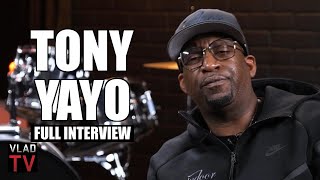
About this episodeShaheim reflects on his pioneering role as a teenage rapper from the projects who broke industry barriers with…AI summary
Shaheim reflects on his pioneering role as a teenage rapper from the projects who broke industry barriers with explicit content and early acting roles, while candidly discussing the challenges of managing sudden wealth and responsibility at age 13. He emphasizes the critical importance of education and structure for young artists, sharing how his personal struggles and incarceration have transformed into a mission to mentor youth through his 'Rugged Road to Recovery' foundation.
Key takeaways 5
Shaheim was the first rapper from the projects to secure an explicit content sticker on his album, fighting labels who wanted 'bubble gum' music, which paved the way for gritty, authentic hip-hop narratives.
He signed a $350,000 deal with Virgin Records at age 13 during a bidding war with Warner Bros, highlighting the immense financial opportunities available to young artists in the mid-90s.
Shaheim regrets not prioritizing education, noting that college would have provided the structure needed to navigate the music business and avoid the mistakes he made while managing millions at a young age.
The conversation clarifies a public dispute with Cassidy, revealing it was a miscommunication due to the lack of cell phones in 1994, resulting in them collaborating on a track called 'What's Up' rather than feuding.
Shaheim's foundation, Rugged Road to Recovery, has expanded to five states (San Diego, Los Angeles, Boston, New Jersey, New York), focusing on grants for mothers needing daycare and prison outreach programs.
Notable quotes 5AI-generated: wording and quote attribution may be wrong. Use the play link to verify.
“I was 13 when I got my first deal. I signed for 350. My first deal was one of the biggest deals in history.”
▶ 6:00Shaheim discussing the magnitude of his early career success and the bidding war between Virgin and Warner Bros.
“A lot of our OG's they showed us how to get money. They never showed us what to do with the money once you got it.”
▶ 11:19Reflecting on the lack of financial guidance for young rappers who suddenly gained wealth in the 90s.
“It's like giving a four-year-old a machine gun. He got 30 bodies and then you throw them in jail and say, 'Yo, you made mistakes.'”
Shaheim's analogy for why punishing young offenders without considering their developmental stage is ineffective.
“I want to be what I needed. I want to be what I really needed.”
▶ 26:19Explaining his motivation for starting his foundation to help youth after experiencing his own struggles.
“If you can't come back home you can't you ain't got nothing man.”
▶ 32:06Shaheim's philosophy on maintaining connections to one's roots and community despite success.
Chapters & Sections (27)▼
0:01Early Days of Hip-Hop and Missed Opportunitieschapter2
1:52Missed Opportunities in Music Industry Deals
3:54Early Days of Hip-Hop in the Projects
5:12Breaking Industry Barriers with Explicit Lyricschapter2
7:13Childhood Struggles and Early Success in Music
8:54Childhood Trauma and Mentorship
11:28Childhood Fame and Responsibility at 13chapter2
13:18Childhood Fame and Shock of Celebrity
14:45Early Life and Career in Acting
16:45Breaking into the Music Industry at 14chapter1
18:17Childhood Trauma and Regretful Life Choices
21:27Importance of Education in Personal Growthchapter2
23:18Generational Impact and Legacy in Hip-Hop
25:19Overcoming Adversity and Redemption through Mentorship
 2h 59m
 1h 32m⏭ 1
 1h 30m⏭ 1
 2h 4m⏭ 1
 3h 12m
 2h 4m
2h 4m 2h 51m
 1h 30m
 1h 34m
 1h 51m
 2h 12m
 1h 13m
 1h 12m⏭ 1
 2h 57m
 1h 8m
1h 8m 49m
49m 1h 53m
 54m
54m 2h 30m⏭ 1
 1h 32m
 1h 6m
1h 6m 1h 42m
 1h 49m⏭ 2
 3h 6m⏭ 1
 11h 23m⏭ 1
 33m
33m 1h 0m⏭ 1
 46m
46m 3h 54m⏭ 7
 3h 59m⏭ 5
 1h 13m
 54m⏭ 1
 1h 16m⏭ 2
 58m⏭ 5
 25m
25m 38m
38m