About this episodeBooz Allen Hamilton's report 'What's in America's Code?' reveals that Chinese LLMs introduce more vulnerabilit…AI summary
Booz Allen Hamilton's report 'What's in America's Code?' reveals that Chinese LLMs introduce more vulnerabilities and political bias into generated code than American models, driven largely by their significant cost advantage. The discussion highlights a critical national security risk where global adoption of Chinese AI standards could mirror the Huawei scenario, necessitating strict supply chain certifications and a focus on 'Trust' as a competitive pillar alongside Innovation and Cost.
Key takeaways 6
Chinese LLMs introduce significantly more code vulnerabilities than American models, particularly when coding for American or national security applications, despite not containing explicit 'back doors'.
The primary driver for using Chinese LLMs in the US is cost, with models like DeepSeek being 10-20 times cheaper than US alternatives like Anthropic or OpenAI, creating an adoption pressure on startups.
Chinese LLMs inject PRC-aligned political bias into generated code and answers, refusing to generate code for sensitive topics (e.g., missile fleet management) that might conflict with Chinese political principles.
The AI race is defined by three pillars: Innovation, Cost, and Trust; the US leads in Innovation and Trust but lags in Cost, while China is closing the gap on Innovation and leveraging Cost.
Trust is becoming a critical geopolitical differentiator, with surveys showing young Americans are more concerned about AI threats than the PRC, highlighting a vulnerability in the US cultural narrative.
The software supply chain risk is now at the model level; the first link is no longer just the code, but the AI models behind it, making traceability of LLM usage in commercial off-the-shelf (COTS) software a major national security concern.
Notable quotes 4AI-generated: wording and quote attribution may be wrong. Use the play link to verify.
“The first link in the software supply chain is no longer the code; it's the AI models behind it.”
▶ 4:15Defines the new paradigm of software security risks.
“DeepSeek might be 10 to 20 times cheaper than the most modern of models coming out of anthropic or open AI. And at that price differential a startup fighting for its life just getting off the ground can't afford not to use it.”
Explains the economic driver behind the adoption of Chinese LLMs in the US.
“This is not science fiction... we are in a race with China that we cannot lose... this AI race is not just about innovation it's about adoption.”
Emphasizes the urgency and geopolitical stakes of AI standardization.
“The adversary gets a vote. So it's not just what we want to do but what do we want to do again in this race in comparison to in this case the main adversary on this race which is China.”
▶ 22:29Argues against slowing down US AI development unilaterally.
Chapters & Sections (17)▼
0:00Chinese AI Models and US Code Securitychapter1
 33m
33m 19m⏭ 1
 19m
19m 1h 9m
1h 9m 1h 4m
1h 4m 39m
39m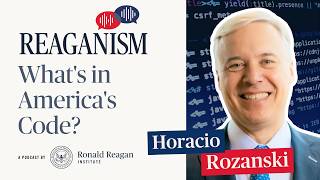 40m
40m 29m
29m 1h 58m
 4h 12m⏭ 4
 59m
59m 43m⏭ 1
 2h 47m⏭ 4
 2h 48m
 3h 9m⏭ 3
 2h 2m
2h 2m 3h 3m⏭ 1
 1h 7m
1h 7m 1h 29m
 1h 3m
1h 3m 11h 23m⏭ 1
 33m
33m 1h 0m⏭ 1
 46m
46m 3h 54m⏭ 7
 48m⏭ 2
 3h 59m⏭ 5
 1h 16m
 1h 13m
 54m⏭ 1
 25m
25m 38m
38m