About this episodeThe discussion analyzes the viral phrase 'Who's going to be the boys?' as a symptom of rigid, institutionally …AI summary
The discussion analyzes the viral phrase 'Who's going to be the boys?' as a symptom of rigid, institutionally reinforced gender roles that harm both men and women. The guests argue that social media curates unrealistic masculine ideals, leading to anxiety, policing of behavior, and a disconnect between authentic self-expression and societal expectations. Ultimately, they advocate for men to define masculinity on their own terms rather than conforming to external performance metrics.
Key takeaways 5
The phrase 'Who's going to be the boys?' originated in the queer community as an inside joke but was co-opted online by straight women to express frustration over perceived declines in traditional masculinity, often linked to conservative political narratives.
Social media creates a 'manufactured' reality where men perform hyper-masculine or hyper-feminine roles for validation, leading people to chase imaginary ideals rather than connecting with real individuals.
Institutions like fraternities (e.g., Alpha Kappa Alpha) and churches actively reinforce rigid gender binaries, such as debating biological definitions of male or focusing women's programming on keeping husbands rather than mutual partnership.
There is a paradoxical pressure where women may police men's masculinity not just for attraction, but to reduce competition in gender performance, fearing that if a man performs femininity, he might attract other women who also perform femininity.
Rigid adherence to traditional masculinity is directly linked to higher rates of violence and femicide, as men are often raised without tools to express emotions other than anger.
Notable quotes 4AI-generated: wording and quote attribution may be wrong. Use the play link to verify.
“I think that for men in particular... men have a responsibility to define what manhood and masculinity is for themselves. Otherwise, you're going to drive yourself crazy because it is a bottomless pit.”
▶ 23:04George M. Johnson argues that men must create their own definition of masculinity rather than chasing an external, shifting standard set by social media or society.
“A lot of people aren't in relationships because they're chasing an image they've created and one that doesn't actually exist. So, when they're picking apart a person, they're picking apart a person based off of something they created in their head.”
▶ 14:50George M. Johnson explains how curated online personas lead to unrealistic dating expectations and the rejection of compatible partners who don't fit an imaginary mold.
“It's not because I'm attracted to George. It's because I have a fear that the person I might be attracted to may also be attracted to yours because now we're doing the same type of quote unquote performance.”
▶ 24:45George M. Johnson illustrates how gender policing can stem from a desire to maintain distinct gender roles and avoid competition in social performance.
“Why can't you all find each other and leave the rest of us out of the conversation? ... It sounds like it's the perfect PB&J sandwich. You have these traditional, rigid, conservative views... And then on the flip side of that, men have a very rigid, very narrow way of what their ideal femininity... looks like.”
▶ 10:44Britney Loose critiques the 'red pill' and traditionalist communities for wanting both rigid gender roles and the freedom to act without consequence, suggesting they should isolate themselves rather than imposing their views on everyone.
Chapters & Sections (9)▼
0:00Online backlash against masculine menchapter2
4:39Sports and Media Masculinity Debates
6:34Social Media's Impact on Masculinity
9:30Rigid Gender Roles and Institutional Reinforcementchapter1
11:42Institutional Masculinity and Trans Exclusion
14:50Chasing Imaginary Masculine Ideals in Datingchapter
21:04Gender Performance and Masculinity Authenticitychapter2
 52m⏭ 3
 53m⏭ 3
 51m⏭ 5
 38m
38m 52m⏭ 4
 51m⏭ 3
 52m⏭ 3
 18m⏭ 3
 38m⏭ 4
 22m⏭ 2
 52m⏭ 5
 22m⏭ 2
 1h 7m
1h 7m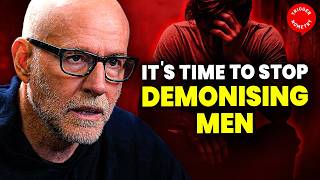 1h 22m⏭ 4
 1h 23m
 1h 52m⏭ 2
 1h 50m⏭ 2
 2h 15m⏭ 7
 45m⏭ 1
 1h 13m⏭ 3
 2h 21m⏭ 3
 1h 24m
 2h 13m⏭ 4
 2h 40m⏭ 2
 11h 23m⏭ 1
 1h 0m⏭ 1
 33m
33m 46m
46m 3h 54m⏭ 7
 3h 59m⏭ 5
 48m⏭ 2
 40m
40m 1h 13m
 38m
38m 54m⏭ 2
 54m⏭ 1